
Roasted Aubergine
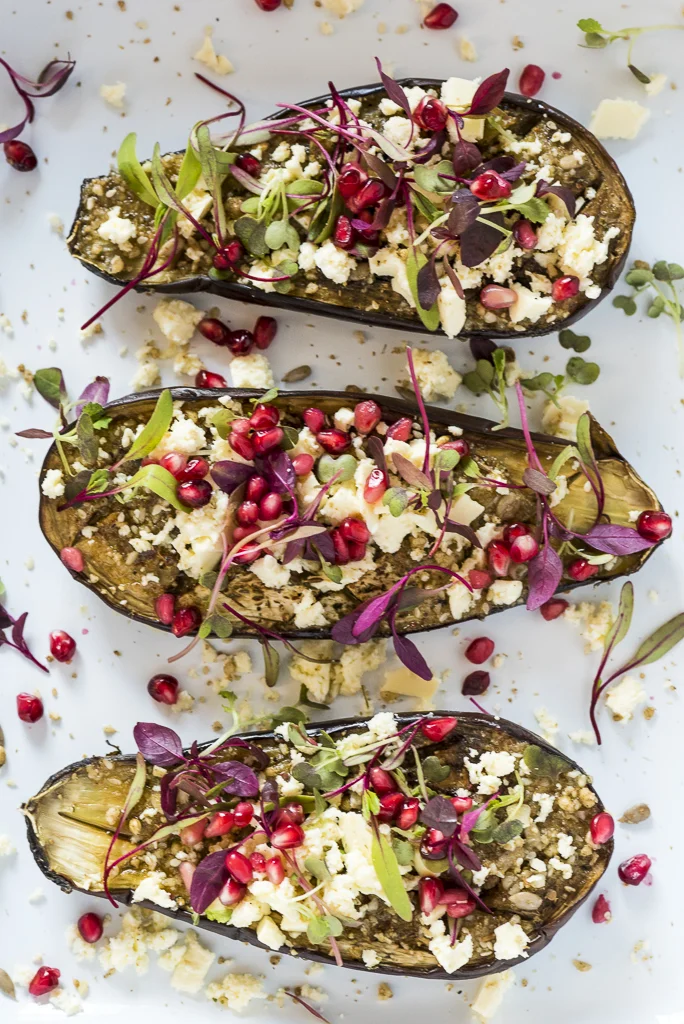
Roasted aubergine halves are finished with a lemony dukkah oil, fresh herbs, pomegranate seeds and optional feta. The oven does most of the work, making this a colourful side or a light meal with bread or grains.
Ingredients
- 2 largeaubergines
- 4 tbspolive oil
- to tastesalt and freshly ground black pepper
- 3 tbspolive oil
- 2 heaped tbspdukkah of your choice
- a squeezelemon juice
- to tastemicro herbs or chopped parsley
- 1–2 disks (optional)feta cheese
- seeds from 1pomegranate
Instructions
- 1
Preheat the oven
Heat the oven to 230°C.
- 2
Score the aubergines
Halve both aubergines lengthways, then cut a criss-cross pattern into the flesh.
- 3
Add the oil
Drizzle the aubergines generously with 4 tablespoons of olive oil, opening the cuts so some oil runs into them.
- 4
Season the flesh
Sprinkle the aubergines with salt and freshly ground black pepper.
- 5
Roast until golden
Arrange them flesh-side up on a baking tray and roast for about 40 minutes, until tender all the way through and deep golden-brown.
- 6
Mix the dressing
About 5 minutes before the aubergines finish roasting, stir together the remaining 3 tablespoons of olive oil, the dukkah and a squeeze of lemon juice.
- 7
Dress the aubergines
As soon as they come out of the oven, spoon the dukkah oil over them, working it into the scored flesh.
- 8
Add the toppings
Finish with the herbs, pomegranate seeds and feta, if using.
What is roasted aubergine?
Roasting aubergine until soft and browned is a familiar approach across many Mediterranean and Middle Eastern-style cuisines, though this recipe does not claim one particular origin. Here, the cut flesh absorbs olive oil and takes on a rich, tender texture.
The dukkah dressing brings spice and crunch, while lemon, herbs and pomegranate add freshness. Feta is an optional salty, creamy finish.
Nutrition and macros by portion
The nutrition label shows one serving as written: 330 calories, 7g protein, 30g carbs, 23g fat.
| Portion | Adjustment | kcal | Protein | Carbs | Fat |
|---|---|---|---|---|---|
| Lighter | Use less dressing oil | 231 kcal | 5g | 21g | 16g |
| This serving | As written | 330 kcal | 7g | 30g | 23g |
| Hungry | Add bread or lentils | 495 kcal | 11g | 45g | 35g |
Aubergine and pomegranate provide most of the carbohydrates and fibre, while the olive oil is the main source of fat. Dukkah and optional feta contribute some protein, though the amount depends on the blend and how much feta is used. Balance the plate with beans or lentils and a fresh salad.
Scoring for flavour
The criss-cross cuts expose more flesh to the oil and seasoning. Cut into the flesh without slicing through the skin, so each half stays intact on the tray.
Open the cuts gently as you drizzle. This helps the oil reach the centre rather than sitting only on the surface.
Roasting until tender
The aubergines roast at 230°C for about 40 minutes, but size and oven performance can affect the timing. Keep the halves flesh-side up so their cut surfaces brown.
Doneness cue: the flesh should be soft when pierced and deeply golden-brown. If it is still firm, give it more time in the oven.
Making the dukkah oil
Dukkah varies by blend, so choose one whose spices and nuts you enjoy. Mixing it with olive oil and lemon just before the aubergines are ready keeps the dressing easy to spoon.
Add the dressing while the aubergines are hot. It can then settle into the scored flesh, carrying its toasted, citrusy flavour through each bite.
Choosing the toppings
Fresh herbs bring a green note; use micro herbs or chopped parsley according to what you have. Scatter them on after roasting so they stay fresh.
Pomegranate seeds add juicy pops of tart sweetness. Crumble or break the optional feta into pieces over the top for a saltier, creamier finish.
Serving the aubergine
Serve the halves warm as a side, or make them part of a larger spread with flatbread, grains or a crisp salad. Their soft texture pairs well with something chewy or crunchy.
If serving as a main meal, add a protein-rich accompaniment such as beans or lentils. Keep the toppings until just before serving for the freshest contrast.
Recipe notes & tips
- Choose aubergines that feel firm and have smooth, glossy skins.
- Use a sharp knife to score the flesh evenly without cutting through the skin.
- Spread the aubergine halves out on the tray so they roast rather than steam.
- Check the aubergines near the end of roasting, as large halves may need extra time.
- Taste the dukkah before adding extra salt, especially if your blend is already seasoned.
- Add the herbs and pomegranate just before serving to keep their texture fresh.
Variations
- Change the dukkah: Choose a different blend to shift the spice and nut flavours.
- Skip the feta: Leave it out for a dairy-free version.
- Add yoghurt: Serve with a spoonful of plain yoghurt for a cool contrast.
- Use another herb: Try chopped mint or coriander instead of parsley.
- Make it more substantial: Serve with warm flatbread or cooked lentils.
Common mistakes to avoid
- Cutting through the skin: The halves may lose their shape; score the flesh only.
- Under-roasting: Firm flesh lacks the intended softness; roast until tender when pierced.
- Crowding the tray: The aubergines can steam instead of brown; leave space between the halves.
- Adding dressing too early: The dukkah oil is best spooned on while the aubergines are hot, just out of the oven.
- Over-salting: Dukkah and feta can both be salty; season cautiously and taste the blend first.
How to store
Refrigerate leftovers in an airtight container for up to 3 days. Reheat in an oven at 180°C until hot, and add fresh herbs or pomegranate after warming.
Frequently asked questions
Can I prepare the aubergines ahead?
You can halve and score them ahead, then cover and refrigerate until ready to roast. For the freshest finish, mix the dressing and add the toppings close to serving.
How do I know when the aubergines are done?
The flesh should be soft when pierced and deep golden-brown on top. If it is still firm, roast for a little longer.
Can I make this without dukkah?
Yes. Use another savoury spice-and-seed blend, or season the oil with spices and add toasted seeds for crunch.
Is the feta essential?
No, it is optional. The aubergines still have plenty of flavour from the dukkah oil, lemon, herbs and pomegranate.
What can I serve with roasted aubergine?
Try flatbread, cooked grains, lentils or a crisp salad. These make it easy to serve as part of a larger meal.
Cook it from the original
This recipe comes from heinstirred.com. Their page has the author’s own photos, notes and tips — the best place to cook it from.
Open the recipe on heinstirred.com