
Banana foutou / Ghanaian fufu
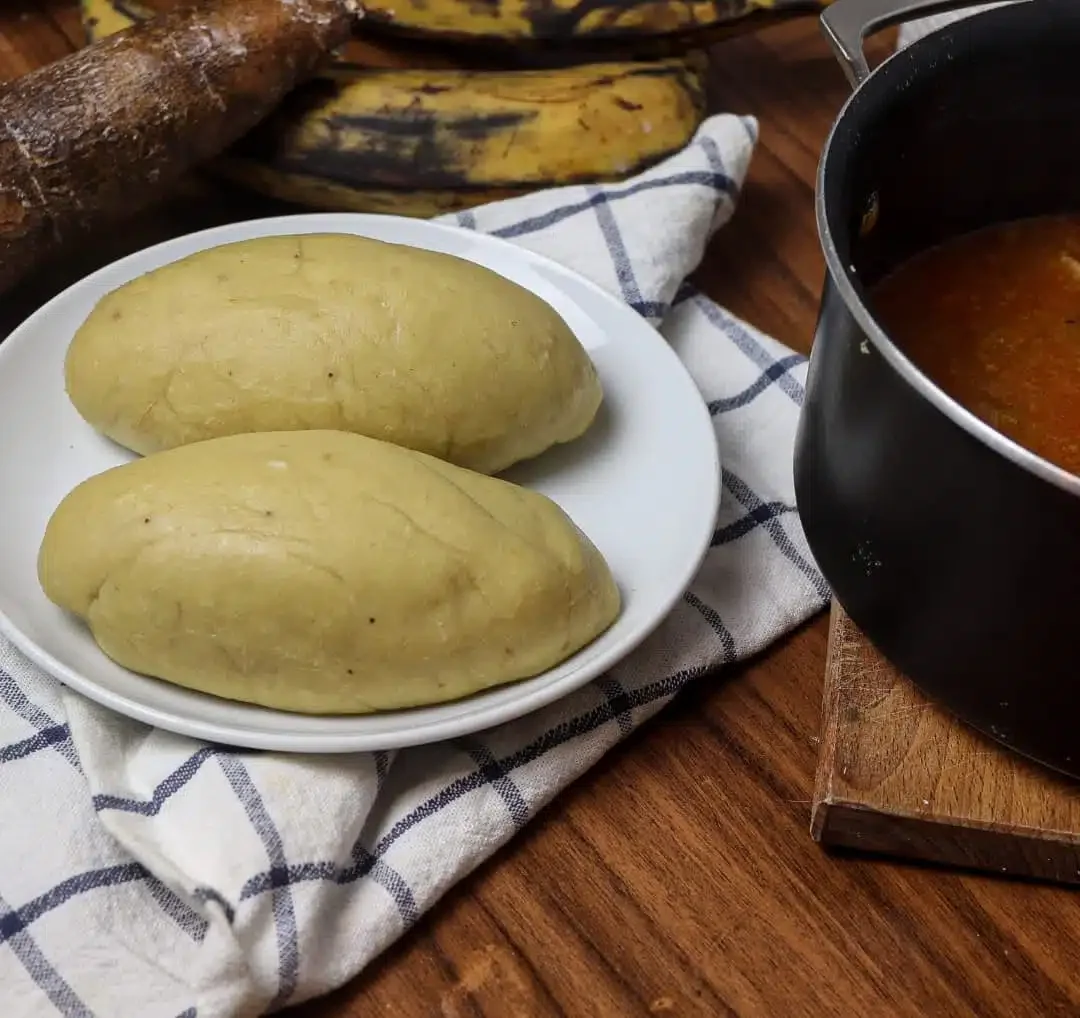
This Ghanaian-style fufu combines boiled cassava and plantain into a smooth, mouldable dough. It is a filling accompaniment to light soup, and the blender makes the pounding traditionally used to achieve its texture more manageable.
Ingredients
- 2 tuberscassava
- 4–5plantains
- as neededwater
Instructions
- 1
Peel the roots
Peel the plantains and cassava.
- 2
Cut into cubes
Cut both into small cubes so they will be easier to pound or blend later.
- 3
Cover with water
Put the plantain in a saucepan first, followed by the cassava. Add enough water to reach the level of the ingredients or come just above them.
- 4
Check for softness
After about 15 minutes of cooking, test the cassava and plantain with a fork. They are ready when they split easily.
- 5
Drain and dry
Pour off the excess water and leave the cassava and plantain to dry for a few minutes.
- 6
Blend in batches
Blend the cassava alone until it forms a paste, then remove it. Blend the plantain, then return the cassava and blend the two together.
- 7
Shape into balls
Once thoroughly combined, use a deep plate to help shape the mixture into smooth balls. Wet your hands regularly with water to prevent sticking.
What is Ghanaian fufu?
Fufu is a soft, starchy staple eaten across parts of West Africa, including Ghana and Côte d’Ivoire. It is commonly served alongside soup, where small pieces can be dipped into the broth.
This version brings cassava and plantain together. It is not couscous made from grains; the cooked ingredients are blended into a smooth, cohesive dough.
Nutrition and macros by portion
The nutrition label shows one serving as written: 1060 calories, 7g protein, 260g carbs, 2g fat.
| Portion | Adjustment | kcal | Protein | Carbs | Fat |
|---|---|---|---|---|---|
| Lighter | Smaller fufu ball | 742 kcal | 5g | 182g | 1g |
| This serving | As written | 1060 kcal | 7g | 260g | 2g |
| Hungry | Larger fufu ball | 1590 kcal | 11g | 390g | 3g |
Most of the energy and carbohydrates come from the cassava and plantains; they provide very little fat or protein. Serve a moderate ball with light soup and include a protein-rich ingredient in the soup to make the meal more balanced.
Choosing the ingredients
Cassava: Choose firm tubers and peel them thoroughly before cooking. Cut away any tough or discoloured parts as you prepare them.
Plantains: Use ripe but still firm plantains so they hold together during boiling and blend into the cassava without becoming overly loose.
Getting the boil right
Even pieces: Cut the cassava and plantain into similarly sized small cubes so they cook at a similar pace.
Water level: The ingredients should be covered or just submerged, as the method directs. Start checking after about 15 minutes, since cooking time depends on the size and firmness of the pieces.
Blending to a smooth dough
Separate batches: Blend the cassava on its own first, then the plantain, before combining them. This helps each ingredient break down before the mixture thickens.
Texture cue: The finished mixture should be smooth and cohesive enough to shape. If your blender struggles, pause and scrape down the mixture rather than forcing the motor.
Shaping and serving
Moist hands: Wet your hands as needed while shaping to stop the sticky dough clinging to them. A deep plate can help form the mixture into rounded portions.
Serve the fufu with light soup, as suggested, while warm. Its mild, starchy flavour works well with a savoury, brothy accompaniment.
Timing and doneness
The recipe gives about 15 minutes as the first point to check the vegetables, not a guaranteed total boiling time. They are ready when a fork makes them split easily.
Allow a few minutes for draining and drying before blending. The full recipe is listed as taking 50 minutes, including preparation and shaping.
Recipe notes & tips
- Peel the cassava and plantains before cutting them into cubes.
- Keep the cubes small and reasonably even so they cook consistently.
- Test both ingredients with a fork rather than relying only on the clock.
- Let the cooked pieces drain and dry briefly before blending.
- Blend the cassava and plantain separately before combining them.
- Wet your hands regularly when shaping the sticky mixture.
Variations
- More plantain: Use the higher end of the stated range for a more plantain-forward fufu.
- More cassava: Use the lower end of the plantain range for a cassava-led balance.
- Soup pairing: Serve with a light, savoury soup for the traditional style described.
- Smaller portions: Shape the dough into several smaller balls for serving.
- Smoother finish: Blend the combined mixture until it is evenly cohesive before shaping.
Common mistakes to avoid
- Large uneven cubes: They may cook at different rates; cut them into similar small pieces.
- Under-cooked centres: The pieces will resist a fork; continue cooking until they split easily.
- Too much water left in: The dough can be difficult to shape; drain well and allow a few minutes to dry.
- Blending everything at once: The mixture may be harder to process evenly; blend cassava and plantain separately first.
- Dry hands: Sticky dough can cling while shaping; wet your hands as needed.
- Overfilling the blender: It can struggle with thick ingredients; process manageable batches.
How to store
Refrigerate leftover fufu in an airtight container and use within 2–3 days. Reheat gently until hot throughout, adding a little water if it has become firm; shape with damp hands if needed.
Frequently asked questions
Is fufu the same as couscous?
No. Despite the description, this dish is made by cooking and blending cassava and plantain into a dough, rather than steaming grain granules.
How do I know when the cassava and plantain are cooked?
After about 15 minutes, test them with a fork. They are ready when they split easily; cook longer if they remain firm.
Can I make this without a blender?
The provided method uses a blender, while traditional fufu is often pounded. If working by hand, the cooked ingredients need to be pounded until smooth and combined.
Why should I blend the cassava and plantain separately?
The method breaks down each ingredient on its own before combining them. This helps create a more even mixture.
What should I serve with fufu?
The recipe description suggests light soup. Serve the fufu warm alongside it.
Cook it from the original
This recipe comes from kelianfood.com. Their page has the author’s own photos, notes and tips — the best place to cook it from.
Open the recipe on kelianfood.com