
Homemade Ricotta
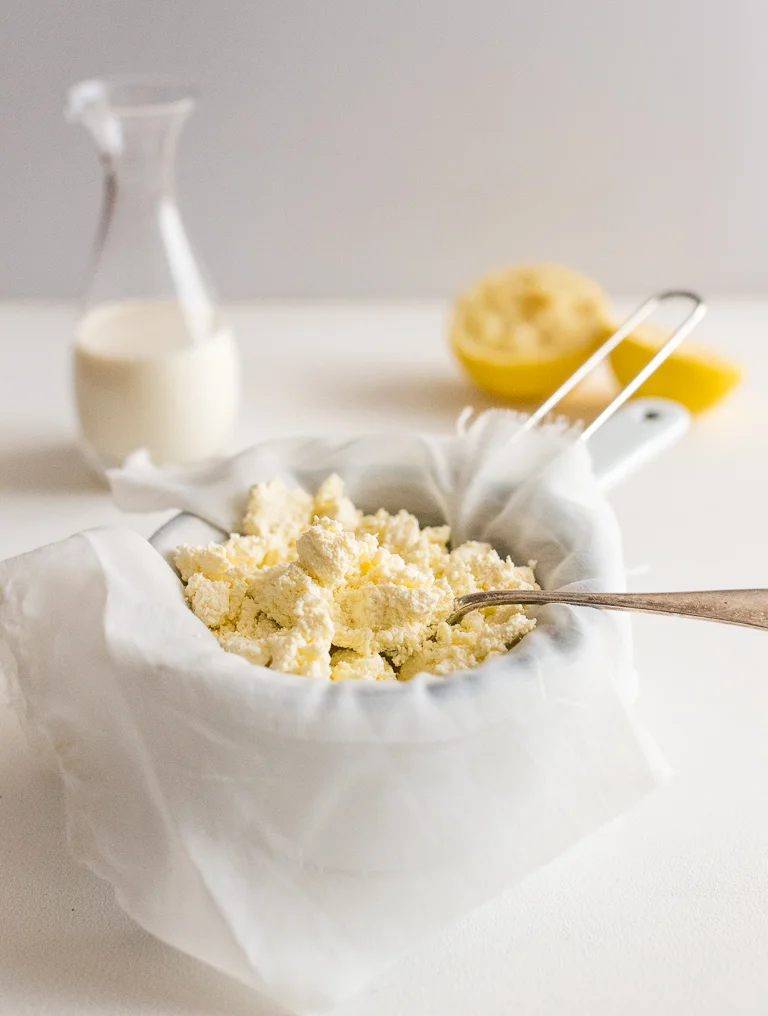
This rich, fresh ricotta-style cheese is made by curdling milk and cream with lemon juice, then draining the curds until they reach your preferred texture. It takes little active work and is useful for spreading, filling pasta or serving with fruit.
Ingredients
- 750 mlfull cream milk
- 250 mldouble cream
- 1/2 tspsea salt
- 2 tbsplemon juice
Instructions
- 1
Prepare the sieve
Line a sieve with muslin cloth and place it over a large, deep bowl.
- 2
Heat the dairy
Put the milk, cream and salt in a heavy-based pot. Bring to the boil, stirring constantly. As it just begins to boil, add the lemon juice, lower the heat and simmer for about 2 minutes.
- 3
Rest the curds
Take the pot off the heat and leave it at room temperature for 15 minutes.
- 4
Drain the mixture
Pour the mixture into the lined sieve and leave it to drain for 1 hour.
- 5
Chill the ricotta
Scrape the ricotta from the cloth into an airtight container and refrigerate for no longer than 3 days.
What is homemade ricotta?
Ricotta is an Italian fresh cheese; traditionally, its name refers to curds made by reheating whey left from cheesemaking. This home version uses milk and cream, so it is best thought of as a rich ricotta-style cheese.
The method is straightforward: lemon juice encourages the warm dairy to separate, and draining gathers the curds into a soft cheese. Cream gives this version a particularly lush texture.
Nutrition and macros by portion
The nutrition label shows one serving as written: 390 calories, 9g protein, 5g carbs, 38g fat.
| Portion | Adjustment | kcal | Protein | Carbs | Fat |
|---|---|---|---|---|---|
| Lighter | Use less double cream | 273 kcal | 6g | 4g | 27g |
| This serving | As written | 390 kcal | 9g | 5g | 38g |
| Hungry | Serve a larger portion | 585 kcal | 14g | 8g | 57g |
The milk and cream provide most of the energy and fat, while the milk also contributes protein and naturally occurring carbohydrate. The salt adds sodium, and draining means the exact nutrition of the finished cheese can vary. Serve a modest spoonful with vegetables, fruit or wholegrain toast to make a more rounded plate.
Why milk and cream work
Milk: full cream milk provides the base for the curds and keeps the cheese tasting milky.
Cream: double cream adds richness and makes the finished cheese softer and more luxurious than a milk-only version.
Lemon: the juice helps the dairy separate once it is hot. Add it as the mixture begins to boil, as directed, rather than at the start.
Watch the heat
Stirring as the milk and cream heat helps prevent them from catching on the base of the pot. Use a heavy-based pot and keep the mixture moving as it approaches the boil.
Once the lemon juice is added, reduce the heat and simmer for about 2 minutes. Avoid letting it continue to boil vigorously.
Drain to your preferred texture
The recipe drains the curds for 1 hour, producing a more gathered cheese than one served straight from the pot. The muslin should catch the curds while the whey drains into the bowl below.
Keep the sieve steady over a deep bowl and let the mixture drain undisturbed. The recipe does not specify a longer draining time, so follow the 1-hour rest for this version.
How to serve it
Spread the ricotta on toast, spoon it over roasted vegetables or use it as a filling for pasta. Its mild, creamy flavour also works with fruit or a drizzle of honey.
For a simple savoury serving, add black pepper or fresh herbs at the table. Keep additions separate if you want to store the ricotta plain.
Plan for the resting time
The method includes 15 minutes of resting after heating, followed by 1 hour of draining. Since the total time is not specified, allow for those stages as well as the time needed to heat the dairy.
Prepare the muslin-lined sieve and bowl before you start cooking. That way, they are ready when the mixture is taken off the heat.
Recipe notes & tips
- Use a pot with a heavy base to help the dairy heat evenly.
- Stir constantly as the milk and cream come to the boil.
- Set the lined sieve over a deep bowl before heating the ingredients.
- Add the lemon juice when the mixture just begins to boil.
- Keep the curds plain during storage and season individual portions when serving.
Variations
- Herb ricotta: Fold chopped fresh herbs into the cheese just before serving.
- Peppery finish: Add freshly ground black pepper to each portion at the table.
- Citrus note: Stir a little finely grated lemon zest through the finished ricotta.
- Sweet serving: Pair it with fruit and a drizzle of honey when serving.
- Garlic spread: Mix a small amount of finely grated garlic into a portion for serving.
Common mistakes to avoid
- Scorching the dairy: Stir constantly and use a heavy-based pot as it heats.
- Adding lemon too early: Wait until the mixture just begins to boil before adding it.
- Boiling hard after adding lemon: Reduce the heat and keep it to a gentle simmer for about 2 minutes.
- Skipping the resting time: Leave the pot at room temperature for 15 minutes before straining.
- Using a shallow bowl: Choose a large, deep bowl that can catch the draining whey.
How to store
Transfer the ricotta to an airtight container and keep it in the fridge for no longer than 3 days. This recipe gives no reheating instructions; serve it chilled or let a portion lose its chill briefly before serving.
Frequently asked questions
Is this traditional ricotta?
Traditional ricotta is generally made by reheating whey. This recipe uses milk, double cream and lemon juice to make a fresh ricotta-style cheese.
How long should I drain it?
The method specifies 1 hour. The finished texture will depend on how much liquid drains during that time.
What can I use instead of muslin?
Use a clean, fine-weave cloth that can hold the curds while letting liquid pass through. Line the sieve securely before pouring in the mixture.
Why did my mixture not separate?
The recipe relies on adding lemon juice as the dairy just begins to boil. Check that the mixture is hot and that the lemon juice is fresh; separation may not be immediate.
Can I freeze homemade ricotta?
Freezing is not covered in this recipe and may change the cheese's soft texture. For the best texture, keep it refrigerated and use it within 3 days.
How should I use the leftover whey?
The recipe does not include a use for the drained liquid. You can discard it or use it in another suitable kitchen recipe.
Cook it from the original
This recipe comes from heinstirred.com. Their page has the author’s own photos, notes and tips — the best place to cook it from.
Open the recipe on heinstirred.com