
German cheesecake with cream
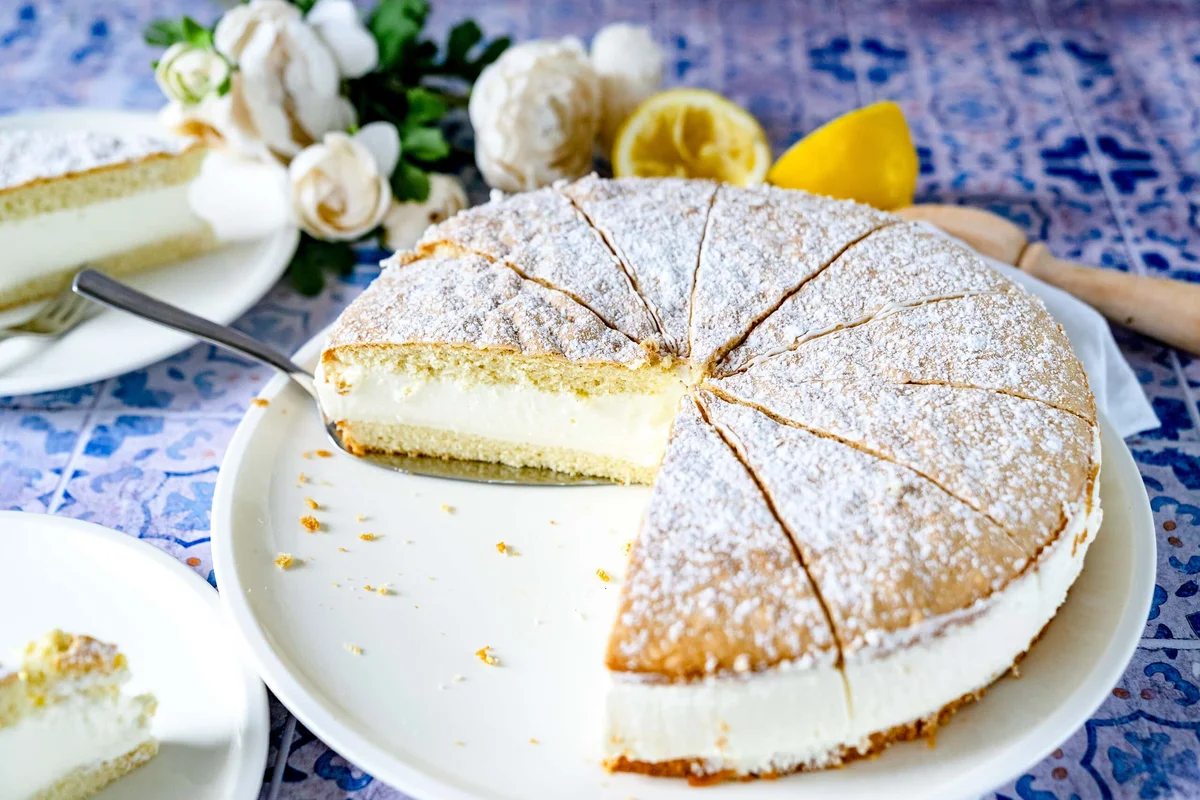
This German-style quark and cream cake has a light sponge base and a chilled, lemony filling set between two sponge layers. It takes time to cool and set, but most of that time is hands-off.
Ingredients
- 65 gbutter
- 4 (size M)eggs
- 150 gsugar
- 1 sachetvanilla sugar
- 100 gplain flour
- 100 gcornflour
- 2 level tspbaking powder (cream of tartar baking powder recommended)
- 2lemons
- 6 sheetswhite gelatine (or a substitute such as powdered gelatine or agar-agar, prepared according to its packet instructions)
- 500 gquark
- 3 tbspmilk
- 150 gicing sugar
- 500 gdouble cream
Instructions
- 1
Melt the butter
Melt the butter in a microwave or small saucepan, and preheat the oven to 180°C fan.
- 2
Make the sponge
Whisk the eggs and sugar until foamy using a hand mixer or stand mixer. Slowly add the melted butter, then mix in the flour, cornflour and baking powder.
- 3
Bake the sponge
Grease a 26 cm springform tin, add the batter and level it. Bake for 30 minutes, until golden brown; shorten or extend the baking time if needed.
- 4
Split the sponge
Remove the sponge from the oven and leave it to cool. Use a long bread knife or another cutting aid, such as a piece of thread, to cut it horizontally into a base and a top about 2 cm thick.
- 5
Set up the base
Put the base back into the springform tin. Alternatively, place it on a cake plate and fit a cake ring around it.
- 6
Prepare the gelatine
Halve and juice the lemons. Soak the gelatine in cold water for 10 minutes, then melt it in a microwave or small saucepan. If using a substitute, prepare it according to the packet instructions.
- 7
Mix the quark
Stir the quark with the milk, icing sugar and lemon juice. Take a little of this mixture and combine it with the melted gelatine, then mix that back into the full quark mixture.
- 8
Fold in the cream
Whip the cream until stiff, then gently fold it into the quark mixture.
- 9
Assemble and chill
Spoon the quark and cream mixture over the sponge base and smooth the surface. Carefully place the sponge top on it and chill for 3 hours.
- 10
Finish the cake
If you like, dust the cake with icing sugar before serving.
What is German cheesecake with cream?
This German cake, often known as Käse-Sahne-Torte, pairs a sponge cake with a chilled filling made from quark and whipped cream. Quark is a fresh dairy cheese commonly used in German baking, giving the filling a tangy, creamy character.
Here, lemon juice brightens the filling, while the sponge is split so it can encase the filling in a top and bottom layer. The result is a cake that is light in texture but rich enough for a celebration or afternoon coffee.
Nutrition and macros by portion
The nutrition label shows one serving as written: 408 calories, 9g protein, 44g carbs, 23g fat.
| Portion | Adjustment | kcal | Protein | Carbs | Fat |
|---|---|---|---|---|---|
| Lighter | Smaller cake slice | 286 kcal | 6g | 31g | 16g |
| This serving | As written | 408 kcal | 9g | 44g | 23g |
| Hungry | Larger cake slice | 612 kcal | 14g | 66g | 35g |
The sponge’s flour, cornflour and sugar provide much of the carbohydrate, while the butter and cream contribute most of the fat. Quark and eggs provide protein, with the cream also adding fat. Serve a slice with fresh fruit, or alongside a lighter meal, to balance the plate.
Building a light sponge
Whisked eggs: beat the eggs and sugar until foamy before adding the dry ingredients. This aeration helps the sponge rise and keeps it from becoming heavy.
Melted butter: add it gradually, as directed, so it blends into the batter. Mix the flour, cornflour and baking powder in without overworking the mixture.
Getting an even cut
Fully cooled: let the sponge cool before slicing, since a warm cake is more fragile and can crumble. A long bread knife or taut thread can help create an even horizontal cut.
Thin top: the recipe aims for a top and base about 2 cm thick. If the sponge is uneven, place the thicker layer on the bottom to give the filling a steady surface.
Setting the filling
Gelatine: soak the sheets in cold water for 10 minutes, then melt them as described. For a substitute, follow its packet directions rather than assuming it behaves exactly like sheet gelatine.
Quark mixture: first blend a small amount of the quark mixture with the melted gelatine, then stir that into the rest. This helps distribute the setting agent through the filling.
Keeping the texture smooth
Whipped cream: whip it until stiff, then fold it in gently so the filling keeps some of its air. Stop once the mixture looks evenly combined.
Sponge layers: spread the filling level before adding the top layer. Set the top down carefully rather than pressing it into the cream.
Allowing time to chill
The cake needs 3 hours in the fridge for the filling to set. Include cooling the sponge and chilling the assembled cake when planning the total preparation time.
For cleaner slices, use a sharp knife and wipe it between cuts. Keep the cake chilled until it is ready to serve.
Serving the cake
A light dusting of icing sugar is an optional finish, added just before serving. The cake also works well with fresh berries or a fruit compote alongside.
Because the filling is creamy and the sponge is sweet, serve modest slices with unsweetened tea or coffee, or pair them with fresh fruit for a brighter contrast.
Recipe notes & tips
- Use a 26 cm springform tin so the sponge layers and filling have the proportions intended by the recipe.
- Check the sponge for a golden-brown colour at 30 minutes and adjust the baking time if necessary.
- Cool the sponge completely before trying to split it.
- Use the gelatine substitute according to its own packet instructions.
- Fold the whipped cream into the quark mixture gently to preserve its airy texture.
- Chill the assembled cake for the full 3 hours before slicing.
Variations
- Berry side: serve with fresh berries for a tart, fruity contrast.
- Fruit topping: offer a fruit compote alongside rather than layering it into the filling.
- Citrus note: add a little finely grated lemon zest to the quark mixture for a more pronounced lemon aroma.
- Alternative setting agent: use agar-agar or another substitute, prepared according to its packet instructions.
- Simple finish: leave off the optional icing sugar for a less sweet topping.
Common mistakes to avoid
- Slicing warm sponge: it may crumble; let it cool completely first.
- Uneven sponge layers: use a long knife or thread and cut horizontally with a steady motion.
- Adding gelatine straight to the full mixture: it may not distribute evenly; first blend it with a little quark mixture.
- Overmixing the cream: the filling can lose its airy texture; fold the whipped cream in gently.
- Moving the cake too soon: the filling may not have set; chill it for the full 3 hours.
- Pressing down the top layer: it can squeeze out the filling; place it gently on the surface.
How to store
Keep the cake covered in the fridge and eat it within 2–3 days. It is best served chilled; freezing may affect the texture of the cream filling.
Frequently asked questions
Can I make the cake ahead?
Yes. The cake needs 3 hours of chilling, so you can prepare it earlier and keep it covered in the fridge until serving.
What can I use instead of sheet gelatine?
The recipe suggests powdered gelatine or agar-agar as alternatives. Prepare whichever you choose according to its packet instructions.
How do I know when the sponge is baked?
It should be golden brown after about 30 minutes. The recipe advises shortening or extending the bake as needed.
Can I use a cake ring instead of the springform tin?
Yes. The sponge base can go on a cake plate with a cake ring fitted around it, if you have one.
Why should I mix some quark mixture with the gelatine first?
Combining the melted gelatine with a little of the quark mixture before adding it to the rest helps it disperse through the filling.
Does the icing sugar topping have to be added?
No. It is optional and can be dusted over the cake just before serving.
Cook it from the original
This recipe comes from gernekochen.de. Their page has the author’s own photos, notes and tips — the best place to cook it from.
Open the recipe on gernekochen.de