
Zebra cheesecake
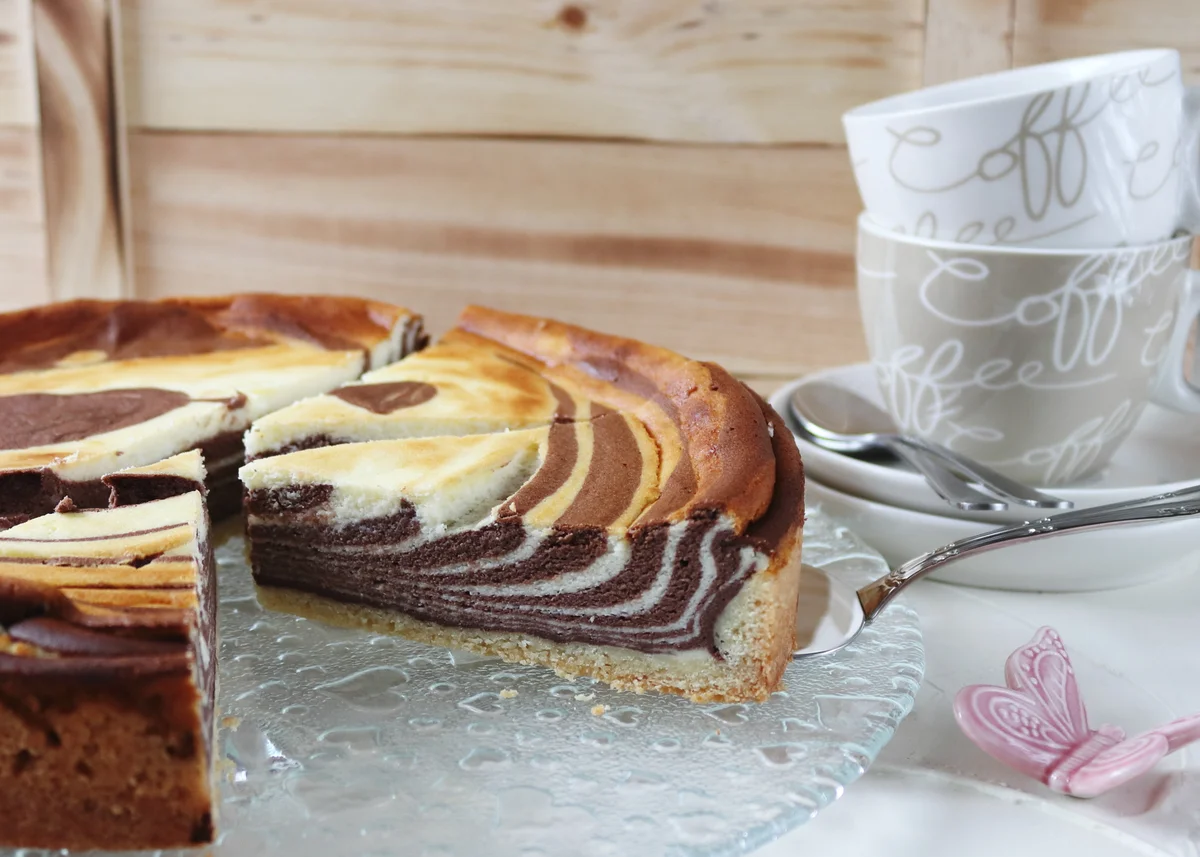
This German-style zebra cheesecake combines a shortcrust base with a creamy quark filling striped with vanilla and cocoa. Alternating the two mixtures in the centre creates the pattern with very little extra effort.
Ingredients
- 150 gplain flour
- 1/2 tspbaking powder
- 75 gsugar
- 1 packetvanilla sugar
- 1 pinchsalt
- 1egg
- 75 gbutter or margarine
- 3egg whites
- 200 gwhipping cream
- 750 gquark
- 120 gsugar
- 2 tsplemon extract
- 50 gcornflour (or 1 packet vanilla pudding powder)
- 3egg yolks
- 3 tbspbaking cocoa
Instructions
- 1
Preheat the oven
Heat the oven to 200°C, using conventional top and bottom heat.
- 2
Make the dough
Mix the flour and baking powder. Add the remaining dough ingredients and knead with a mixer fitted with dough hooks or a food processor until a dough forms.
- 3
Line the tin
Line the base of a springform tin with baking paper.
- 4
Press in the base
Roll out about two-thirds of the dough over the tin base with a small rolling pin, or press it down firmly with your hands.
- 5
Chill the remainder
Set the remaining dough aside in a cool place for now.
- 6
Pre-bake the base
Prick the dough several times with a fork. Bake it on the oven rack for about 10 minutes, then leave it to cool briefly.
- 7
Lower the heat
Reduce the oven temperature to 160°C, still using top and bottom heat.
- 8
Shape the edge
Roll the remaining dough into a rope and press it around the edge of the tin to make a rim about 3 cm high.
- 9
Whip whites and cream
Whip the egg whites until stiff, then whip the cream until stiff.
- 10
Mix the filling
Put the other filling ingredients, excluding the baking cocoa, in a bowl and whisk until smooth.
- 11
Fold in the whites
Gently fold in the whipped egg whites and cream, taking care not to incorporate too much air.
- 12
Make cocoa mixture
Transfer half of the quark mixture to a second bowl. Sift the baking cocoa over it and whisk until smooth.
- 13
Create the stripes
Add equal amounts of the two quark mixtures alternately to the centre of the tin, using about 2 tablespoons or more each time.
- 14
Settle the filling
Tap the tin lightly on the work surface a few times to help the filling level out.
- 15
Bake the cheesecake
Place the tin in the oven and bake at 160°C with top and bottom heat for 75 minutes.
- 16
Cool it slowly
Switch off the oven and let the cheesecake cool gradually inside, with the oven door slightly open.
- 17
Chill overnight
You can make the cheesecake the day before and leave it in the fridge overnight.
What is zebra cheesecake?
This is a German-style Käsekuchen: a baked cheesecake made with quark, a fresh dairy cheese that gives the filling its characteristic tang. Here, a pastry base and rim hold a mixture of quark, whipped cream and eggs.
The zebra effect comes from alternating plain and cocoa-flavoured portions in the centre of the tin. The pattern forms as each addition spreads out beneath the next.
Nutrition and macros by portion
The nutrition label shows one serving as written: 800 calories, 29g protein, 96g carbs, 35g fat.
| Portion | Adjustment | kcal | Protein | Carbs | Fat |
|---|---|---|---|---|---|
| Lighter | Smaller cheesecake slice | 560 kcal | 20g | 67g | 25g |
| This serving | As written | 800 kcal | 29g | 96g | 35g |
| Hungry | Larger cheesecake slice | 1200 kcal | 44g | 144g | 53g |
Most of the carbohydrates come from the flour and sugars, while butter or margarine and cream contribute much of the fat. Quark, eggs and cream supply protein, with the exact balance depending on the quark's fat content. Serve a slice with fresh fruit for a simple, fresh contrast.
The pastry base
Dough: The flour, baking powder, sugar, vanilla sugar, salt, egg and butter or margarine make a simple shortcrust. Pressing most of it into the base before baking helps it hold together beneath the moist filling.
Rim: Keep the reserved dough cool while the base pre-bakes, then roll it into a rope and press it around the edge. Aim for an even rim about 3 cm high.
A light quark filling
Quark: This is the main ingredient in the filling, with sugar and lemon extract adding sweetness and a fresh, tangy note. Cornflour helps the mixture set; vanilla pudding powder is given as an alternative.
Whipped ingredients: Stiff egg whites and cream add lightness. Fold them in gently so the mixture stays airy, rather than whisking them into the quark mixture.
How to make the zebra pattern
Alternating spoonfuls: Add equal quantities of each mixture to the centre, switching between plain and cocoa. Using around 2 tablespoons or more at a time keeps the process manageable.
Evening out: A few light taps on the work surface help the filling settle. Avoid stirring or swirling it afterwards, which would blur the distinct bands.
Baking and doneness
Two oven temperatures: The base begins at 200°C for about 10 minutes; the filled cheesecake then bakes at 160°C for 75 minutes. The recipe uses conventional top and bottom heat throughout.
Slow cooling: Once the oven is switched off, leave its door slightly open and let the cake cool gradually inside. This gives the filling time to settle before chilling.
Serving and planning ahead
Make-ahead: The recipe suggests preparing the cheesecake a day ahead and chilling it overnight. A well-chilled cake is easier to slice cleanly and shows the stripes clearly.
To serve: Pair a slice with fresh berries or fruit if you like a tart contrast. The cheesecake is rich enough to serve on its own as well.
Recipe notes & tips
- Use a springform tin so you can release the cheesecake without lifting it out.
- Let the pre-baked base cool briefly before adding the filling.
- Sift the cocoa into the reserved quark mixture to help avoid lumps.
- Keep the spoonfuls of plain and cocoa mixture similar in size for more regular stripes.
- Tap the tin gently rather than shaking it to settle the filling.
- Allow time for the cake to cool and chill before slicing.
Variations
- Vanilla pudding powder: Use 1 packet instead of the 50 g cornflour as suggested in the ingredient list.
- More lemon: Add a little extra lemon extract for a brighter citrus note.
- Fruit topping: Serve slices with fresh berries for a tart contrast.
- Margarine base: Use margarine instead of butter for the pastry dough.
- Cocoa contrast: Sift the cocoa carefully into the filling for an even chocolate-coloured half.
Common mistakes to avoid
- Skipping the pre-bake: Bake the base for about 10 minutes first so it has a head start beneath the filling.
- Warm reserved dough: Keep the remaining dough cool until you shape the rim, so it is easier to handle.
- Overmixing the folded filling: Fold in the whipped whites and cream gently to avoid knocking out too much air.
- Unequal spoonfuls: Use roughly equal amounts of each mixture so the pattern forms more evenly.
- Swirling the stripes: Add each portion to the centre without stirring, or the zebra bands may blur.
- Rushing the cooling: Leave the cake in the switched-off oven with the door slightly open, then chill it before slicing.
How to store
Once cooled, cover the cheesecake and keep it in the fridge; the recipe recommends making it the day before and chilling it overnight. For best texture, serve it cold. The recipe does not specify a storage duration beyond overnight.
Frequently asked questions
What is quark, and can I use another cheese?
Quark is a fresh dairy cheese commonly used in German cheesecakes. The recipe does not give a substitute, and another cheese may change the filling's texture and flavour.
Can I use vanilla pudding powder instead of cornflour?
Yes. The ingredient list gives 1 packet of vanilla pudding powder as an alternative to 50 g of cornflour.
Why is the base baked before the filling goes in?
The method pre-bakes the base for about 10 minutes so it has time to start setting before the moist filling is added.
How do I get the zebra pattern?
Add equal amounts of the plain and cocoa quark mixtures alternately to the centre of the tin. Do not stir the layers together.
How long does the cheesecake bake?
The filled cheesecake bakes for 75 minutes at 160°C with conventional top and bottom heat. The base is pre-baked separately for about 10 minutes at 200°C.
Can I make it the day before?
Yes. The method says it can be prepared a day ahead and chilled in the fridge overnight.
Cook it from the original
This recipe comes from katrinsbackblog.com. Their page has the author’s own photos, notes and tips — the best place to cook it from.
Open the recipe on katrinsbackblog.com