
Fluffy Waffles
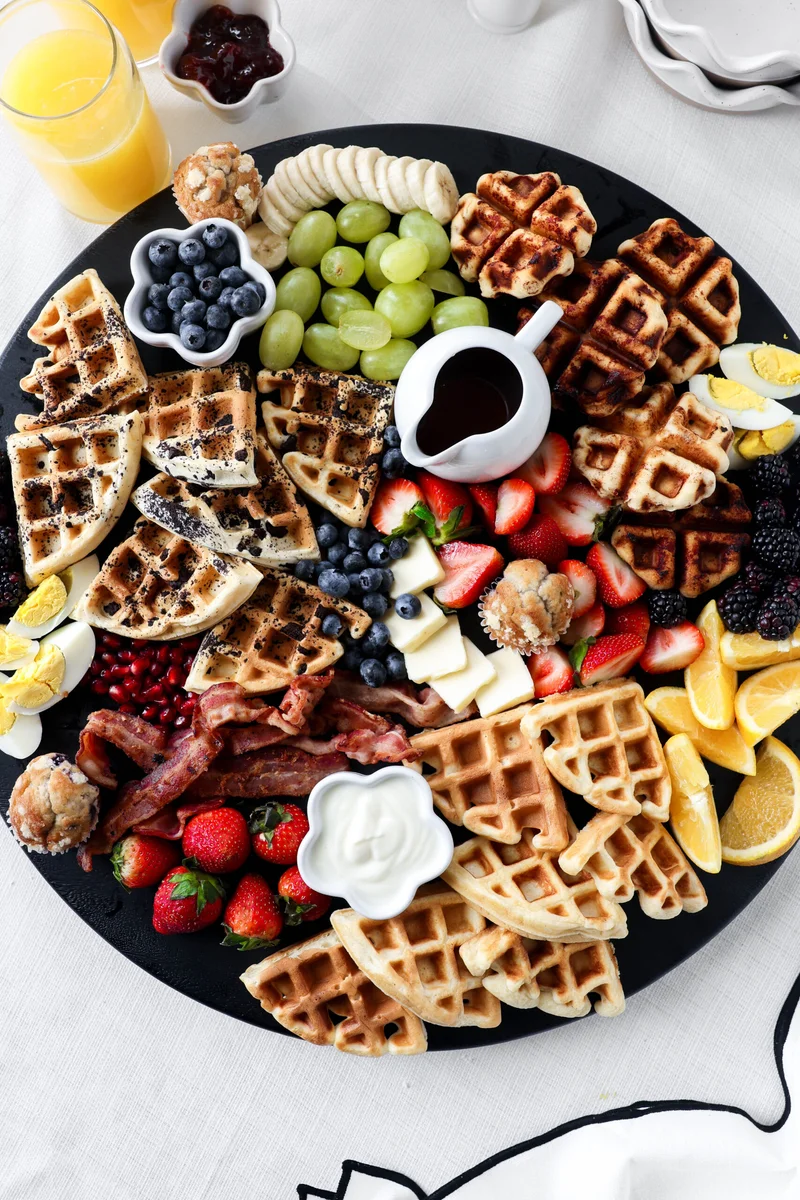
These fluffy waffles are made with a simple buttermilk batter, lifted with baking powder and baking soda and cooked until golden. Let the batter rest briefly, then serve the waffles warm with your favourite toppings.
Ingredients
- 190 g (1 1/2 cups)plain flour
- 240 g (1 cup)buttermilk or unsweetened yoghurt
- 1 mediumegg
- 25 g (2 tbsp)sugar
- 30 g (2 tbsp)water or milk
- 28 g (2 tbsp)melted butter or oil
- 10 g (2 tsp)baking powder
- 2 g (1/2 tsp)bicarbonate of soda
- 2 g (1/2 tsp)salt
- 5 ml (1 tsp), optionalvanilla extract
Instructions
- 1
Mix wet ingredients
In a large bowl, whisk together the buttermilk, water or milk, egg, melted butter or oil and vanilla extract, if using, until combined.
- 2
Add dry ingredients
Add the flour, sugar, baking powder, bicarbonate of soda and salt. Stir gently just until combined; a few lumps are fine, so avoid overmixing.
- 3
Rest the batter
Leave the batter to stand for 5–10 minutes so the flour can absorb the liquid and the raising agents can begin to work.
- 4
Heat the waffle maker
Heat the waffle maker fully. Lightly grease the plates with butter, oil or non-stick spray to help prevent sticking.
- 5
Cook the waffles
Pour about 120 ml (1/2 cup) of batter into the centre of the waffle maker, or about 60 ml (1/4 cup) for mini waffles. Close the lid and cook for 3–5 minutes, until golden brown.
- 6
Serve warm
Serve the waffles warm with your favourite toppings.
What are fluffy waffles?
Waffles are griddled batter cakes cooked in a patterned iron, which gives them crisp ridges and pockets for toppings. Although this recipe is categorised as African, no particular country or regional tradition is specified, so it is best understood as a straightforward home-style waffle recipe.
Buttermilk, a short rest and two raising agents help give this version a light interior. The outside turns golden in a properly heated waffle maker.
Nutrition and macros by portion
The nutrition label shows one serving as written: 148 calories, 5g protein, 22g carbs, 5g fat.
| Portion | Adjustment | kcal | Protein | Carbs | Fat |
|---|---|---|---|---|---|
| Lighter | Use less added fat | 104 kcal | 3g | 15g | 3g |
| This serving | As written | 148 kcal | 5g | 22g | 5g |
| Hungry | Add another waffle | 222 kcal | 7g | 33g | 7g |
The flour supplies most of the carbohydrates, while the butter or oil contributes much of the fat; the egg and dairy provide some protein. For a more balanced plate, serve a waffle with fruit and yoghurt rather than relying only on sweet toppings.
Choosing the dairy
Buttermilk: its mild tang pairs well with the bicarbonate of soda and gives the batter a pourable consistency.
Yoghurt: unsweetened yoghurt is the listed alternative; if it is especially thick, mix it thoroughly with the water or milk so the batter is easier to pour.
Mix gently
Wet ingredients: whisk the buttermilk, liquid, egg, fat and optional vanilla together first for an even base.
Dry ingredients: stir these in only until no large patches of flour remain. Small lumps are fine; continued mixing can make the cooked waffles less tender.
Why the batter rests
Resting: leave the mixed batter for 5–10 minutes, as directed. This gives the flour time to absorb liquid and allows the raising agents to start working.
Timing: use the rest to heat the waffle maker fully, so the batter can go onto hot plates as soon as it is ready.
Getting the texture right
Hot plates: wait until the waffle maker has fully heated, then grease it lightly to reduce sticking and encourage even cooking.
Doneness: cook each waffle for 3–5 minutes, checking for a golden-brown surface. Waffle makers vary, so use the colour as well as the suggested time.
Portions and serving
Standard waffles: use about 120 ml (1/2 cup) of batter per waffle. For mini waffles, use about 60 ml (1/4 cup).
Toppings: serve warm with your preferred toppings. Fresh fruit or yoghurt makes a fresh-tasting pairing, while syrup or honey adds extra sweetness.
Recipe notes & tips
- Measure the flour carefully so the batter does not become unnecessarily thick.
- Mix only until the dry ingredients are just incorporated.
- Allow the full 5–10-minute rest before cooking.
- Preheat the waffle maker completely for more even browning.
- Grease the plates lightly before adding the first portion of batter.
- Serve the waffles soon after cooking for the best contrast between crisp edges and a soft centre.
Variations
- Use yoghurt: choose unsweetened yoghurt instead of buttermilk for the listed alternative.
- Choose oil: use oil in place of melted butter for a different fat option.
- Add vanilla: include the optional vanilla extract for a gentle aroma.
- Make mini waffles: use about 60 ml (1/4 cup) of batter for each mini waffle.
- Top with fruit: add fresh fruit at serving for a bright, juicy contrast.
Common mistakes to avoid
- Overmixing: the waffles can turn less tender; stop stirring when the batter is just combined.
- Skipping the rest: the batter misses its 5–10-minute resting time; let it stand before cooking.
- Starting with a cool iron: the waffles may cook unevenly; wait for the waffle maker to heat fully.
- Using too much batter: it can overflow the plates; start with about 120 ml (1/2 cup), or 60 ml (1/4 cup) for mini waffles.
- Opening too soon: the waffle may not be golden yet; allow 3–5 minutes and check the colour.
How to store
Store cooled waffles in an airtight container in the fridge for up to 3 days. Reheat in a toaster or waffle maker until warmed through and crisp at the edges.
Frequently asked questions
Can I use yoghurt instead of buttermilk?
Yes, the recipe lists unsweetened yoghurt as an alternative. Mix it well with the water or milk before adding the dry ingredients.
Can I use water instead of milk?
Yes. The recipe allows either water or milk in the batter.
How much batter should I use for each waffle?
Use about 120 ml (1/2 cup) for a standard waffle or about 60 ml (1/4 cup) for a mini waffle.
How do I know when the waffles are done?
Cook for 3–5 minutes, until golden brown. The exact time can vary between waffle makers.
Can I make the batter ahead?
The method calls for a short 5–10-minute rest before cooking. For the fluffiest result, cook the batter after that rest rather than leaving it for an extended period.
Cook it from the original
This recipe comes from kikifoodies.com. Their page has the author’s own photos, notes and tips — the best place to cook it from.
Open the recipe on kikifoodies.com