
Matoke
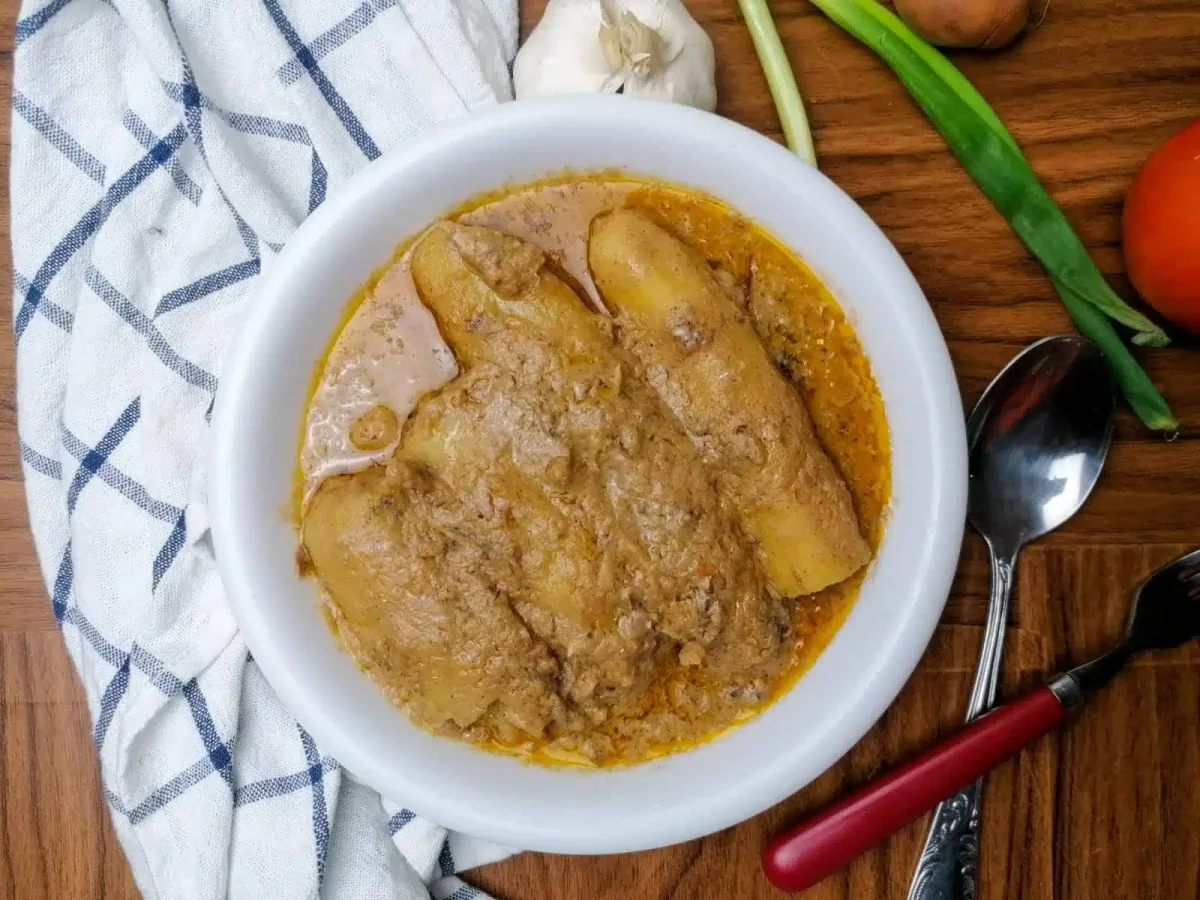
Matoke is a hearty stew of green bananas simmered with roasted peanut paste, tomatoes and smoked fish. It is a warming one-pot meal, with a rich, savoury sauce that you can make looser or thicker by adjusting the water.
Ingredients
- 3 tablespoons (about 45 g)roasted peanuts
- 6–8green bananas
- 5 clovesgarlic
- 1 piecefresh ginger
- 3tomatoes
- 4onions
- 3 smallsmoked fish
- ½smoked mackerel
- 1chilli
- 1 sprig (optional)chives
- to tastesalt and pepper
- 2 (optional)stock cubes
- to tasteoil
- 500 ml–1 lwater
Instructions
- 1
Prepare ingredients
Get the ingredients ready. If you do not have roasted peanuts in a tin, roast them and grind them into a smooth paste. Peel the green bananas.
- 2
Soak the fish
Clean the smoked fish and soak it in a little water for 15–20 minutes to soften. Keep the soaking water to use later.
- 3
Prepare aromatics
Peel the garlic, chop the onions and flake the smoked mackerel.
- 4
Crush tomatoes
Crush the tomatoes separately from the other seasonings.
- 5
Fry onion and fish
Heat a drizzle of oil in a large pot and fry the onions. After about 2 minutes, add the smoked fish, including the fish that was soaked. Do not add its soaking water yet.
- 6
Simmer tomatoes
After about 2 minutes, add the tomatoes and simmer for 5 minutes. Stir in the fish-soaking water. The amount of water you add now affects how much sauce the finished stew has, so add more if you prefer a looser sauce.
- 7
Cook the bananas
When the liquid starts to boil, add the peanut paste and stir well so it does not stick to the bottom. Add the bananas and the onions crushed earlier. Simmer over low heat for about 30–40 minutes, stirring every 10 minutes because the peanut paste can burn quickly. Add water if needed.
- 8
Season and serve
Season with salt and pepper, then serve hot.
What is matoke?
Matoke is a stew built around green bananas, which soften as they cook and absorb the flavour of the sauce. The dish is popular in parts of East and Central Africa, including Kenya and Cameroon, though recipes and names vary by place.
This version combines roasted peanuts with smoked fish for a thick, savoury sauce. The soaking liquid adds fish flavour, while the banana provides a substantial base for the pot.
Nutrition and macros by portion
The nutrition label shows one serving as written: 560 calories, 27g protein, 76g carbs, 19g fat.
| Portion | Adjustment | kcal | Protein | Carbs | Fat |
|---|---|---|---|---|---|
| Lighter | Use less peanut paste | 392 kcal | 19g | 53g | 13g |
| This serving | As written | 560 kcal | 27g | 76g | 19g |
| Hungry | Add another green banana | 840 kcal | 41g | 114g | 29g |
Green bananas provide most of the carbohydrate, while the peanuts and cooking oil contribute much of the fat. The smoked fish supplies protein, and its saltiness, along with any optional stock cubes, affects the sodium. Serve a moderate bowl with a green vegetable or salad to balance the plate.
The ingredients that shape the stew
Green bananas: Choose firm, unripe fruit rather than sweet yellow bananas. They hold their shape better through a long simmer and give the stew its characteristic starchy texture.
Peanut paste: Roasted peanuts ground to a smooth paste bring richness and help thicken the liquid. Stir it in thoroughly so it disperses rather than settling on the bottom.
Smoked fish: The small smoked fish and mackerel bring concentrated savoury flavour. Their soaking water is useful in the sauce, so set it aside rather than pouring it away.
Prepare the fish and aromatics
Soak the smoked fish for 15–20 minutes, just long enough to soften it for the stew. Clean it first, and keep the soaking water for the later cooking stage.
The method calls for chopped onions for frying and crushed onions to add with the bananas. Prepare the onions accordingly, along with the peeled garlic, crushed tomatoes and flaked mackerel.
Keep the peanut paste moving
Once the peanut paste goes into the boiling liquid, stir well to lift it from the base of the pot. It can scorch if left undisturbed, particularly as the stew thickens.
During the 30–40-minute simmer, stir every 10 minutes and add water if the sauce becomes too thick. A heavy-based pot can make it easier to maintain gentle, even heat.
Check texture and doneness
The bananas should be tender when pierced but still hold together rather than dissolving into the sauce. If they are still firm at the end of the stated cooking time, continue simmering gently and check them again.
The finished sauce can be thick or more generous, depending on how much water you add. Keep the heat low once the bananas are in, and stir carefully so they are less likely to break.
Adjust the sauce as it cooks
The recipe allows 500 ml to 1 litre of water, and the fish-soaking liquid contributes to that total. Add liquid gradually to suit the consistency you want rather than pouring it all in at once.
If the stew tightens before the bananas are tender, add a little more water and stir. If it seems thin near the end, let it simmer gently for a little longer, keeping an eye on the pot.
Serve it hot
Serve matoke hot as a substantial one-pot meal. Its bananas, peanut sauce and smoked fish make it filling on its own.
For a more balanced plate, pair a smaller portion with a simple green vegetable or fresh salad. Chives are listed as optional and can be added as a fresh garnish if you have them.
Recipe notes & tips
- Use firm, green bananas so they keep their shape during the long simmer.
- Keep the fish-soaking water and add it with the tomatoes as directed.
- Add the peanut paste once the liquid is boiling, then stir thoroughly.
- Stir the pot every 10 minutes during the 30–40-minute simmer.
- Add water in stages to control how much sauce the finished stew has.
Variations
- More heat: Add extra chilli if you prefer a hotter stew.
- Optional chives: Scatter chopped chives over the stew when serving.
- Stock cubes: Add the optional cubes with the seasoning, tasting before adding extra salt.
- Smoother sauce: Grind the roasted peanuts thoroughly before cooking.
- Thicker stew: Use less water, adding small amounts only if the pot gets too thick.
Common mistakes to avoid
- Using ripe bananas: They can turn soft and sweet; choose firm green bananas instead.
- Discarding the soaking water: It carries flavour from the smoked fish; reserve it for the stew.
- Adding peanut paste without stirring: It can stick and burn; stir it in well as soon as it is added.
- Leaving the pot unattended: Peanut paste can scorch; stir every 10 minutes over low heat.
- Adding all the water at once: The sauce may be thinner than intended; add it gradually to control the consistency.
How to store
Cool leftovers promptly, place them in a covered container and refrigerate for up to 3 days. Reheat gently in a pot until piping hot, adding a splash of water if the sauce has thickened; stir carefully to keep the bananas intact.
Frequently asked questions
Can I use ripe bananas instead?
Firm green bananas are best because they are less sweet and hold their shape through simmering. Ripe bananas are likely to become too soft.
How much water should I add?
The recipe gives a range of 500 ml to 1 litre, including the fish-soaking liquid. Add it gradually and stop when the sauce reaches your preferred consistency.
Do I need to soak the smoked fish?
Yes, the method calls for soaking it in a little water for 15–20 minutes to soften. Keep the soaking water to use in the stew.
How can I stop the peanut paste burning?
Stir it in thoroughly when the liquid begins to boil, then keep the stew at a low simmer. Stir every 10 minutes and add water if it gets too thick.
How do I know when the bananas are cooked?
Pierce one with a fork: it should be tender but still hold its shape. Continue simmering gently if it is still firm.
Can I make matoke ahead?
Yes, you can refrigerate it for up to 3 days and reheat it gently until piping hot. Add a little water if the sauce has thickened in storage.
Cook it from the original
This recipe comes from kelianfood.com. Their page has the author’s own photos, notes and tips — the best place to cook it from.
Open the recipe on kelianfood.com