
Dublin Coddle
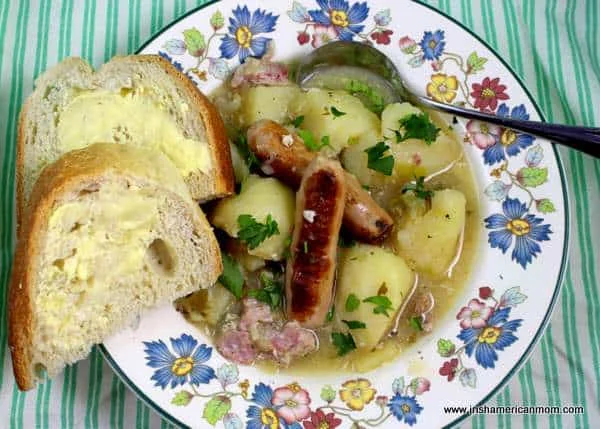
Dublin coddle is a comforting Irish stew of sausages, bacon, potatoes and onions, slowly simmered in broth. Layering the ingredients lets the potatoes soften and the meat flavour the cooking liquid, making it a satisfying one-pot meal.
Ingredients
- 8 slices, chopped into 2.5 cm piecesbacon
- 227 g (8 sausage links)Irish pork sausages
- 454 g, peeled and cut into 2.5 cm pieces (about 8 medium potatoes)potatoes
- 3 medium, sliced into ringsonions
- to seasonground black pepper
- 3 tablespoons, chopped and dividedparsley
- 480 mlchicken broth
- 1 teaspoonoil
Instructions
- 1
Brown the sausages
Heat 1 teaspoon of oil in a hot frying pan. Brown the sausages on every side without cooking them through, then set them aside.
- 2
Slice the onions
Peel the onions and cut them into rings, separating the rings as you go.
- 3
Cut the potatoes
Peel the potatoes and cut them into 2.5 cm cubes.
- 4
Chop the bacon
Cut the bacon into 2.5 cm pieces.
- 5
Layer the ingredients
In a Dutch oven, arrange half the onions, four sausages and half the bacon as the first layer.
- 6
Season the first layer
Season with ground black pepper and scatter half the parsley over the onions and meat.
- 7
Add the potatoes
Add a layer using half the potatoes.
- 8
Repeat and add broth
Repeat the layers of onion, sausage, bacon, parsley, ground black pepper and potatoes. Pour in the broth; it should come to within 2.5 cm of the top of the ingredients without covering them.
- 9
Simmer the coddle
Set the Dutch oven over high heat and bring the broth to a boil. Turn the heat to low and simmer for 2 hours.
- 10
Serve with bread
Serve the coddle in bowls, with crusty bread on the side.
What is Dublin coddle?
Coddle is an Irish stew associated with Dublin, traditionally built from sausages, rashers, potatoes and onions. Its name is often linked to the gentle simmering that cooks the ingredients together rather than browning them into a thick, heavily reduced stew.
This version starts by browning the sausages, then layers them with bacon, vegetables and broth. The covered-pot simmer gives the potatoes time to soften while the meat seasons the liquid.
Nutrition and macros by portion
The nutrition label shows one serving as written: 507 calories, 20g protein, 37g carbs, 32g fat.
| Portion | Adjustment | kcal | Protein | Carbs | Fat |
|---|---|---|---|---|---|
| Lighter | More onion, less bacon | 355 kcal | 14g | 26g | 22g |
| This serving | As written | 507 kcal | 20g | 37g | 32g |
| Hungry | Larger portion with bread | 761 kcal | 30g | 56g | 48g |
The potatoes provide most of the carbohydrates, while the sausages and bacon contribute much of the protein and fat. Serve a bowl with crusty bread as directed, or balance it with a side of green vegetables.
Choose the sausages and bacon
Sausages: Irish pork sausages suit the dish, but any mild pork sausage can work. Brown them all over first, stopping before they are cooked through.
Bacon: Cut the rashers into similarly sized pieces so they distribute through the layers. The bacon and sausages both contribute savoury flavour to the broth.
Build even layers
First layer: Spread half the onions across the base, then add four sausages and half the bacon. Season with pepper and some parsley before adding half the potatoes.
Second layer: Repeat the same sequence with the remaining ingredients. Keeping the layers fairly even helps the potatoes cook at a similar rate.
Keep the broth below the top
Liquid level: Add enough broth to come to within 2.5 cm of the top of the ingredients, without covering them. The ingredients release moisture as they cook, so the stew does not need to be submerged.
Gentle simmer: Bring the pot to the boil over high heat, then lower the heat. A quiet simmer for 2 hours is the key to tender potatoes and sausages without breaking the layers apart.
Check for doneness
Potatoes: They should be tender when pierced with a knife but still hold their shape. If they are not ready after the stated simmer, continue cooking gently until tender.
Sausages: Check that they are cooked through before serving. Avoid stirring vigorously, which can break up the potatoes and sausages.
Serve it simply
Bread: Crusty bread is served alongside the coddle to soak up the savoury broth. Ladle broth into each bowl along with plenty of the layered ingredients.
Freshness: Add the reserved parsley at the end if you have kept some aside. Its fresh flavour gives a little contrast to the rich stew.
Recipe notes & tips
- Brown the sausages on all sides, but do not cook them through before layering.
- Cut the potatoes and bacon into evenly sized pieces for more consistent cooking.
- Keep the broth below the top of the ingredients rather than submerging the layers.
- Once the pot is simmering, keep the heat low and steady for the full 2 hours.
- Serve carefully with a ladle so the potato and sausage layers stay mostly intact.
Variations
- Use vegetable stock: Swap the chicken broth for vegetable stock for a different flavour base.
- Add thyme: Include a little thyme among the layers for an aromatic note.
- Try cider: Replace some of the broth with cider for a gently fruity variation.
- Use smoked bacon: Choose smoked rashers for a stronger smoky flavour.
- Add carrots: Layer in sliced carrots with the potatoes for extra vegetables.
Common mistakes to avoid
- Cooking the sausages through first: Brown them only, as they will finish cooking in the stew.
- Covering the ingredients with broth: Keep the liquid below their top so the layers are not submerged.
- Boiling throughout: Lower the heat after the broth boils to maintain a gentle simmer.
- Cutting uneven potato pieces: Aim for 2.5 cm cubes so they cook at a similar pace.
- Stirring vigorously: Lift portions gently when serving to avoid breaking up the potatoes.
How to store
Cool leftovers promptly, then store them covered in the fridge for up to 3 days. Reheat gently in a saucepan until piping hot throughout, adding a splash of broth if needed.
Frequently asked questions
Can I make Dublin coddle ahead?
Yes. Cook it, cool it promptly and refrigerate it covered; reheat gently until piping hot throughout. The potatoes may soften further after storing.
Do I need to brown the sausages first?
Yes, the method starts by browning them on all sides. Stop before they are cooked through, as they finish cooking in the Dutch oven.
Should the broth cover the ingredients?
No. It should come to within about 2.5 cm of the top of the ingredients without covering them.
How do I know when the coddle is ready?
After the 2-hour simmer, the potatoes should be tender when pierced and the sausages cooked through. Keep the heat low so the stew simmers gently.
What can I serve with Dublin coddle?
Serve it in bowls with crusty bread on the side, as in the recipe. The bread is useful for soaking up the broth.
Cook it from the original
This recipe comes from irishamericanmom.com. Their page has the author’s own photos, notes and tips — the best place to cook it from.
Open the recipe on irishamericanmom.com