
Bihari Style Egg Curry Recipe
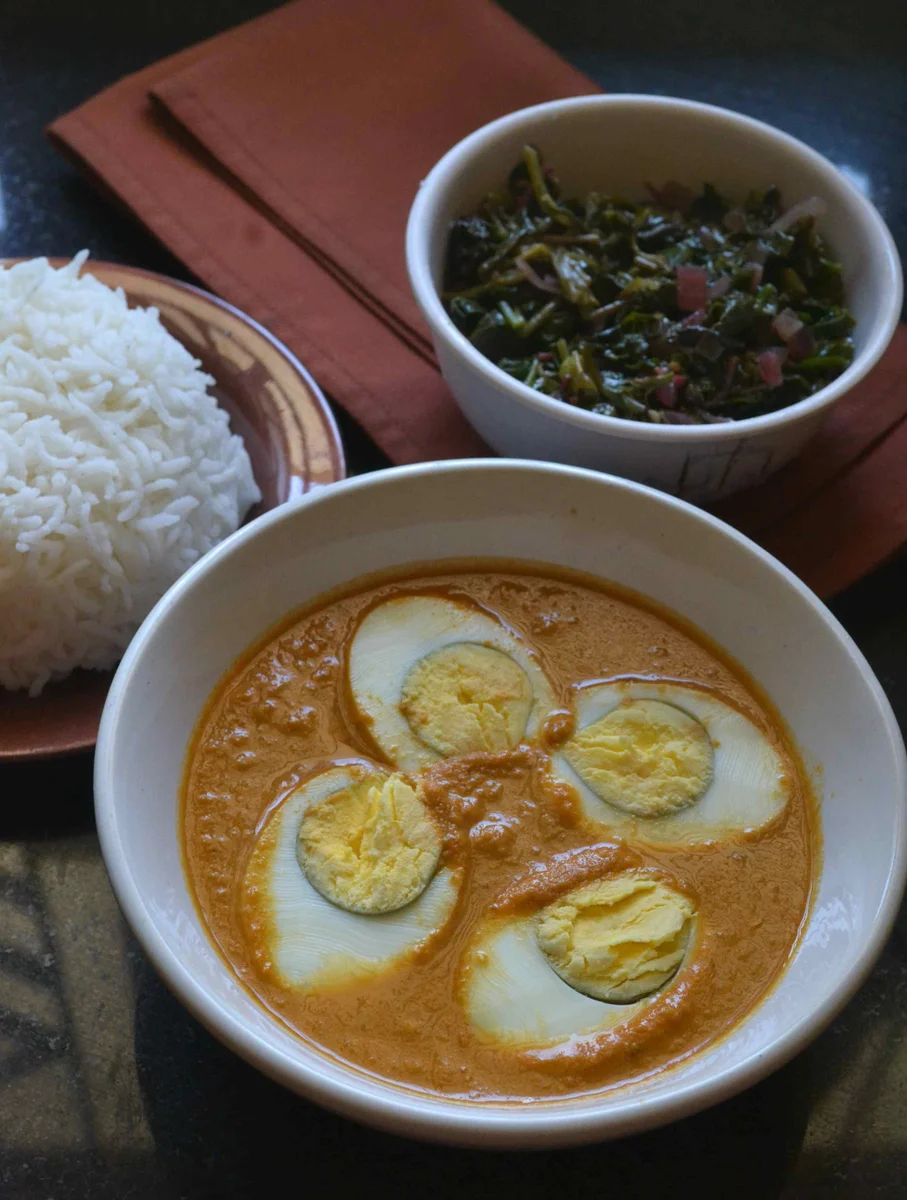
Bihari-style egg curry pairs boiled eggs with a freshly ground paste of onion, tomato, garlic and spices, simmered into a savoury gravy. It makes a warming meal for one, especially served with rice.
Ingredients
- 15 mlMustard oil
- 2.5 mlCumin seeds
- 2Eggs
- to tasteSalt
- 1Onion
- 1 smallTomato
- 2 clovesGarlic
- 5 mlCoriander seeds
- 5 mlMustard seeds
- 4, or to tasteRed chillies
Instructions
- 1
Grind the paste
Grind the onion, tomato, garlic, coriander seeds, mustard seeds and red chillies with a little water until smooth. Set the paste aside.
- 2
Boil the eggs
Boil the eggs, peel them and set aside.
- 3
Cook the spices
Heat the mustard oil in a pan and add the cumin seeds. Once they crackle, add the spice paste and cook over a low heat until it releases oil.
- 4
Make the gravy
Add enough water to give the mixture a gravy-like consistency, then season with salt to taste.
- 5
Add the eggs
When the gravy comes to the boil, halve the eggs and add them to the pan.
- 6
Finish and serve
Cook for a few minutes, then serve hot with rice.
What is Bihari-style egg curry?
Egg curry is a dish of boiled eggs warmed through in a spiced sauce, with versions found across the Indian subcontinent. This one takes its cue from Bihar, using mustard oil and a ground paste of aromatics and seeds.
Freshly grinding the paste gives the gravy its body and lets the eggs take on its flavour. Rice makes a simple partner for the savoury, chilli-led sauce.
Nutrition and macros by portion
The nutrition label shows one serving as written: 350 calories, 15g protein, 20g carbs, 25g fat.
| Portion | Adjustment | kcal | Protein | Carbs | Fat |
|---|---|---|---|---|---|
| Lighter | Use less mustard oil | 245 kcal | 11g | 14g | 18g |
| This serving | As written | 350 kcal | 15g | 20g | 25g |
| Hungry | Add more rice | 525 kcal | 23g | 30g | 38g |
The eggs provide most of the protein, while the onion, tomato and chillies contribute some carbohydrate. Mustard oil supplies most of the fat; rice, if served alongside, adds substantially to the meal’s carbohydrates. Pair it with a generous serving of vegetables for a more balanced plate.
Building the spice paste
Whole spices: coriander and mustard seeds are ground with onion, tomato, garlic and chillies, so the sauce starts with a concentrated mix rather than separate additions.
Water: add only a little while grinding, just enough to help the ingredients blend smoothly. More water goes into the pan later to adjust the gravy.
Cooking the paste
Low heat: after the cumin seeds crackle in the oil, add the paste and cook it gently. Stir as it cooks so it does not catch on the base of the pan.
Oil cue: the method’s signal that the paste is ready is when it releases oil. Let it reach this stage before thinning it with water.
Getting the gravy right
Consistency: add water gradually until the sauce is loose enough to coat the eggs but still has body. The recipe gives no fixed water quantity, so adjust by eye.
Seasoning: salt the gravy before adding the eggs, then taste it if needed. The chillies can be adjusted to suit your preferred level of heat.
Adding the eggs
Boiled eggs: peel them before they go into the gravy, then cut them in half as directed. The cut sides are exposed to the sauce as the curry finishes cooking.
Brief simmer: the eggs only need a few minutes in the hot gravy. Avoid prolonged cooking, which can make their texture firmer.
Serving the curry
Rice: serve the curry hot with rice to catch the gravy. Plain steamed rice keeps the focus on the mustard, cumin and chilli flavours.
For a fuller plate, add a vegetable side such as greens or a simple salad. Serve the curry soon after cooking while the sauce is hot.
Recipe notes & tips
- Grind the paste until smooth so it makes an even gravy.
- Use a low heat while cooking the paste and stir it regularly.
- Add water a little at a time to control the gravy’s consistency.
- Adjust the number of chillies to your taste.
- Add the halved eggs only once the gravy has come to the boil.
Variations
- Milder curry: use fewer chillies for less heat.
- More sauce: add extra water gradually and adjust the salt.
- Whole-spice finish: reserve a pinch of cumin seeds to add with the first lot.
- Vegetable side: serve with cooked greens alongside the rice.
- Rice swap: serve with flatbread instead of rice.
Common mistakes to avoid
- Adding too much water at once: the gravy can become thin; pour it in gradually.
- Cooking the paste over high heat: it may catch on the pan; keep the heat low and stir.
- Stopping before the paste releases oil: give it time to cook gently to the stated cue.
- Leaving the eggs whole: halve them as directed so the gravy reaches their cut surfaces.
- Adding the eggs too early: wait until the gravy boils, then simmer them for only a few minutes.
How to store
Cool leftovers promptly and refrigerate in a covered container for up to 2 days. Reheat gently in a pan until piping hot, adding a splash of water if the gravy has thickened; rice is best stored separately.
Frequently asked questions
Can I make the spice paste ahead?
Yes. Grind it ahead and keep it covered in the fridge, then cook it as directed. For best results, use it within a day.
How do I know when the paste is cooked?
The method’s cue is that it releases oil. Keep the heat low and stir while it cooks.
How much water should I add?
The recipe does not specify a quantity. Add it gradually until the sauce reaches a gravy-like consistency.
Can I use fewer chillies?
Yes. The recipe allows for adjusting the four chillies to taste, so use fewer for a milder curry.
What should I serve with egg curry?
Serve it hot with rice, as the recipe suggests. Flatbread is another practical option for scooping up the gravy.
Cook it from the original
This recipe comes from gayathriscookspot.com. Their page has the author’s own photos, notes and tips — the best place to cook it from.
Open the recipe on gayathriscookspot.com