
Chicken kedjenou
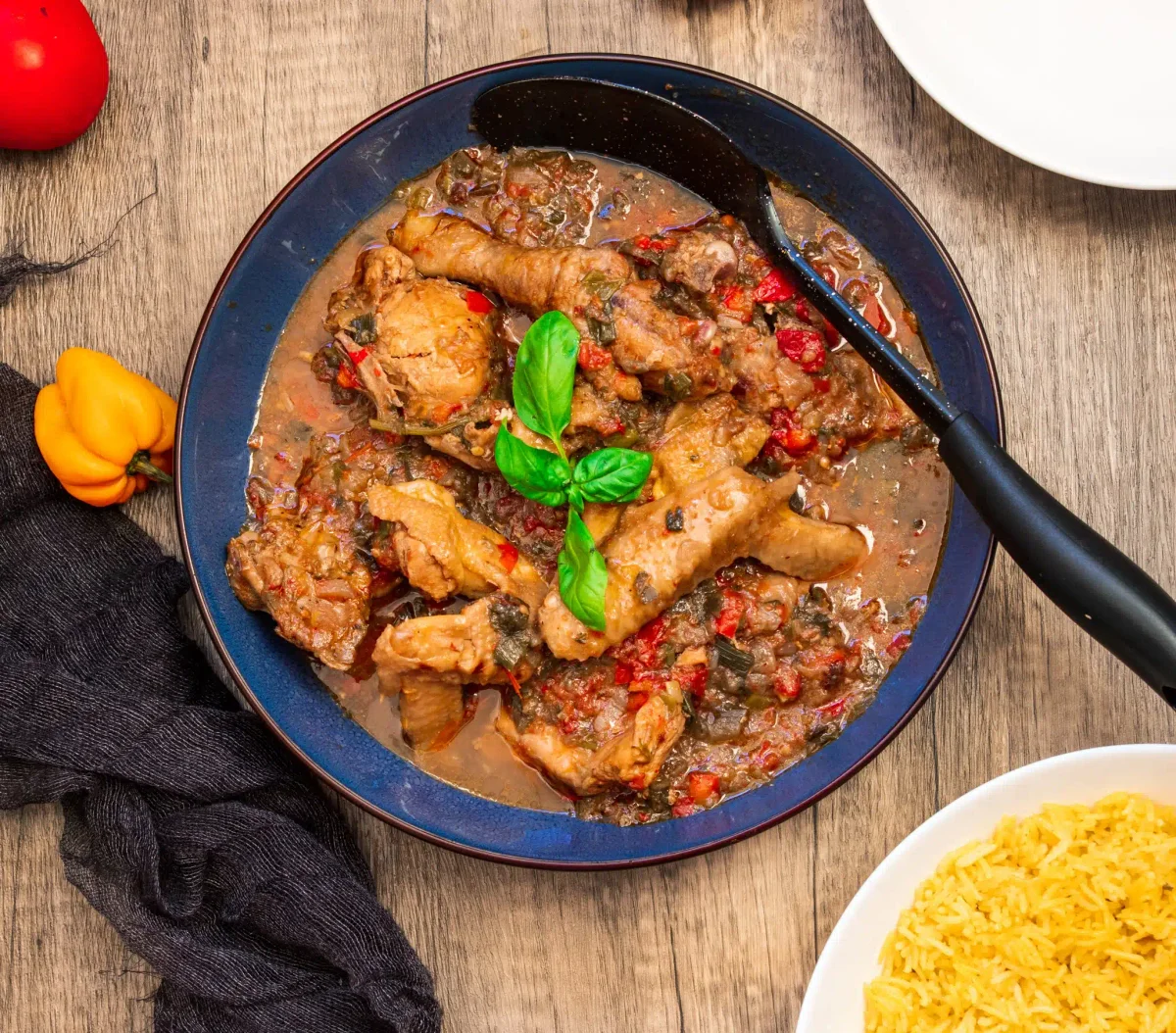
Kedjenou is an Ivorian chicken stew in which chicken and vegetables cook together in a covered pot, without added water. It is a straightforward, gently cooked dish to serve with rice or attiéké.
Ingredients
- 1whole chicken, cleaned and cut into pieces
- 5tomatoes
- 1purple aubergine
- 1 tsp (or 3 cloves)garlic powder (or finely chopped garlic)
- 1 tspginger
- 3onions
- 2spring onions or chives
- 1fresh red or green pepper
- 1 optional sprigparsley
- 1chilli
- to tastesalt and pepper
- 2bay leaves
Instructions
- 1
Prepare the chicken
Clean the chicken and cut it into pieces.
- 2
Chop the vegetables
Wash all the vegetables, then cut them up.
- 3
Layer the pot
Arrange the chicken in a large pot or casserole first, then add all the chopped vegetables.
- 4
Season the stew
Add salt and pepper, then add the chilli.
- 5
Cook covered
Cover the pot and cook over a low heat for 20 minutes.
- 6
Stir occasionally
After that, stir the pot every 10 minutes to help prevent the chicken sticking to the bottom as it finishes cooking.
- 7
Serve the stew
Serve the sauce with plain rice or attiéké.
What is kedjenou?
Kedjenou is a chicken stew associated with Côte d’Ivoire. Chicken and vegetables are cooked together in a covered pot, relying on the moisture they release rather than added water.
This version keeps the preparation simple: layer the chicken and vegetables, season them, and let them cook gently. The result is served with rice or attiéké, a side made from cassava.
Nutrition and macros by portion
The nutrition label shows one serving as written: 387 calories, 0g protein, 0g carbs, 0g fat.
| Portion | Adjustment | kcal | Protein | Carbs | Fat |
|---|---|---|---|---|---|
| Lighter | More vegetables, less chicken | 271 kcal | 0g | 0g | 0g |
| This serving | As written | 387 kcal | 0g | 0g | 0g |
| Hungry | Larger portion with rice | 581 kcal | 0g | 0g | 0g |
The chicken provides most of the protein, while the rice or attiéké served alongside supplies most of the plate’s carbohydrates. The chicken also contributes fat; serve a generous amount of vegetables and a measured portion of the side to balance the meal.
Why cook it without water?
Vegetables such as tomatoes and aubergine release moisture as they soften. Keeping the pot covered helps that liquid stay in the stew and form its sauce.
Use a pot with a well-fitting lid and keep the heat low. The recipe does not call for added water.
Preparing the vegetables
Even pieces: cut the vegetables into similar-sized pieces so they soften at a similar pace. Chop the onions, spring onions or chives, and pepper before layering them over the chicken.
Aubergine: wash and cut the purple aubergine along with the other vegetables. There is no need to cook it separately.
Keeping the chicken from sticking
First stage: leave the covered pot undisturbed for the initial 20 minutes of low-heat cooking.
Afterwards: stir every 10 minutes while the stew continues to cook. Move the pieces gently so the chicken does not catch on the bottom.
Checking the cooking
The recipe gives a total time of 60 minutes and specifies the first 20 minutes, followed by stirring every 10 minutes during the remaining cooking. Keep the heat low throughout.
Check that the chicken is cooked through before serving. If the pieces are large, allow them to finish cooking before bringing the dish to the table.
Choosing a side
Rice: plain rice is a simple accompaniment that takes up the stew’s sauce.
Attiéké: serve the chicken and vegetables with attiéké, as suggested in the recipe. Keep the side separate until serving so you can spoon the sauce over it.
Recipe notes & tips
- Use a pot with a lid that fits well to keep the vegetables’ moisture in.
- Keep the heat low so the chicken and vegetables cook gently.
- Cut the vegetables into similar-sized pieces for more even softening.
- Stir gently every 10 minutes after the first 20 minutes to help stop the chicken sticking.
- Taste the sauce before serving and adjust the salt and pepper if needed.
Variations
- Use fresh garlic: replace the garlic powder with 3 finely chopped cloves, as suggested in the ingredient list.
- Choose your pepper: use either a red or green fresh pepper.
- Swap the herbs: use chives instead of spring onions.
- Adjust the chilli: use less or more of the single chilli to suit your preference.
- Add parsley: include the optional sprig for an extra herbal note.
Common mistakes to avoid
- Adding water: the recipe relies on moisture from the ingredients, so keep the lid on instead.
- Cooking over high heat: the chicken may catch before the vegetables release enough moisture; keep the heat low.
- Skipping the stirring: once the first 20 minutes have passed, stir every 10 minutes to help prevent sticking.
- Stirring too roughly: move the ingredients gently to keep the chicken pieces intact.
- Serving before the chicken is cooked through: check the largest pieces and continue cooking if needed.
How to store
Refrigerate leftovers in a covered container once cooled and use within 3 days. Reheat gently in a covered pot until piping hot, stirring occasionally; add a small splash of water only if the sauce needs loosening.
Frequently asked questions
Do I need to add water?
No. The recipe is designed to cook the chicken with the vegetables without adding water, using the moisture released as they cook.
How long does kedjenou take to cook?
The stated total time is 60 minutes. The method specifies 20 minutes covered over low heat, followed by stirring every 10 minutes as it continues cooking.
Can I use garlic cloves instead of garlic powder?
Yes. The ingredient list gives 3 finely chopped garlic cloves as an alternative to 1 teaspoon of garlic powder.
What can I serve with kedjenou?
Serve it with plain rice or attiéké, as suggested in the recipe.
How can I tell when the chicken is ready?
Check the thickest pieces to make sure they are cooked through before serving. If they need more time, keep the pot covered over low heat and continue cooking.
Cook it from the original
This recipe comes from kelianfood.com. Their page has the author’s own photos, notes and tips — the best place to cook it from.
Open the recipe on kelianfood.com