
Buttery Whole Wheat Sourdough Cinnamon Rolls Recipe
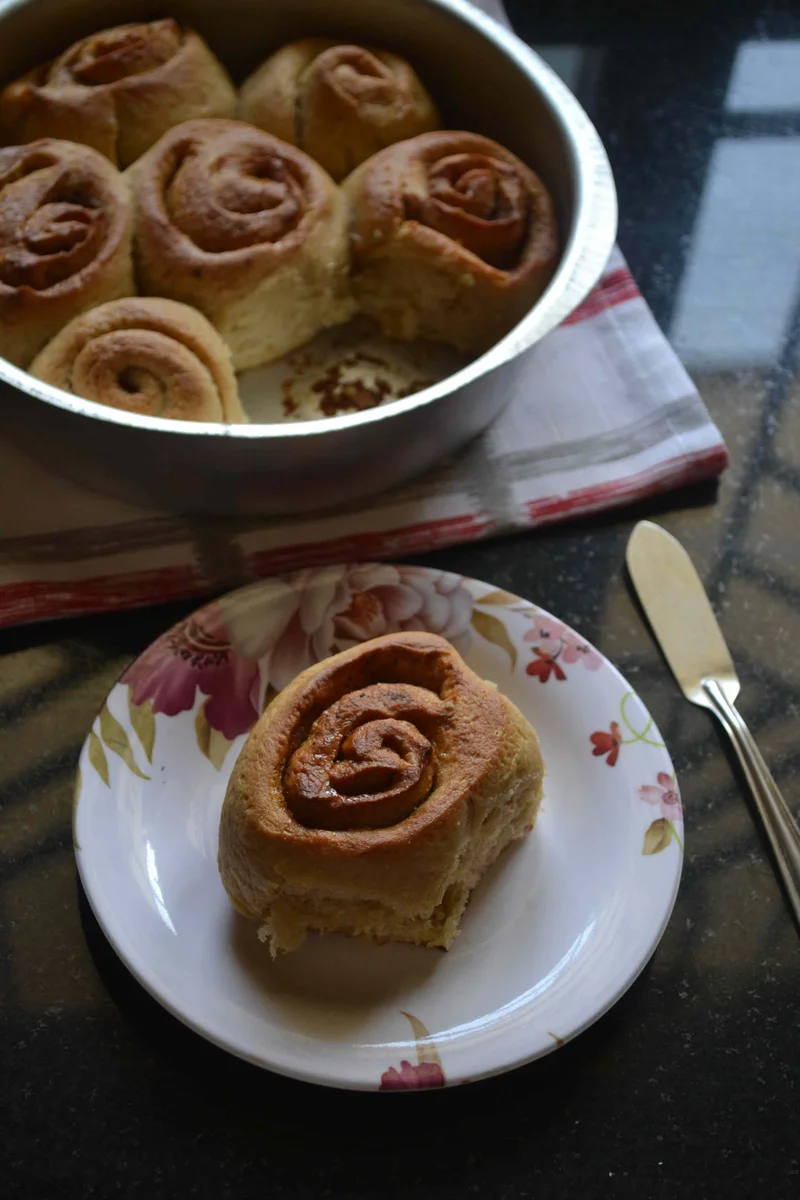
These whole wheat sourdough cinnamon rolls are soft, buttery swirls with a lightly tangy dough and a cinnamon-sugar centre. The long, cool starter rest takes planning, but the hands-on steps are simple and the rolls are lovely served warm.
Ingredients
- 80 g (1/3 cup)sourdough starter
- 60 g (1/2 cup)whole wheat flour (atta)
- 45–60 ml (3–4 tbsp)water
- 120 g (1 cup)whole wheat flour
- 2.5 g (1/2 tsp)salt
- 25 g (2 tbsp)brown sugar
- 28 g (2 tbsp)butter
- 60 ml (1/4 cup)water or milk
- 14 g (1 tbsp)melted butter
- 25–38 g (2–3 tbsp)cinnamon sugar
Instructions
- 1
Mix the starter
Stir the bubbly sourdough starter with the water and whole wheat flour until you have a sticky dough.
- 2
Rest the mixture
Cover the bowl and leave the mixture to rest for 2 hours.
- 3
Chill overnight
Place the covered bowl in the refrigerator overnight.
- 4
Warm the starter
Take the bowl out of the refrigerator and leave it on the counter for 4 hours.
- 5
Add dough ingredients
Add the butter, brown sugar, salt, water or milk, and whole wheat flour to the same bowl.
- 6
Mix the dough
Mix everything together to make a shiny, soft dough.
- 7
Rest the dough
Cover the bowl and leave the dough for 30 minutes.
- 8
Knead until smooth
Turn the dough out onto the counter and knead for 5 minutes, until it is smooth and elastic.
- 9
Leave to prove
Put the dough in an oiled bowl and turn it to coat it with oil. Cover and leave it until doubled in size.
- 10
Allow time to rise
The first prove may take 2–4 hours, depending on the room temperature.
- 11
Shape a rectangle
Turn the proved dough out onto the counter and press it into a rectangle.
- 12
Add the filling
Spread the melted butter over the dough, then sprinkle the cinnamon sugar evenly across it.
- 13
Roll the dough
Starting at a shorter side, roll the rectangle into a tight log.
- 14
Slice the log
Cut the log into 7 equal portions.
- 15
Arrange the rolls
Grease a 18 cm (7-inch) cake tin and arrange the rolls inside.
- 16
Prove once more
Cover the tin and leave the rolls to prove for 30 minutes.
- 17
Heat the oven
While the rolls prove, preheat the oven to 250°C.
- 18
Brush and bake
Brush the rolls with milk, then bake in the preheated oven for 25 minutes.
- 19
Serve the rolls
Remove the rolls from the oven and serve them warm.
What are sourdough cinnamon rolls?
Cinnamon rolls are rolled sweet dough filled with butter and spiced sugar, then sliced and baked together. This version uses a sourdough starter and whole wheat flour, giving the dough a gently tangy flavour and a heartier character.
The recipe uses a firm starter mixture that rests overnight in the refrigerator before being mixed into the final dough. That long rest is what makes this version different from a quick, yeast-raised roll.
Nutrition and macros by portion
The nutrition label shows one serving as written: 170 calories, 5g protein, 29g carbs, 6g fat.
| Portion | Adjustment | kcal | Protein | Carbs | Fat |
|---|---|---|---|---|---|
| Lighter | Use less filling butter | 119 kcal | 4g | 20g | 4g |
| This serving | As written | 170 kcal | 5g | 29g | 6g |
| Hungry | Serve two rolls | 255 kcal | 8g | 44g | 9g |
The flour and cinnamon sugar provide most of the carbohydrates, while butter contributes much of the fat; the flour and starter supply some protein. Pair a roll with plain yoghurt or eggs and fresh fruit if you want a more balanced plate.
Building the starter mixture
Bubbly starter: use it when it is active and showing bubbles, so it can help the dough rise. The initial mixture should be sticky rather than stiff.
Overnight chill: the recipe calls for a night in the refrigerator, followed by 4 hours on the counter. Allow for that schedule before you plan to shape and bake.
Mixing and kneading the dough
Liquid choice: water or milk both work in the dough as written. Add the measured amount with the butter, sugar, salt and flour, then mix until the dough looks soft and shiny.
Kneading: after the 30-minute rest, knead for 5 minutes and look for a smooth, elastic feel. The dough should hold together rather than remain ragged.
Getting the rise right
First prove: leave the dough covered in an oiled bowl until it has doubled. The recipe allows 2–4 hours for this stage, so use the dough's size as your cue rather than relying only on the clock.
Final prove: once the rolls are in the tin, cover them and give them 30 minutes. They should have time to puff before they go into the hot oven.
Rolling and filling
Even filling: spread the melted butter across the rectangle and distribute the cinnamon sugar as evenly as possible. This helps each slice get a similar swirl.
Tight log: roll from a shorter side, keeping the dough snug without squeezing out the filling. Cut the log into 7 equal pieces so they fit the tin consistently.
Baking and serving
Hot oven: preheat to 250°C as directed and bake for 25 minutes. Keep an eye on the surface towards the end, as the high temperature can colour the rolls quickly.
Warm to serve: the rolls are intended to be served straight from the oven once they are safe to handle. They make a sweet breakfast or a treat alongside tea or coffee.
Recipe notes & tips
- Measure the flour by weight for a more consistent dough.
- Let the starter mixture complete both rests before adding the remaining dough ingredients.
- Use the doubled-in-size cue for the first prove, since room temperature affects the timing.
- Roll the dough from the shorter side to make seven compact portions.
- Grease the cake tin well so the baked rolls are easier to lift out.
- Have the oven fully preheated before the final prove is finished.
Variations
- Use milk: choose milk instead of water in the dough for a richer flavour.
- Add spice: mix a little ground cardamom into the cinnamon sugar.
- Add nuts: scatter chopped walnuts over the filling before rolling.
- Change the sugar: use a different type of cinnamon sugar if that is what you have to hand.
- Make smaller rolls: cut the log into more portions and use a suitably sized tin.
Common mistakes to avoid
- Rushing the starter: give it the overnight chill and 4 hours on the counter as directed.
- Adding too much flour: keep the dough soft and slightly sticky rather than making it stiff.
- Skipping the first prove: wait until the dough has doubled before shaping.
- Uneven filling: spread the butter and cinnamon sugar across the full rectangle.
- Loose rolling: roll the dough snugly from the shorter side to help the slices hold their shape.
- Crowding the tin: arrange the 7 portions with room to puff during the final prove.
How to store
Store cooled rolls in an airtight container at room temperature for up to 2 days, or refrigerate for up to 4 days. Reheat briefly in the oven or microwave until warm; the rolls are best on the day they are baked.
Frequently asked questions
Can I prepare the starter mixture ahead?
Yes. The method already includes an overnight refrigerator rest. Bring it back to room temperature on the counter for 4 hours before making the dough.
How do I know when the first prove is finished?
The dough should have doubled in size. Depending on the room temperature, the recipe allows 2–4 hours.
Can I use milk instead of water in the dough?
Yes. The ingredient list gives water or milk as alternatives for the 60 ml added to the dough.
What size tin should I use?
The method specifies a greased 18 cm (7-inch) cake tin for the 7 rolls.
Why are my rolls not rising much?
The starter may not have been bubbly and active, or the dough may need more time in a cool room. Use the rise cues in the method, especially the doubled-size cue for the first prove.
Can I freeze the baked rolls?
Yes. Once fully cooled, wrap them well and freeze. Defrost, then warm them in the oven or microwave before serving.
Cook it from the original
This recipe comes from gayathriscookspot.com. Their page has the author’s own photos, notes and tips — the best place to cook it from.
Open the recipe on gayathriscookspot.com