
Foolproof Thanksgiving Turkey Recipe
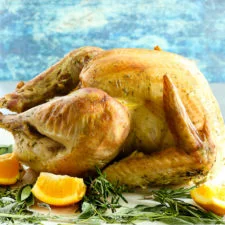
This roast turkey is dry-brined with salt, baking powder and dried herbs, then cooked with butter, stock, fruit and aromatics. The long, hands-off brine and gradual roasting make it a practical centrepiece for a Thanksgiving meal.
Ingredients
- 1 (6.8 kg; 15 lb)fresh or completely thawed turkey
- 45 ml (3 tablespoons)kosher salt (do not substitute fine salt)
- 15 ml (3 teaspoons)baking powder
- 10 ml (2 teaspoons)dried rosemary
- 10 ml (2 teaspoons)dried parsley
- 10 ml (2 teaspoons)dried thyme
- 3carrots, chopped into large pieces, divided
- 3celery stalks, cut into pieces, divided
- 6whole, peeled garlic cloves, divided
- 1 largeonion, cut into large chunks
- 3 sprigs eachfresh rosemary, sage and thyme
- 1apple, cut into wedges
- 1orange, cut into wedges
- 113 g (1 stick; ½ cup)unsalted butter, sliced
- 1.2 litres (5 cups), dividedchicken stock
Instructions
- 1
Mix the brine
One to three days before cooking, mix the dry-brine ingredients together in a small bowl and set aside.
- 2
Prepare the turkey
Remove the giblets and neck from the cavity and save them for another use. Remove or discard any plastic or metal cages and pop-up thermometers.
- 3
Dry and season
Pat the turkey dry with paper towels and place it on a rimmed baking sheet or in a roasting pan. Sprinkle the brine mixture over the inside and outside of the bird.
- 4
Refrigerate uncovered
Refrigerate the turkey uncovered for 1–3 days.
- 5
Preheat the oven
Heat the oven to 150°C (300°F).
- 6
Prepare the pan
Put one of the chopped carrots, one celery stalk, 2 garlic cloves, the onion, and the sage, rosemary and thyme in the bottom of a large roasting pan.
- 7
Fill the turkey
Set the turkey on top of the vegetables and herbs. Put the remaining carrots, celery and garlic, along with the apple and orange wedges, inside the cavity. Tie the legs together with kitchen twine, then arrange the butter slices around the outside of the bird so they stick.
- 8
Roast and baste
Roast for 45 minutes, then pour half the chicken stock over the turkey. Roast for another 45 minutes and pour over the remaining stock. Roast for a further 45 minutes and baste with the pan juices. Roast for another 45 minutes and baste again. Continue cooking until the internal temperature reaches 74°C (165°F). If the skin starts to brown too much, cover the turkey loosely with foil.
- 9
Rest before carving
Remove the turkey from the oven and let it rest for at least 10 minutes before carving.
What is a Thanksgiving turkey?
Roast turkey is a traditional centrepiece of Thanksgiving in the United States, where it is commonly served with a spread of sides. This version uses a dry brine rather than a liquid soak, seasoning the bird ahead of roasting.
The mix of herbs, fruit, vegetables, butter and stock adds flavour as the turkey cooks. The gradual roasting and repeated basting are the key features of this method.
Nutrition and macros by portion
The nutrition label shows one serving as written: 130 calories, 26g protein, 0g carbs, 3g fat.
| Portion | Adjustment | kcal | Protein | Carbs | Fat |
|---|---|---|---|---|---|
| Lighter | Less butter, more vegetables | 91 kcal | 18g | 0g | 2g |
| This serving | As written | 130 kcal | 26g | 0g | 3g |
| Hungry | Larger turkey portion | 195 kcal | 39g | 0g | 5g |
The turkey supplies most of the protein, while the butter contributes much of the fat. The recipe lists no carbohydrate per serving; the vegetables and fruit are used as aromatics rather than served as measured portions. Add vegetables and a suitable carbohydrate side, such as potatoes, to round out the plate.
The dry-brine ingredients
Kosher salt: its larger crystals are specified here, so avoid substituting fine salt. Baking powder and dried herbs are mixed with it to make the coating.
Uncovered chilling: leave the seasoned turkey in the fridge for 1–3 days as directed. This gives the brine time to season the bird and leaves its surface exposed to the cool air.
Build flavour in the roasting pan
Pan aromatics: the first carrot, celery stalk and garlic cloves go beneath the turkey with the onion and fresh herbs. The remaining vegetables and garlic, plus the apple and orange, are placed in the cavity.
Butter and stock: butter slices are pressed around the outside of the bird, while the stock is poured over in two portions during roasting. Keep the stock divided so you can follow the recipe's sequence.
Roast in stages
First pours: roast for 45 minutes before adding half the stock, then roast for another 45 minutes before adding the rest. After the next 45 minutes, baste with pan juices; baste again after a further 45 minutes.
Continue cooking: after those stages, roast until the internal temperature reaches 74°C (165°F). The cooking time can vary, so use the temperature cue rather than relying on a fixed total.
Check the skin and doneness
Browning: keep an eye on the skin during the long roast. If it becomes too brown, cover the turkey loosely with foil, as the method directs.
Temperature: check the internal temperature with a meat thermometer, taking care not to confuse the reading with the oven setting. Rest the turkey for at least 10 minutes after taking it out.
Carve and serve
Resting: give the turkey at least 10 minutes before carving so it is easier to handle. Use the resting time to finish preparing the rest of the meal.
Serving: pair slices of turkey with vegetables, potatoes and a spoonful of the pan juices. These sides make a balanced plate and complement the savoury, herb-scented roast.
Recipe notes & tips
- Thaw the turkey completely before beginning the dry brine.
- Use kosher salt rather than fine salt, as the recipe specifically calls for it.
- Set the turkey on a rimmed tray or in a roasting pan while it brines to catch any liquid.
- Tie the legs with kitchen twine before roasting, as directed.
- Use a thermometer to check for an internal temperature of 74°C (165°F).
- If the skin browns too much, loosely cover the turkey with foil.
Variations
- Herb choice: keep the specified dried herbs in the brine and fresh herbs in the pan for the recipe's layered seasoning.
- Fruit aromatics: use the apple and orange wedges as listed to add their aroma to the cavity.
- Pan vegetables: cut the carrots and celery into large pieces as directed so they sit beneath and inside the turkey.
- Stock handling: reserve half the chicken stock for the first pour and the rest for the second.
- Butter placement: slice the unsalted butter and arrange it around the outside of the bird rather than melting it first.
Common mistakes to avoid
- Using fine salt: it is not the salt specified here, so use kosher salt.
- Brining covered: the method calls for uncovered refrigeration; leave the turkey uncovered for 1–3 days.
- Adding all the stock at once: pour it in two portions at the stated stages.
- Skipping the basting: baste with the pan juices after the third 45-minute roasting period and again after the next one.
- Relying on time alone: continue roasting until the internal temperature reaches 74°C (165°F).
- Carving immediately: rest the bird for at least 10 minutes before cutting.
How to store
Refrigerate leftover turkey promptly in a covered container and use within 3–4 days. Reheat portions until steaming hot throughout; add a little stock if needed to keep the meat moist.
Frequently asked questions
How far ahead can I dry-brine the turkey?
The recipe specifies 1–3 days before cooking. Keep it uncovered in the refrigerator during that time.
Can I use fine salt instead of kosher salt?
No: the recipe specifically says not to substitute fine salt. Use kosher salt for the dry brine.
How long does the turkey take to roast?
The method gives several 45-minute roasting stages, then says to continue until the internal temperature reaches 74°C (165°F). The total roasting time can vary, so check the temperature.
When should I add the chicken stock?
Pour half over the turkey after the first 45 minutes of roasting. Add the rest after another 45 minutes.
What should I do if the skin gets too brown?
Cover the turkey loosely with foil if the skin starts to brown too much.
How long should the turkey rest before carving?
Let it rest for at least 10 minutes after removing it from the oven.
Cook it from the original
This recipe comes from happyhealthymama.com. Their page has the author’s own photos, notes and tips — the best place to cook it from.
Open the recipe on happyhealthymama.com