
Egg roll
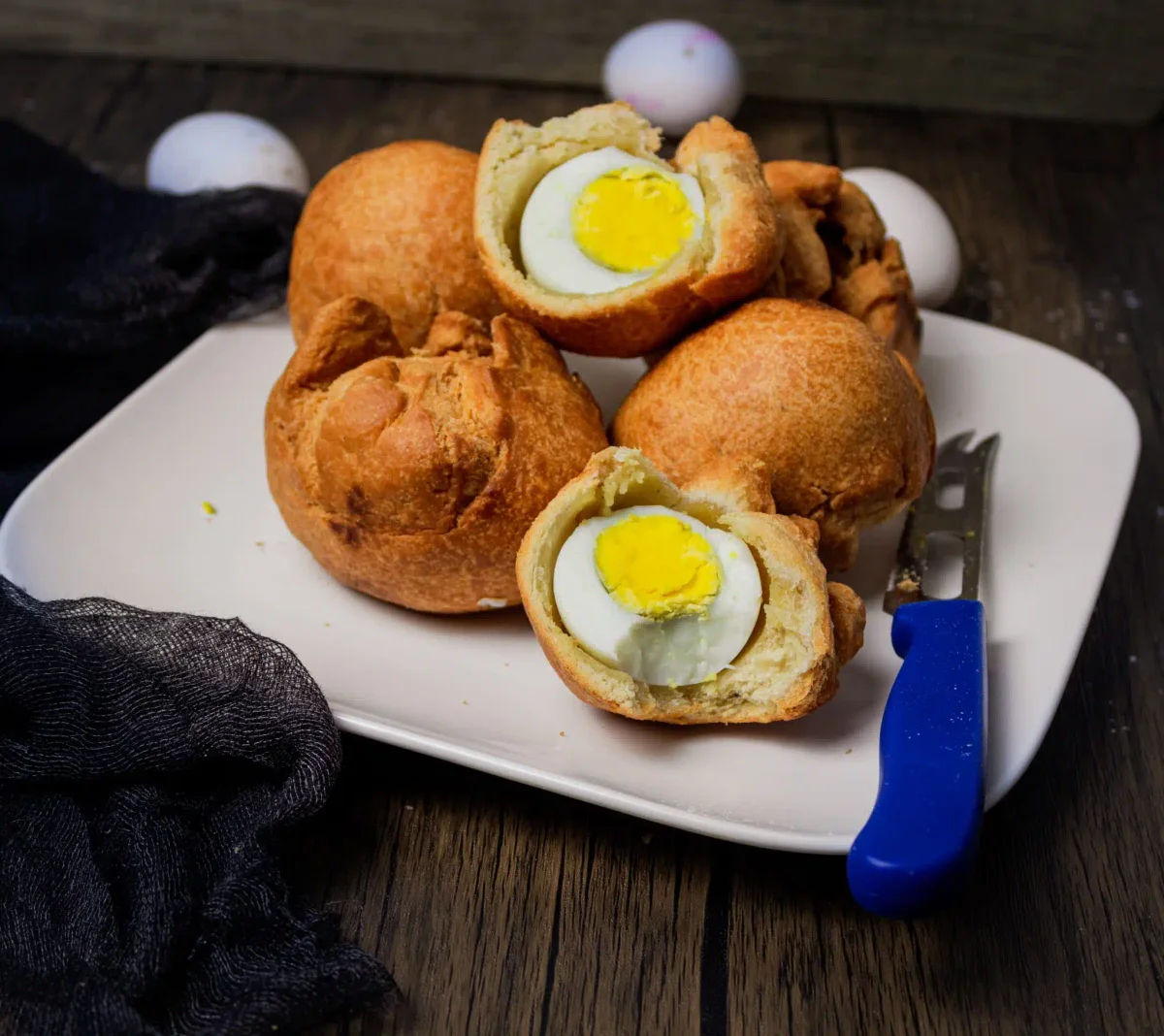
Egg roll is a boiled egg wrapped in a soft, slightly sweet dough and fried until golden. This five-piece batch makes a filling snack popular in Nigeria and Cameroon.
Ingredients
- 250 gplain flour
- 1egg, for the dough
- 5 ml (1 teaspoon)baking powder
- 1.25 ml (¼ teaspoon)salt
- 28 g (2 tablespoons)butter, not melted
- 120–135 ml (8–9 tablespoons)water
- 5hard-boiled eggs
- 25 g (2 tablespoons)sugar
Instructions
- 1
Mix dry ingredients
Put the flour, baking powder, salt and sugar in a bowl and mix them together.
- 2
Rub in butter
Add the butter to the flour mixture and rub it in with your fingers.
- 3
Add the egg
Beat the egg, add it to the bowl and mix.
- 4
Add water gradually
Pour in the water a little at a time, stirring continuously. The dough should be slightly sticky but still manageable.
- 5
Rest the dough
Work the dough, then cover it and leave it for 15–20 minutes.
- 6
Wrap the eggs
When the resting time is over, work the dough for another 1–2 minutes and divide it into 5 equal pieces. Wrap one hard-boiled egg in each piece, closing the dough around it and rolling it between your hands.
- 7
Fry the rolls
Fry the rolls one at a time over a low heat.
- 8
Serve
Serve and enjoy.
What is egg roll?
Egg roll is a whole hard-boiled egg enclosed in a simple dough and fried as a handheld snack. Versions of it are popular in Nigeria and Cameroon.
This recipe’s lightly sweetened dough surrounds each egg, making the contrast between the soft centre and the fried coating the main appeal.
Nutrition and macros by portion
The nutrition label shows one serving as written: 265 calories, 0g protein, 0g carbs, 0g fat.
| Portion | Adjustment | kcal | Protein | Carbs | Fat |
|---|---|---|---|---|---|
| Lighter | Serve with more salad | 186 kcal | 0g | 0g | 0g |
| This serving | As written | 265 kcal | 0g | 0g | 0g |
| Hungry | Add another egg roll | 398 kcal | 0g | 0g | 0g |
The dough supplies most of the carbohydrates, while the butter and frying contribute fat; the eggs provide protein and some fat. Pair one roll with fresh vegetables or salad for a more balanced plate.
Getting the dough right
Butter: use it softened but not melted, as specified; rubbing it into the flour helps distribute it through the dough.
Water: add it gradually while stirring. Stop when the dough is a little sticky yet still easy enough to handle and wrap.
Rest before shaping
Resting: cover the dough for 15–20 minutes before shaping. This gives it time to settle and makes it easier to work with.
Final knead: work the rested dough for another 1–2 minutes, then divide it into five equal pieces so each roll gets a similar amount of coating.
Wrapping the eggs
Enclosing: place a hard-boiled egg in each piece of dough and bring the dough around it, closing the seam as you roll it between your hands.
Coverage: check that the egg is enclosed all around before frying, so the dough forms a complete shell.
Frying over low heat
Heat: the method calls for a low heat and frying the rolls one at a time. Keep the heat gentle so the outside has time to cook without rushing the process.
Doneness: the recipe does not give a frying time, so use the appearance of the dough as your cue and check the first roll before continuing with the rest.
Serving the snack
Freshly fried egg rolls work well as a snack or a simple lunch. Let them cool briefly before eating, as the egg inside will be hot.
For a more rounded plate, serve them with a crisp salad or fresh vegetables alongside.
Recipe notes & tips
- Measure the water and add it in stages, since the dough should remain manageable.
- Use eggs that are fully hard-boiled and peeled before wrapping.
- Divide the dough into five equal pieces for evenly sized rolls.
- Seal the dough all around each egg before frying.
- Fry one roll at a time over low heat, as directed.
Variations
- Adjust the sweetness: reduce or increase the sugar to suit your taste.
- Season the dough: add a little ground spice for a more aromatic coating.
- Add herbs: mix finely chopped herbs into the dough for a fresh note.
- Make smaller rolls: use smaller eggs and divide the dough into more portions.
- Serve with vegetables: pair the rolls with salad or sliced fresh vegetables.
Common mistakes to avoid
- Adding all the water at once: pour it in gradually so the dough does not become too wet.
- Using melted butter: use butter that is not melted, as the recipe specifies.
- Skipping the rest: cover the dough for 15–20 minutes before shaping.
- Leaving a gap in the coating: close the dough fully around each egg before frying.
- Frying over high heat: keep the heat low, as directed, and cook the rolls one at a time.
How to store
Cool the rolls and store them in an airtight container in the fridge for up to 3 days. Reheat until hot throughout, using an oven or a frying pan over low heat.
Frequently asked questions
Can I prepare the eggs ahead?
Yes. Hard-boil and peel them in advance, then keep them chilled until you are ready to wrap the dough around them.
How sticky should the dough be?
It should feel slightly sticky but still be manageable to work and shape. Add the water a little at a time to reach that texture.
Why does the dough need to rest?
The recipe rests the covered dough for 15–20 minutes before shaping. This pause makes it easier to handle.
Can I fry all the rolls at once?
The method says to fry them one at a time over low heat. Follow that instruction so each roll can cook without crowding.
Can egg rolls be reheated?
Yes. Reheat them in an oven or frying pan over low heat until hot throughout.
Cook it from the original
This recipe comes from kelianfood.com. Their page has the author’s own photos, notes and tips — the best place to cook it from.
Open the recipe on kelianfood.com