
Conch Fritters Recipe
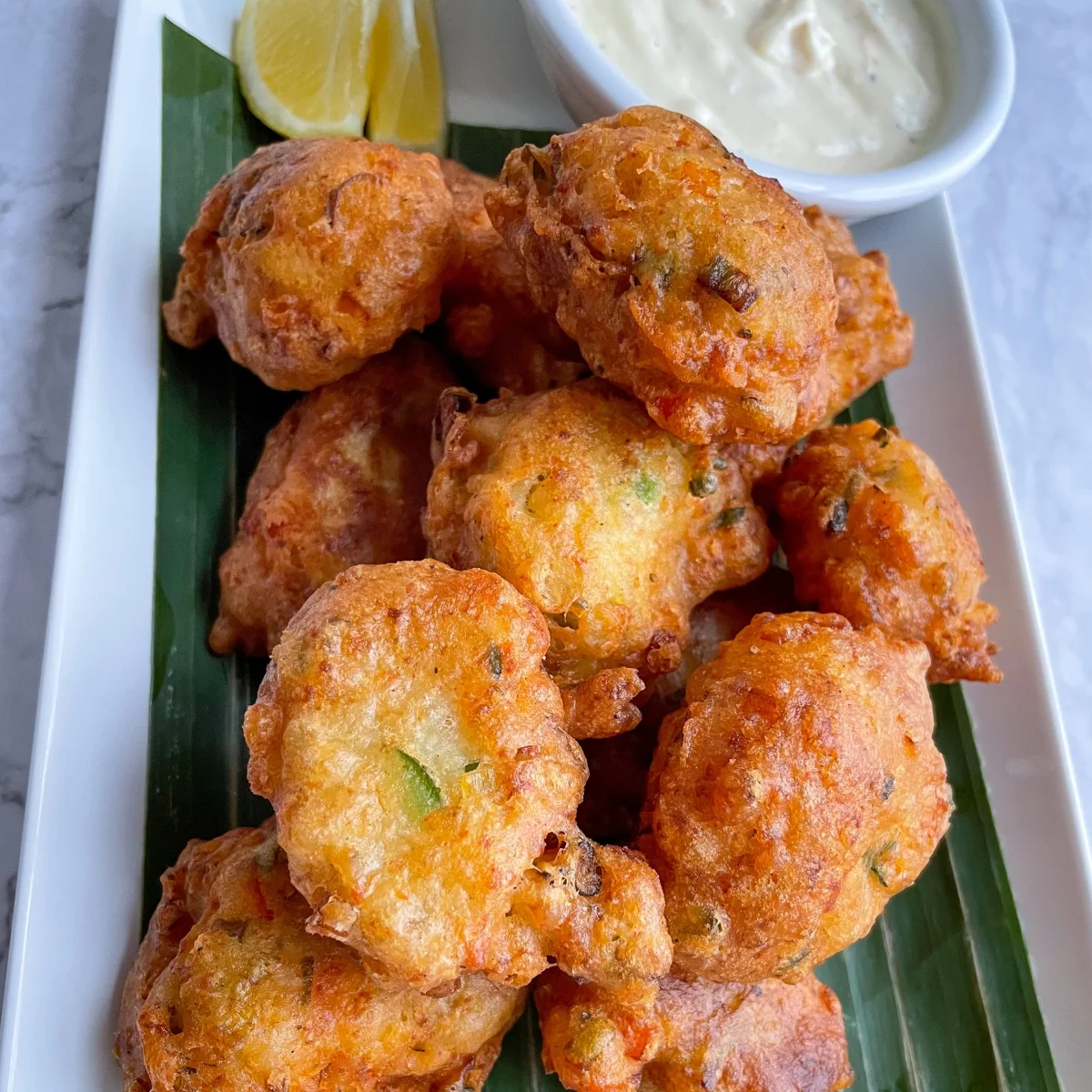
These Caribbean conch fritters combine tenderised conch, finely chopped vegetables and a lightly seasoned batter, fried until crisp and golden. Serve them hot as a sharing appetiser with aioli or hot sauce.
Ingredients
- 2bay leaves
- 7 clovesgarlic
- al gustopimento
- 4spring onions
- un puñadofresh thyme
- 1whole hot pepper
- 1 tablespoonsalt
- 1.4–1.9 litres (6–8 cups)water
- 454 g (1 lb)conch, tenderised in the flavour bath
- 1shallot, diced
- 1spring onion, diced
- 3 sprigsthyme, leaves stripped from the stems
- 1/4red, yellow and green bell pepper, finely diced
- al gustoScotch bonnet, minced
- al gustoMaggi Fish Season-Up
- 1/4 teaspoonblack pepper
- 1/4 teaspoonsalt
- 1egg, beaten
- 125 g (1 cup)plain flour
- 1 tablespoonbaking powder
- about 240 ml (1 cup)cold milk
- 710 ml (3 cups)oil, for frying
Instructions
- 1
Rinse the conch
Rinse the conch under fresh running water to remove any sand. It is usually sold cleaned, with the inedible parts already removed.
- 2
Cook in flavour bath
Put the water and all the flavour-bath ingredients in a large pot. Add the conch, cover and cook over high heat until fork-tender, about 1 hour.
- 3
Chop the conch
Lift the cooked conch out of the liquid and cut it into small pieces. Discard the liquid and the other flavour-bath ingredients; leave the conch pieces a little larger if you want distinct bites of meat in the fritters.
- 4
Prepare the vegetables
Finely dice the shallot, spring onion, bell peppers and Scotch bonnet. Put them in a medium bowl with the chopped conch.
- 5
Season the mixture
Add the Maggi seasoning, salt and black pepper. Mix thoroughly with a spoon or fork.
- 6
Mix in the egg
Add the beaten egg to the conch mixture and stir until it is well incorporated.
- 7
Make the batter
Mix the baking powder into the flour. Add the flour mixture and cold milk alternately to the conch mixture, making a smooth batter that is wet but not runny. A wetter batter makes flatter fritters.
- 8
Heat the oil
Heat the oil in a medium frying pan to 175°C (350°F), checking the temperature with a thermometer.
- 9
Fry the fritters
Use two soup spoons: scoop up a heaped spoonful of batter with one and use the other to push it into the hot oil. Fry each fritter on both sides until golden brown, about 2 minutes per side.
- 10
Drain the fritters
Remove the cooked fritters from the oil and drain them on a plate lined with kitchen paper.
- 11
Serve while hot
Serve the fritters hot with aioli or hot sauce for dipping.
What are conch fritters?
Conch fritters are fried bites made with conch, a large sea snail popular in Caribbean cooking. They bring together seasoned seafood and a crisp batter, often with peppers and other aromatics mixed through.
This version first cooks the conch in a flavour bath, then folds it into a vegetable-studded batter. That extra cooking stage helps tenderise the meat before the fritters are fried.
Nutrition and macros by portion
The nutrition label shows one serving as written: 510 calories, 24g protein, 34g carbs, 30g fat.
| Portion | Adjustment | kcal | Protein | Carbs | Fat |
|---|---|---|---|---|---|
| Lighter | Serve fewer with salad | 357 kcal | 17g | 24g | 21g |
| This serving | As written | 510 kcal | 24g | 34g | 30g |
| Hungry | Add another fritter | 765 kcal | 36g | 51g | 45g |
The flour and milk provide most of the carbohydrates, while the frying oil contributes much of the fat. Conch and egg supply protein; the peppers and other vegetables add relatively little energy. For a more balanced plate, serve a few fritters with a generous salad or fresh vegetables.
The flavour bath
Aromatics: Bay leaves, garlic, spring onions, thyme, pimento and whole hot pepper flavour the cooking water as the conch softens.
Tenderness: The recipe allows about an hour of cooking and uses a fork-tender cue. The conch should be tender enough to chop before it goes into the fritter batter.
Chop for distinct bites
Conch pieces: Cut the cooked meat into small pieces, but they do not need to be minced. Slightly larger pieces make the seafood noticeable in each fritter.
Vegetables: Dice the shallot, spring onion, peppers and Scotch bonnet finely so they distribute through the batter and cook along with it.
Getting the batter right
Add gradually: Alternate the flour mixture with the cold milk rather than adding all the liquid at once. Stop when the batter is smooth and wet but still holds together on a spoon.
Shape: A looser batter spreads more in the oil, while a thicker one makes fuller fritters. Use the two-spoon method to portion and release each scoop.
Frying to golden
Oil temperature: Aim for 175°C and check it with a thermometer before frying. Keeping the oil near that temperature helps the outside turn golden while the batter cooks through.
Doneness: Fry for about 2 minutes on each side, looking for an even golden-brown colour. Drain the fritters on kitchen paper as soon as they come out of the pan.
Seasoning and heat
Seasoning: Maggi Fish Season-Up, salt and black pepper season the conch mixture before the egg and batter are added. Since the seasoning product can vary, add it to taste.
Chilli: Scotch bonnet and the whole hot pepper bring heat at different stages. For a milder batch, use less Scotch bonnet or omit it.
Serving ideas
Dips: Serve the fritters hot with aioli or hot sauce, as suggested in the recipe. A squeeze of lime alongside is another simple option.
On the plate: Pair them with a crisp green salad or fresh vegetables for contrast with the fried coating. They are best served soon after frying, while their edges are still crisp.
Recipe notes & tips
- Rinse the conch thoroughly before cooking in case any sand remains.
- Keep the conch pieces a little larger if you want clear bites of seafood.
- Dice the vegetables finely so they mix evenly into the batter.
- Add the milk gradually and stop when the batter is wet but not runny.
- Use a thermometer to check that the oil reaches 175°C before frying.
- Fry in batches if needed so the fritters have room to cook evenly.
Variations
- Milder fritters: Use less Scotch bonnet or leave it out.
- More pepper: Add extra finely diced bell pepper for a more pronounced vegetable flavour.
- Extra herbs: Add a little more stripped thyme to the conch mixture.
- Citrus finish: Serve with lime wedges for a fresh, sharp contrast.
- Different dip: Offer hot sauce instead of aioli, or serve both alongside.
Common mistakes to avoid
- Skipping the rinse: Sand can remain on the meat, so rinse the conch under running water first.
- Undercooking the conch: It can be tough if it is not fork-tender; cook it for about 1 hour as directed.
- Runny batter: The fritters may spread too much; add the flour and milk alternately and watch the consistency.
- Guessing the oil temperature: Oil that is not at 175°C can affect browning; check it with a thermometer.
- Crowding the pan: Too many fritters at once make frying harder to manage; cook them in batches.
- Serving them cold: The coating loses its crispness as it sits, so serve the fritters hot after draining.
How to store
Cool leftover fritters and refrigerate them in a sealed container for up to 2 days. Reheat in an oven or air fryer until hot and crisp; the coating may soften if reheated in a microwave.
Frequently asked questions
How do I know when the conch is tender?
After about 1 hour of cooking, test it with a fork. It should be tender enough to cut into small pieces.
Can I make the batter ahead?
The recipe does not specify make-ahead storage for the batter. For the freshest texture, mix it shortly before frying.
What should the batter consistency be?
It should be smooth and wet but not runny. A wetter batter makes flatter fritters.
How hot should the frying oil be?
Heat it to 175°C (350°F) and check with a thermometer before adding the batter.
How long does each fritter take to fry?
Fry each one for about 2 minutes on each side, until golden brown.
What can I serve with conch fritters?
Serve them hot with aioli or hot sauce for dipping. A green salad or fresh vegetables make a good accompaniment.
Cook it from the original
This recipe comes from jamdownfoodie.com. Their page has the author’s own photos, notes and tips — the best place to cook it from.
Open the recipe on jamdownfoodie.com