
Yorkshire Pudding
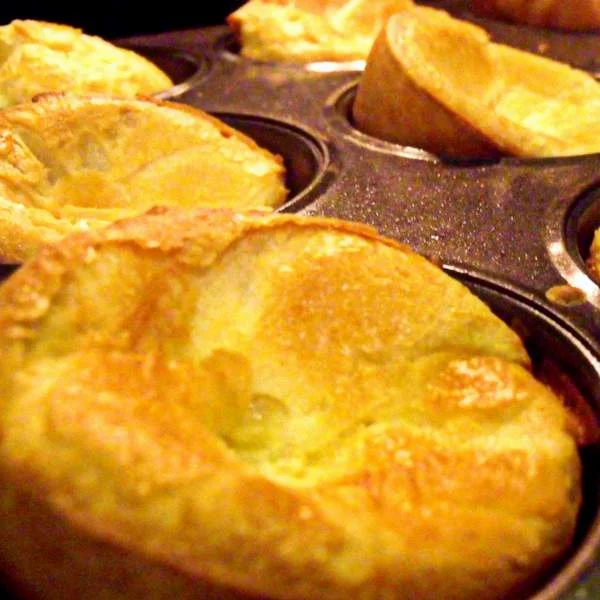
Yorkshire pudding is a light, puffed batter bake traditionally served with roast beef and gravy. This version makes 12 individual puddings, with a hot, oiled muffin tray helping them rise and turn golden.
Ingredients
- 125 g (1 cup)plain flour
- 1.25 ml (1/4 teaspoon)salt
- 3 largeeggs
- 240 ml (1 cup)whole milk
- 30 ml (6 teaspoons)rapeseed oil
Instructions
- 1
Mix the batter
Put the flour, salt, milk and eggs in a mixing bowl. Beat with an electric mixer for 1 minute, until the batter is thick and gravy-like.
- 2
Rest the batter
If time allows, cover the bowl and leave the batter to rest for 1 hour.
- 3
Heat the oven
Preheat the oven to 220°C (425°F).
- 4
Heat the oil
Pour 1/4 teaspoon of rapeseed oil into each cup of a 12-cup muffin tray. Put the tray in the oven for 3 to 5 minutes to heat the oil.
- 5
Beat the batter
While the oil heats, beat the batter with an electric mixer for 1 to 2 minutes. Avoid beating it for longer, as the puddings may pop and burst during cooking.
- 6
Fill the tray
Take the hot muffin tray out of the oven. Pour batter into each cup, filling it to about three-quarters full.
- 7
Bake until golden
Bake at 220°C (425°F) for 25 to 30 minutes, until the puddings have puffed up and turned golden.
- 8
Serve with gravy
Serve with roast beef and top with gravy.
What is Yorkshire pudding?
Yorkshire pudding is a British baked batter dish associated with Yorkshire in northern England. It is commonly served alongside roast beef and gravy as part of a roast dinner.
This version bakes the batter in individual muffin-tray portions. Resting the batter if time allows, then pouring it into a hot, oiled tray, helps create the characteristic puffed shape.
Nutrition and macros by portion
The nutrition label shows one serving as written: 86 calories, 3g protein, 9g carbs, 4g fat.
| Portion | Adjustment | kcal | Protein | Carbs | Fat |
|---|---|---|---|---|---|
| Lighter | Use less gravy | 60 kcal | 2g | 6g | 3g |
| This serving | As written | 86 kcal | 3g | 9g | 4g |
| Hungry | Add another pudding | 129 kcal | 5g | 14g | 6g |
The flour and milk provide most of the carbohydrates, while the eggs contribute protein and the eggs, milk and oil provide fat. Serve a pudding with roast beef and vegetables for a more complete plate, keeping the gravy to the amount you prefer.
A simple batter
Flour: plain flour gives the batter its structure. Mix it with the salt before adding the wet ingredients.
Eggs and milk: together they make the pourable batter, while the eggs help it set as it bakes. Beat until smooth and thick, like gravy.
Why rest the batter
Resting time: cover the bowl and leave the batter for 1 hour if your schedule allows. The recipe also works without this optional pause.
Final beat: give the rested batter a brief 1 to 2 minute beat just before filling the tray. The method cautions against beating it for longer.
Get the tray and oil hot
Hot oil: add 1/4 teaspoon of oil to each muffin cup, then heat the tray in the oven for 3 to 5 minutes. Take care when moving the hot tray.
Quick filling: pour the batter into the cups after the tray comes out of the oven, filling each about three-quarters full.
Watch for colour and puff
Baking: cook at 220°C (425°F) for 25 to 30 minutes. The recipe’s doneness cues are puffed puddings with a golden colour.
Avoid opening the oven just to check early; use the stated baking time and visual cues to judge when they are ready.
Serve them with a roast
Traditional pairing: serve the puddings with roast beef and gravy, as directed in the recipe. Spoon gravy over the top when serving.
For a fuller plate, add vegetables served with your roast dinner. Serve the puddings soon after baking while they are freshly puffed.
Recipe notes & tips
- Measure the oil into the muffin cups before putting the tray in the oven.
- If you have time, cover and rest the batter for 1 hour.
- Beat the batter for only 1 to 2 minutes before filling the hot tray.
- Fill each muffin cup to about three-quarters full.
- Use the golden colour and puffed shape as cues that the puddings are ready.
- Serve with roast beef and gravy as suggested in the recipe.
Variations
- Individual portions: bake the batter in the 12-cup muffin tray as directed.
- Roast dinner: serve with roast beef and gravy for the traditional pairing.
- Vegetable side: add vegetables from your roast dinner alongside the puddings.
- Gravy on the side: serve gravy separately so each person can add their preferred amount.
Common mistakes to avoid
- Skipping the hot tray: the method calls for heating the oiled muffin tray for 3 to 5 minutes before adding the batter.
- Overbeating before baking: limit the final electric-mixer beat to 1 to 2 minutes, as the recipe warns the puddings may pop and burst if beaten too long.
- Overfilling the cups: leave room for the puddings to puff by filling each cup to about three-quarters full.
- Using a cool tray: heat the oiled tray in the oven before pouring in the batter.
- Removing them too soon: bake for 25 to 30 minutes and look for puffed, golden puddings.
How to store
The recipe gives no storage instructions. If you have leftovers, cool them and refrigerate in a covered container; reheat in an oven until warmed through.
Frequently asked questions
Can I skip resting the batter?
Yes. The recipe says to rest it for 1 hour only if time allows.
How full should I fill each muffin cup?
Fill each cup to about three-quarters full.
How long do Yorkshire puddings bake?
Bake them for 25 to 30 minutes at 220°C (425°F), until puffed and golden.
Why does the muffin tray go into the oven first?
The method heats the oil in the tray for 3 to 5 minutes before the batter is added. Take care when handling the hot tray.
What should I serve with Yorkshire pudding?
This recipe suggests serving it with roast beef and gravy.
Can I make these as one large pudding?
The recipe is written for a 12-cup muffin tray and does not give instructions for baking one large pudding.
Cook it from the original
This recipe comes from irishamericanmom.com. Their page has the author’s own photos, notes and tips — the best place to cook it from.
Open the recipe on irishamericanmom.com