
Easy Homemade Flatbread {Gluten-free and Dairy-free}
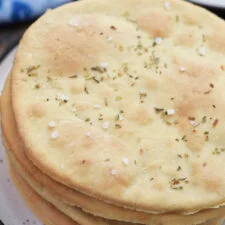
This quick, oven-baked flatbread uses potato flour, coconut flour, eggs and coconut milk for a gluten-free, dairy-free result. Shape it into a couple of large rounds or several smaller breads, then bake until the edges turn golden.
Ingredients
- 120 g (1 cup)potato flour
- 56 g (½ cup)coconut flour
- 4eggs
- 480 ml (2 cups)full-fat coconut milk
- 2.5 g (½ teaspoon)salt
- To tastesea salt and/or your favourite seasonings, for sprinkling
Instructions
- 1
Preheat the oven
Heat the oven to 175°C (350°F).
- 2
Mix and shape
Add all the ingredients to a medium bowl and mix well. Line two baking sheets with parchment paper, then spread the dough into your preferred sizes: 2 large flatbreads or 6–8 small ones. Shape each into a circle or another shape using your hands.
- 3
Season the dough
Sprinkle the flatbreads with sea salt and/or your favourite seasonings.
- 4
Bake until golden
Bake in the preheated oven for 20 minutes, or until the edges are golden and the top is beginning to turn golden. Serve and enjoy.
What is this flatbread?
Flatbread is a broad family of breads cooked as relatively thin rounds or shapes rather than tall loaves. This American-style version uses potato and coconut flours instead of wheat flour, with eggs and coconut milk bringing the mixture together.
Five core ingredients make it a straightforward option when you want a gluten-free, dairy-free bread to serve warm. Its simple dough can be shaped into large rounds or smaller portions.
Nutrition and macros by portion
The nutrition label shows one serving as written: 430 calories, 13g protein, 47g carbs, 23g fat.
| Portion | Adjustment | kcal | Protein | Carbs | Fat |
|---|---|---|---|---|---|
| Lighter | Smaller flatbread portion | 301 kcal | 9g | 33g | 16g |
| This serving | As written | 430 kcal | 13g | 47g | 23g |
| Hungry | Larger flatbread portion | 645 kcal | 19g | 71g | 34g |
The flours and coconut milk provide most of the carbohydrates and fat, while the eggs contribute protein as well as fat. Serve a piece with vegetables and a lean protein source to make a more balanced plate.
Choosing the flours
Potato flour: it forms the bulk of the flour mixture and gives the flatbread its base. Measure it carefully, since flour packed into a cup can vary in weight.
Coconut flour: it absorbs liquid readily, so keep to the stated amount rather than adding extra while mixing.
Mixing the dough
Combine all the ingredients well in a medium bowl, as the method directs. The mixture is shaped on parchment-lined baking sheets rather than rolled out on a work surface.
If it feels sticky, use your hands to spread and shape it on the parchment. Aim for an even thickness so the bread bakes consistently.
Shaping and seasoning
Large rounds: shape 2 flatbreads across the two prepared sheets. Smaller breads: divide the dough into 6–8 portions and flatten each one.
Seasoning: add sea salt and/or your preferred seasonings before baking. Keep the toppings light so they do not obscure the surface cues for doneness.
Baking cues
Bake at 175°C (350°F) for 20 minutes. The recipe’s cues are golden edges and a top that is starting to turn golden.
Ovens and bread sizes can affect how quickly the surface colours, so check for those visual signs as the stated baking time ends.
Serving ideas
Serve the flatbread warm alongside a soup, salad or a main dish, or use it to scoop up a thick dip. Smaller pieces are convenient for sharing.
For a simple plate, pair a piece with vegetables and a protein-rich dish; the flatbread itself provides a substantial portion of the meal’s energy.
Recipe notes & tips
- Line both baking sheets with parchment before shaping the dough.
- Use your hands to form the dough directly on the prepared sheets.
- Keep the flatbreads an even thickness to help them bake at the same rate.
- Choose either 2 large flatbreads or 6–8 smaller ones, as described in the method.
- Look for golden edges and a top beginning to colour when checking doneness.
Variations
- Herb seasoning: sprinkle on your favourite dried herbs before baking.
- Pepper topping: add a little ground pepper with the sea salt.
- Small rounds: shape the dough into 6–8 pieces for individual servings.
- Large rounds: make 2 larger flatbreads for sharing or serving alongside a meal.
Common mistakes to avoid
- Uneven thickness: spread the dough evenly so thinner areas do not colour much sooner.
- Skipping the parchment: line the baking sheets first to make shaping and handling easier.
- Adding extra coconut flour: stick to the listed amount because it absorbs liquid readily.
- Relying only on the clock: check for golden edges and a top starting to turn golden at 20 minutes.
How to store
Cool the flatbreads, then store them in an airtight container in the refrigerator for up to 3 days. Reheat briefly in a warm oven or in a dry frying pan until warmed through.
Frequently asked questions
Is this flatbread gluten-free and dairy-free?
The listed ingredients are potato flour, coconut flour, eggs, coconut milk and salt, with optional seasonings. Check the packaging of your flours and seasonings if you need to avoid cross-contamination.
Can I make large or small flatbreads?
Yes. The method suggests shaping the dough into 2 large flatbreads or 6–8 smaller ones.
How do I know when the flatbread is ready?
Bake for 20 minutes at 175°C (350°F), until the edges are golden and the top is beginning to turn golden.
Do I need to roll out the dough?
No. The method has you flatten and shape it by hand on parchment-lined baking sheets.
Can I season the flatbread?
Yes. Sprinkle it with sea salt and/or your favourite seasonings before baking.
Cook it from the original
This recipe comes from happyhealthymama.com. Their page has the author’s own photos, notes and tips — the best place to cook it from.
Open the recipe on happyhealthymama.com