
Whole Roasted Chicken
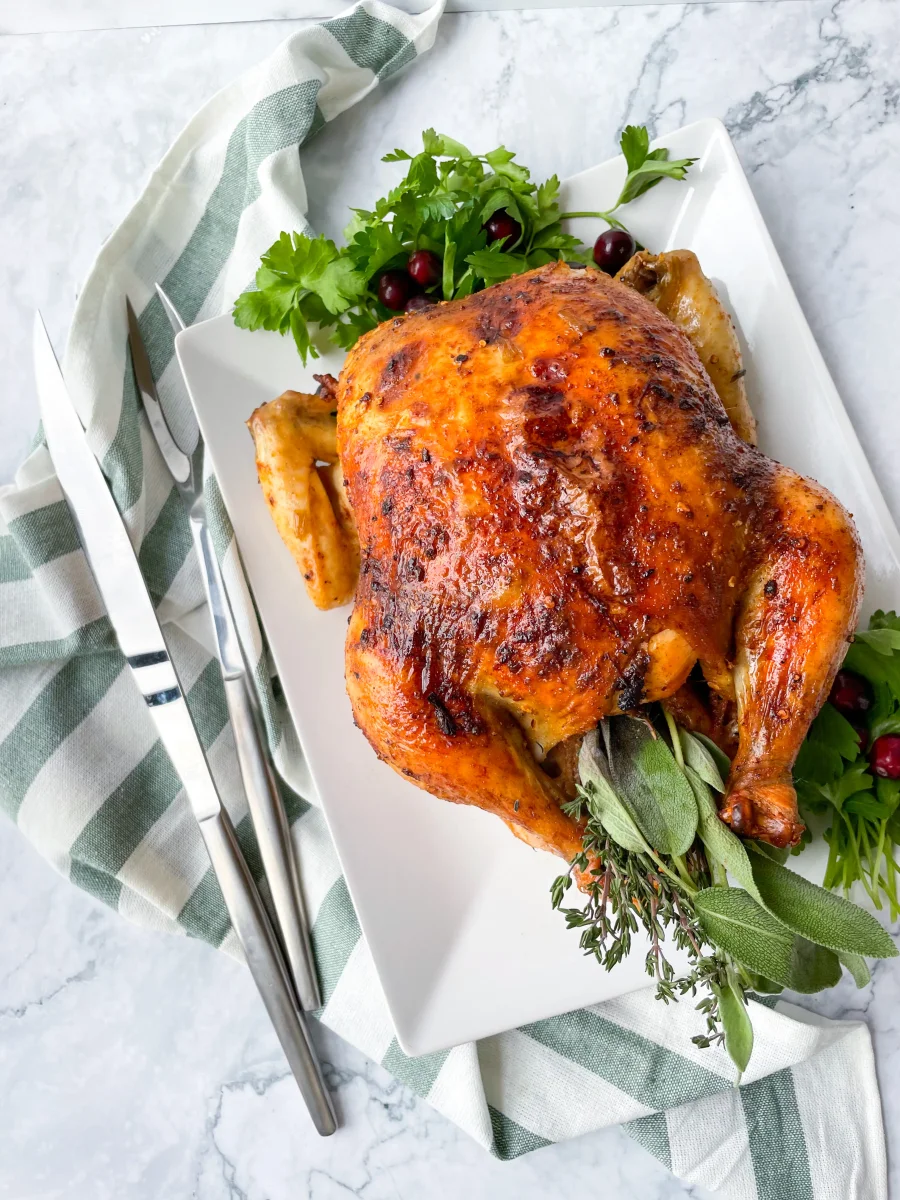
A whole chicken roasted over leeks, carrots, garlic and herbs, with a paprika-spiced buttered skin. It makes a generous alternative to turkey for a celebratory meal or a Sunday roast.
Ingredients
- 4.54 kg (10 lb)roasting chicken
- 1leek
- 2 mediumcarrots
- 3 stems, plus more to taste for the cavity and servingfresh sage
- 5 sprigs, plus more to taste for the cavity and servingfresh thyme
- 6 clovesgarlic
- 2 tbspkosher salt
- 2 tsppaprika
- 2 tspchicken seasoning
- ½ tspground sage
- 1 tspgarlic powder
- 1 tsponion powder
- 1 tspred pepper flakes
- 1 tspfreshly cracked pepper
- 2 tbspmelted butter
- 1 tbspolive oil
Instructions
- 1
Prepare the aromatics
Slice the leek, halve each slice, then rinse under cold water and drain. Put it in a large roasting pan with the fresh sage, garlic and thyme, reserving some sage and thyme for the chicken cavity. Season the aromatics with olive oil, salt and pepper.
- 2
Heat the oven
Preheat the oven to 218°C (425°F).
- 3
Mix the seasoning
Combine all the powdered spices in a small bowl and mix them into a dry rub.
- 4
Season the chicken
Clean and rinse the chicken, then pat it dry with paper towels on a large meat board. Season both sides and the cavity generously with the spice mixture. Put the reserved herbs in the cavity, set the chicken on the bed of aromatics and brush it with melted butter.
- 5
Roast until done
Roast for 1½–2 hours, or until the juices run clear when the chicken is pierced between the leg and thigh.
- 6
Serve with gravy
Transfer the chicken to a serving plate and garnish with fresh herbs. Use the pan drippings to make gravy.
What is whole roasted chicken?
Roasting a whole bird is a familiar European-style centrepiece, served for family meals and celebrations alike. It offers a turkey alternative while bringing both the meat and the pan juices to the table.
This version sits on leeks, carrots, garlic and herbs, while a paprika and seasoning blend flavours the chicken. Butter brushed over the skin helps it roast with a savoury finish.
Nutrition and macros by portion
The nutrition label shows one serving as written: 200 calories, 0g protein, 0g carbs, 20g fat.
| Portion | Adjustment | kcal | Protein | Carbs | Fat |
|---|---|---|---|---|---|
| Lighter | Less butter, more vegetables | 140 kcal | 0g | 0g | 14g |
| This serving | As written | 200 kcal | 0g | 0g | 20g |
| Hungry | Larger chicken portion | 300 kcal | 0g | 0g | 30g |
The chicken provides most of the protein and fat, while the butter and olive oil add further fat. The leek and carrots contribute a smaller amount of carbohydrate; serve with vegetables and a moderate portion of potatoes to balance the plate.
The aromatic bed
Leek and carrots: these sit beneath the chicken with garlic, sage and thyme, collecting the drippings as the bird roasts.
Fresh herbs: some go in the roasting pan and some are reserved for the cavity and serving. The recipe also uses ground sage in its dry rub for a more concentrated herbal note.
Building the seasoning
Dry rub: mix the paprika, chicken seasoning, ground sage, garlic powder, onion powder, red pepper flakes, salt and cracked pepper before applying it. This distributes the spices more evenly over the chicken.
Seasoning coverage: the method calls for seasoning both sides and the cavity generously. Patting the chicken dry first helps the rub cling to its surface.
Roasting and checking doneness
Oven heat: roast at 218°C (425°F) for 1½–2 hours, as directed. The recipe gives a broad time range, so use the stated cue as well as the clock.
Juices: pierce the chicken between the leg and thigh and check that the juices run clear. Let the chicken rest before carving so it is easier to handle and serve.
Making use of the drippings
Pan juices: the method suggests using the drippings to make gravy. The vegetables and herbs in the pan contribute flavour to those juices as they roast.
Serving herbs: finish the plated chicken with fresh sage and thyme. Serve the gravy alongside so diners can add it to the carved meat.
What to serve alongside
A roast chicken pairs well with potatoes and green vegetables for a full meal. Keep the sides simple so the seasoned bird and its pan gravy remain the focus.
If you serve bread or another starchy side, a portion of vegetables can help round out the plate.
Recipe notes & tips
- Dry the chicken well with paper towels before adding the seasoning.
- Reserve some sage and thyme before adding the rest to the roasting pan.
- Mix the powdered seasonings thoroughly so each part of the chicken gets a similar blend.
- Use a large roasting pan that can hold the chicken on top of the aromatics.
- Check the juices at the leg and thigh joint as the end of the roasting time approaches.
Variations
- Herb emphasis: add extra fresh sage and thyme to the cavity and use them to garnish the finished bird.
- Milder spice: reduce the red pepper flakes for less heat.
- Citrus note: add lemon wedges to the cavity alongside the reserved herbs.
- Root vegetables: add extra carrots to the roasting pan for more vegetables with the drippings.
- Gravy on the side: serve the pan drippings as gravy alongside the carved chicken.
Common mistakes to avoid
- Skipping the drying step: wet skin can make the seasoning less likely to cling; pat the chicken dry first.
- Forgetting the cavity: season it as well as the outside so the flavour is distributed through the bird.
- Using all the herbs in the pan: reserve some for the cavity and serving, as the method directs.
- Relying only on the clock: roast for the stated 1½–2 hours and check that the juices run clear between the leg and thigh.
- Leaving the drippings behind: use them to make gravy instead of discarding the flavour in the roasting pan.
How to store
Refrigerate leftover chicken in a covered container within 2 hours of cooking and use within 3–4 days. Reheat portions until piping hot; store gravy separately and reheat it until hot throughout.
Frequently asked questions
How long does this chicken take to roast?
The recipe gives a range of 1½–2 hours at 218°C (425°F). Check that the juices run clear when pierced between the leg and thigh.
What is the doneness cue in this recipe?
Pierce the chicken between the leg and thigh and look for clear juices. The method specifies this check alongside the roasting time.
Can I prepare the seasoning ahead?
Yes. Mix the powdered spices in a small bowl ahead of time and keep them covered until you are ready to season the chicken.
What should I do with the pan drippings?
Use them to make gravy, as suggested in the method, and serve it with the chicken.
Can I use dried herbs instead of fresh?
The recipe calls for fresh sage and thyme in the pan, cavity and for serving. Dried herbs will change the texture and appearance, so use fresh if you can.
Cook it from the original
This recipe comes from jamdownfoodie.com. Their page has the author’s own photos, notes and tips — the best place to cook it from.
Open the recipe on jamdownfoodie.com