
Indian Style Veg Paella Recipe
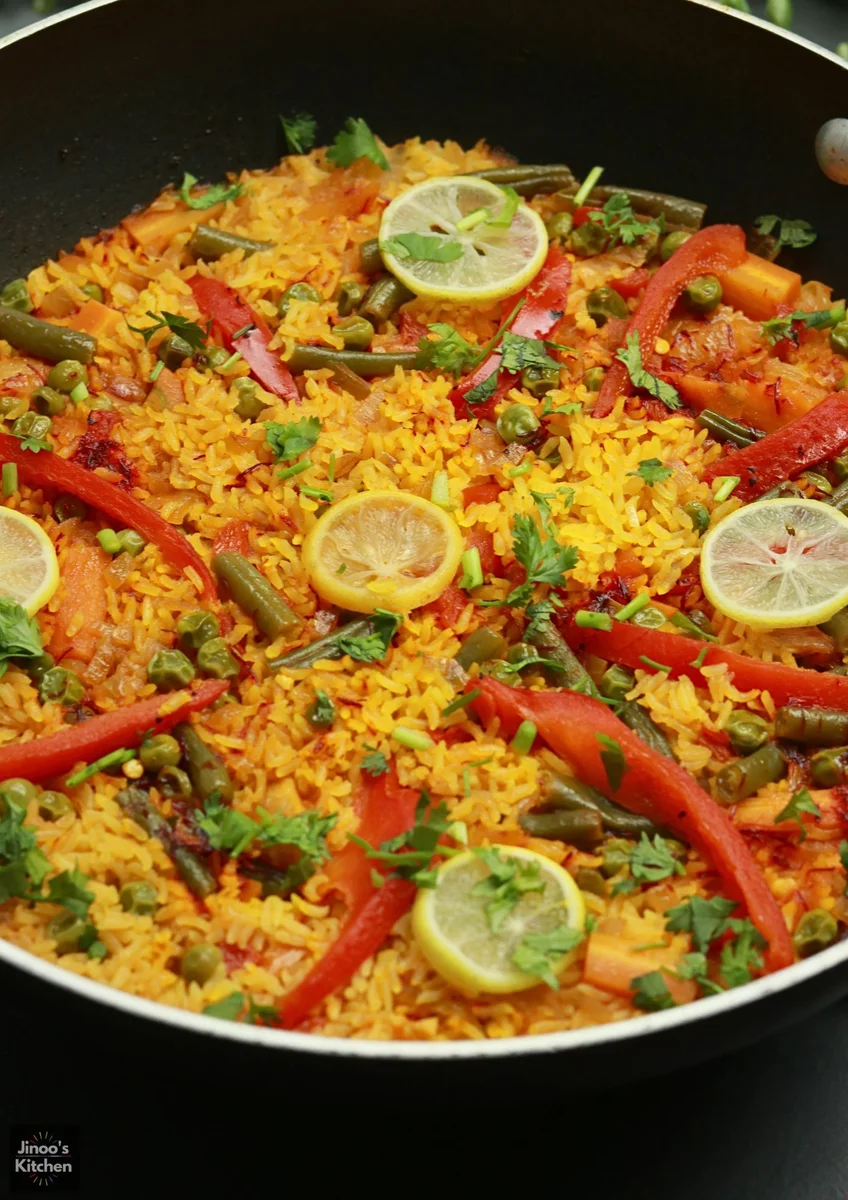
This one-pot paella pairs seeraga samba rice with vegetables, roasted pepper and a fragrant homemade stock. It takes a little time to prepare, but the stock and golden, lightly crisp base give the rice plenty of character.
Ingredients
- 2.5 ml (1/2 tsp)oil
- 1onion, roughly chopped
- 4 clovesgarlic, crushed
- 2.5 ml (1/2 tsp)peppercorns
- 3bay leaves
- 2.5 cm (1 inch)cinnamon
- 3cloves
- 1carrot, chopped
- 1potato, chopped
- 480 ml (2 cups)bottle gourd, chopped
- 1 litrewater
- 1red pepper, roasted
- 1onion, finely chopped
- 2 clovesgarlic, chopped
- 1carrot, chopped
- 5–6green beans, chopped
- 60 ml (1/4 cup)tomato purée
- 60 ml (1/4 cup)peas
- 2.5 ml (1/2 tsp) chilli powder or 5 ml (1 tsp) paprikachilli powder or paprika
- 300 ml (1.25 cups)seeraga samba rice
- 360 ml (1.5 cups)vegetable stock
- 1 pinchsaffron
- to tastelemon slices and coriander leaves
Instructions
- 1
Make the stock
Pressure-cook the roughly chopped onion, crushed garlic, peppercorns, bay leaves, cinnamon, cloves, carrot, potato and bottle gourd with 1 litre of water for 10 to 12 whistles. Strain the liquid to make a clear, aromatic stock.
- 2
Roast the pepper
Roast the red pepper directly over a flame until its skin is blackened. Peel it and remove the seeds; cut one half into strips and finely chop the other half.
- 3
Cook the vegetables
Heat the oil in a wide pan and sauté the finely chopped onion until soft. Add the chopped garlic and finely chopped roasted pepper, then stir in the carrot and beans and cook them lightly.
- 4
Add tomato and spice
Stir in the tomato purée, peas and chilli powder or paprika. Cook for 1 minute, until the raw smell of the tomato has gone.
- 5
Toast the rice
Wash and drain the seeraga samba rice. Add it to the pan and toast over a low flame until the moisture has evaporated and the grains look glossy.
- 6
Add stock and garnish
Carefully pour in the prepared stock, spread the rice evenly and make holes in the rice so the liquid can soak through. Arrange the pepper strips around the sides and lemon slices in the centre, then cover and cook until the stock is absorbed.
- 7
Finish cooking
Pour a little extra water over the top and continue cooking until the upper layer of rice is soft and fluffy.
- 8
Serve the paella
Finish with fresh coriander leaves and more lemon slices. Serve hot, including some of the slightly crisp, golden rice from the bottom.
What is Indian-style veg paella?
Paella is a Spanish rice dish traditionally cooked in a broad pan, with the rice absorbing seasoned cooking liquid. This version takes a more Indian-influenced route, using seeraga samba rice, warm spices and homemade vegetable stock.
A wide pan helps the rice cook in an even layer, while roasted pepper and lemon bring sweetness and brightness. The crisp layer at the base is a welcome contrast to the fluffy rice above.
Nutrition and macros by portion
The nutrition label shows one serving as written: 370 calories, 8g protein, 78g carbs, 3g fat.
| Portion | Adjustment | kcal | Protein | Carbs | Fat |
|---|---|---|---|---|---|
| Lighter | More vegetables, less rice | 259 kcal | 6g | 55g | 2g |
| This serving | As written | 370 kcal | 8g | 78g | 3g |
| Hungry | Larger rice portion | 555 kcal | 12g | 117g | 5g |
Most of the carbohydrates come from the seeraga samba rice, with smaller amounts from the peas and vegetables. The oil supplies most of the fat, while the vegetables and rice contribute modest protein. Pair a serving with a fresh vegetable salad for extra variety and a more balanced plate.
Why make the stock from scratch?
Stock vegetables: onion, garlic, carrot, potato and bottle gourd simmer under pressure with whole spices to make the liquid used for cooking the rice. Straining it keeps the paella relatively clear of loose vegetable pieces.
Keep the stock measured for the rice step: the recipe calls for 360 ml. The stock-making batch uses more water than that, so any extra can be saved for another use.
Roasting the pepper
Blackened skin: roast the pepper directly over a flame until its outside is charred, then peel it away. Removing the seeds and dividing the pepper between chopped pieces and strips gives you both flavour in the base and a garnish on top.
Handle the pepper once it is cool enough to peel safely. If you roast it ahead, keep it covered until you are ready to remove the skin.
Toasting the rice
Rinsing: wash and drain the rice before adding it to the pan. Drain it well so excess water does not slow the toasting stage.
Glossy grains: toast over a low flame until the visible moisture is gone and the grains look shiny. This stage helps the grains stay distinct as they cook in the stock.
Cooking the rice evenly
Even layer: spread the rice through the pan before covering it, and make small holes so stock can reach different areas. Keep the pan covered while the liquid absorbs.
Soft top: if the upper rice is still firm after the stock has been absorbed, add a little water over the top and continue cooking as directed. Check the texture rather than relying on a fixed extra cooking time, which the recipe does not specify.
The golden base
Bottom layer: a slightly crisp, golden base adds texture and concentrated toasted flavour. Use a wide pan and avoid stirring once the rice is spread and covered.
Watch the heat near the end so the base can colour without burning. Serve from the bottom as well as the fluffy rice above.
What to serve with it
Fresh finish: extra lemon slices and coriander brighten the warm, spiced rice. Put them on just before serving so their aromas stay fresh.
For a fuller meal, serve the paella with a simple salad or another vegetable side. Keep accompaniments lightly dressed so they do not compete with the seasoned rice.
Recipe notes & tips
- Use a broad pan so the rice can sit in a fairly even layer.
- Drain the washed rice well before toasting it.
- Keep the flame low while toasting so the grains turn glossy without scorching.
- Strain the stock before measuring the 360 ml needed for the rice.
- Add the extra water gradually if the top layer is still firm.
- Serve soon after cooking to enjoy the contrast between fluffy rice and its crisp base.
Variations
- Change the pepper: use paprika instead of chilli powder for a gentler, smoky flavour.
- Add more vegetables: include extra peas or chopped beans while keeping the rice and stock quantities in proportion.
- Use another rice: try a different short- or medium-grain rice, noting that its cooking needs may differ.
- Make it more citrusy: serve with extra lemon wedges for squeezing at the table.
- Skip the saffron: leave it out if unavailable; the stock and spices will still flavour the rice.
Common mistakes to avoid
- Using unstrained stock: solids can make the rice cook unevenly; strain the liquid before measuring it.
- Skipping the rice rinse: excess surface starch can make the grains stick; wash and drain them first.
- Adding wet rice to the pan: leftover rinse water slows toasting; drain the rice thoroughly.
- Stirring after adding stock: this can disturb the even rice layer; spread it once and let it cook covered.
- Turning the heat too high: the base may burn before the top softens; keep the heat controlled and add a little water if needed.
- Peeling the pepper too soon: a very hot pepper is difficult to handle; let it cool enough to peel safely.
How to store
Refrigerate leftovers in a covered container and eat within 2 days. Reheat until steaming hot, adding a splash of water if the rice has dried out; the crisp base may soften during storage.
Frequently asked questions
Can I make the vegetable stock ahead?
Yes. Make and strain it in advance, then refrigerate it in a covered container and measure out 360 ml when you cook the rice.
Can I use a different rice?
Yes, but the cooking time and liquid absorption may vary by rice type. Check the rice as it cooks and adjust the extra water only as needed.
Is seeraga samba rice the same as basmati?
No. Seeraga samba is a different aromatic rice variety, with shorter grains than basmati. The recipe specifically calls for seeraga samba.
How do I know when the rice is cooked?
The stock should be absorbed, and the rice should be soft and fluffy, including the top layer. If the top remains firm, the method calls for a little extra water and more cooking.
Can I cook the pepper without a gas flame?
You can roast it under a grill or in a hot oven until the skin is blackened and blistered. Peel it and remove the seeds before dividing it into strips and chopped pieces.
How do I get a crisp base without burning it?
Use a wide pan and keep the heat controlled once the rice is spread. Check near the end of cooking and serve the base when it is golden rather than dark.
Cook it from the original
This recipe comes from jinooskitchen.com. Their page has the author’s own photos, notes and tips — the best place to cook it from.
Open the recipe on jinooskitchen.com