
Paneer Pepper Varattiyathu
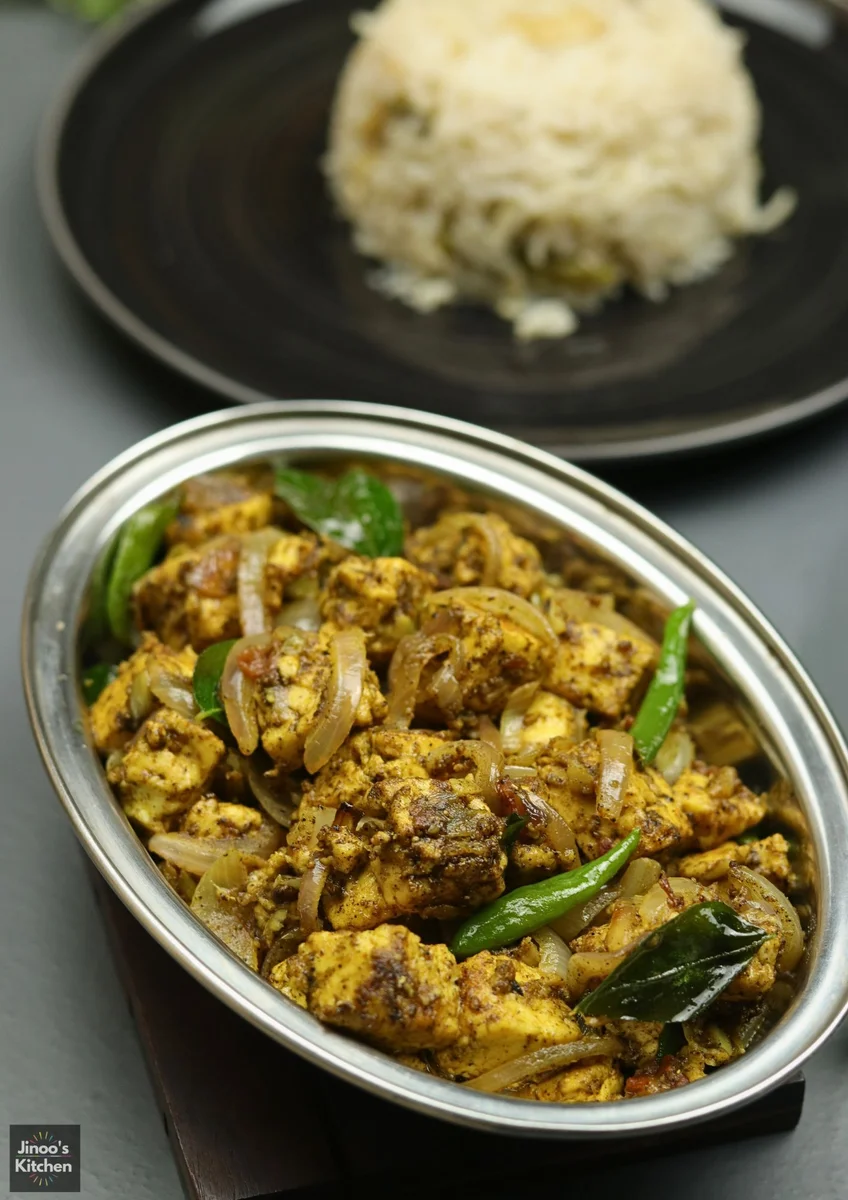
Paneer Pepper Varattiyathu is a Kerala-style dry paneer dish built around freshly roasted spices, black pepper and curry leaves. It is a good choice when you want a warmly spiced, savoury meal with soft paneer and a little bite from the onions and chillies.
Ingredients
- 200 gpaneer
- 1/2 inchcinnamon
- 3cloves
- 1cardamom
- 1 tspcumin seeds
- 1/2 tspfennel seeds
- 1 tbspcoriander seeds
- 1 tbsppeppercorns
- 1/8 tspturmeric powder
- 1/2 tspsalt
- 1/8 tsppepper powder
- 5small onions, crushed
- 1 tbspcrushed ginger and garlic
- 1 sprigcurry leaves
- 1/2tomato, chopped
- 1large onion, sliced
- 2green chillies, chopped
- A pinchred chilli powder
- 1 tspcoconut oil
Instructions
- 1
Roast the spices
Dry-roast the cinnamon, cloves, cardamom, cumin seeds, fennel seeds, coriander seeds and peppercorns until fragrant. Let them cool, grind to a fine powder and set aside.
- 2
Soak the paneer
Cut the paneer into cubes and mix with the turmeric, salt and pepper powder. Cover with hot water and leave it to soak for a while so it stays soft.
- 3
Sauté the aromatics
Heat the coconut oil in a pan. Add the crushed small onions and crushed ginger and garlic; sauté until the onions turn pink, then add the curry leaves.
- 4
Cook the tomato
Add the chopped tomato, turmeric, salt and some of the prepared spice powder. Cook until the tomato softens.
- 5
Add the paneer
Lift the paneer from the soaking water and add it to the pan, then add a little of that water as well. Mix gently and cook for a couple of minutes.
- 6
Fry the onions
Add the crushed sliced onion, green chillies, more of the spice powder, the red chilli powder and salt. Fry until the onions soften.
- 7
Mash some paneer
Lightly mash some of the paneer in the pan to give the dish a varied texture.
- 8
Adjust the spice
Add more of the prepared spice powder if you prefer a spicier dish.
- 9
Finish and serve
Finish with a drizzle of coconut oil and curry leaves. Mix and serve hot.
What is paneer pepper varattiyathu?
Varattiyathu refers to a dry-style preparation in which ingredients are cooked down rather than served in a loose sauce. This Kerala-inspired version pairs paneer with pepper, whole spices, curry leaves and onions.
Freshly roasted spices give the dish its backbone, while soaking the paneer helps it stay soft as the mixture cooks down.
Nutrition and macros by portion
The nutrition label shows one serving as written: 220 calories, 13g protein, 10g carbs, 16g fat.
| Portion | Adjustment | kcal | Protein | Carbs | Fat |
|---|---|---|---|---|---|
| Lighter | Use less paneer | 154 kcal | 9g | 7g | 11g |
| This serving | As written | 220 kcal | 13g | 10g | 16g |
| Hungry | Serve with extra rice | 330 kcal | 19g | 15g | 23g |
Paneer supplies most of the protein and fat, while the onions and tomato contribute most of the carbohydrates; the coconut oil adds a little more fat. Pair a serving with vegetables and rice or flatbread to make a fuller plate.
The freshly ground spice blend
Whole spices: cinnamon, cloves, cardamom, cumin, fennel, coriander and peppercorns are dry-roasted together. Grind them only once cool, so the powder stays fine and easy to mix through the pan.
Pepper: the peppercorns provide the main pungent warmth, with the red chilli powder and green chillies bringing additional heat. Add the spice powder in stages, as the method directs.
Keeping paneer soft
Hot-water soak: briefly soaking the seasoned cubes helps keep them tender. Add the paneer without the soaking water, then use only a little of that water in the pan.
Gentle mixing: paneer can break up if stirred roughly. Fold it through the tomato and spice mixture, then mash only a portion at the end for a thicker, varied texture.
Building the onion base
Small onions: sauté the crushed onions with the ginger and garlic until they turn pink before adding the curry leaves. This gives the base time to soften and become aromatic.
Tomato and sliced onion: cook the tomato until softened, then fry the sliced onion until tender. The recipe calls for the sliced onion to be crushed before it goes into the pan.
How to judge the texture
The tomato should soften before the paneer is added, and the onions should be soft by the end of frying. Keep the mixture moist enough to coat the paneer, but avoid adding more soaking water than needed.
A little mashing should thicken the mixture without turning all the paneer into a paste. Finish with the coconut oil and curry leaves just before serving.
Serving ideas
Serve the paneer hot as a side with rice, flatbread or another meal accompaniment. Its concentrated pepper-and-spice flavour works well alongside a milder dish.
For a more balanced plate, add vegetables and a staple such as rice or bread; the paneer preparation itself is rich in flavour and relatively compact.
Recipe notes & tips
- Keep the spices moving over dry heat and take them off as soon as they smell fragrant.
- Let the roasted spices cool before grinding for a finer powder.
- Use hot water for soaking the paneer, and drain it before adding it to the pan.
- Add the spice powder in stages so you can adjust the heat to your taste.
- Mix gently after adding paneer to help the cubes hold their shape.
- Mash just some of the paneer to thicken the dish while retaining distinct pieces.
Variations
- More pepper: increase the prepared spice powder for a stronger pepper flavour.
- Milder heat: use fewer green chillies and less red chilli powder.
- Extra curry leaves: add a few more at the finish for a stronger herbal note.
- Softer onions: give the sliced onion more time in the pan before serving.
- Serve with rice: add plain rice alongside to make the dish part of a larger meal.
Common mistakes to avoid
- Over-roasting the spices: they can turn bitter, so remove them once fragrant.
- Grinding the spices warm: let them cool first for a finer, less clumpy powder.
- Adding all the soaking water: use only a little so the dish stays dry-style.
- Stirring too roughly: fold the paneer through gently to avoid breaking every cube.
- Mashing all the paneer: mash only some pieces to keep a mix of textures.
- Adding the whole spice blend at once: add it in stages, then adjust to taste.
How to store
Refrigerate leftovers in a covered container and use within 2 days. Reheat gently in a pan, adding a small splash of water if the mixture seems dry; avoid prolonged heating, which can toughen the paneer.
Frequently asked questions
Can I make the spice powder ahead?
Yes. Roast, cool and grind the spices ahead, then keep the powder in a sealed container until you cook the dish.
Do I need to use all the prepared spice powder?
The method adds it in stages and suggests adding more if you want extra heat. Adjust to your preference rather than tipping it all in at once.
Why soak the paneer in hot water?
The recipe uses the soak to help keep the paneer soft. Drain the cubes before adding them, then add just a little of the soaking water to the pan.
How do I keep the dish from becoming too wet?
Use only a little soaking water and let the tomato and onions cook until soft. The finished mixture should coat the paneer rather than sit in a pool of liquid.
Can I make it less spicy?
Use less of the prepared spice powder, green chilli and red chilli powder. Add the spice blend gradually so you can stop when it tastes right.
What should I serve with it?
Serve it hot with rice or flatbread, and add vegetables or a milder side to round out the meal.
Cook it from the original
This recipe comes from jinooskitchen.com. Their page has the author’s own photos, notes and tips — the best place to cook it from.
Open the recipe on jinooskitchen.com