
Sajjige Bajil – Udupi's Traditional Upma and Poha Combo
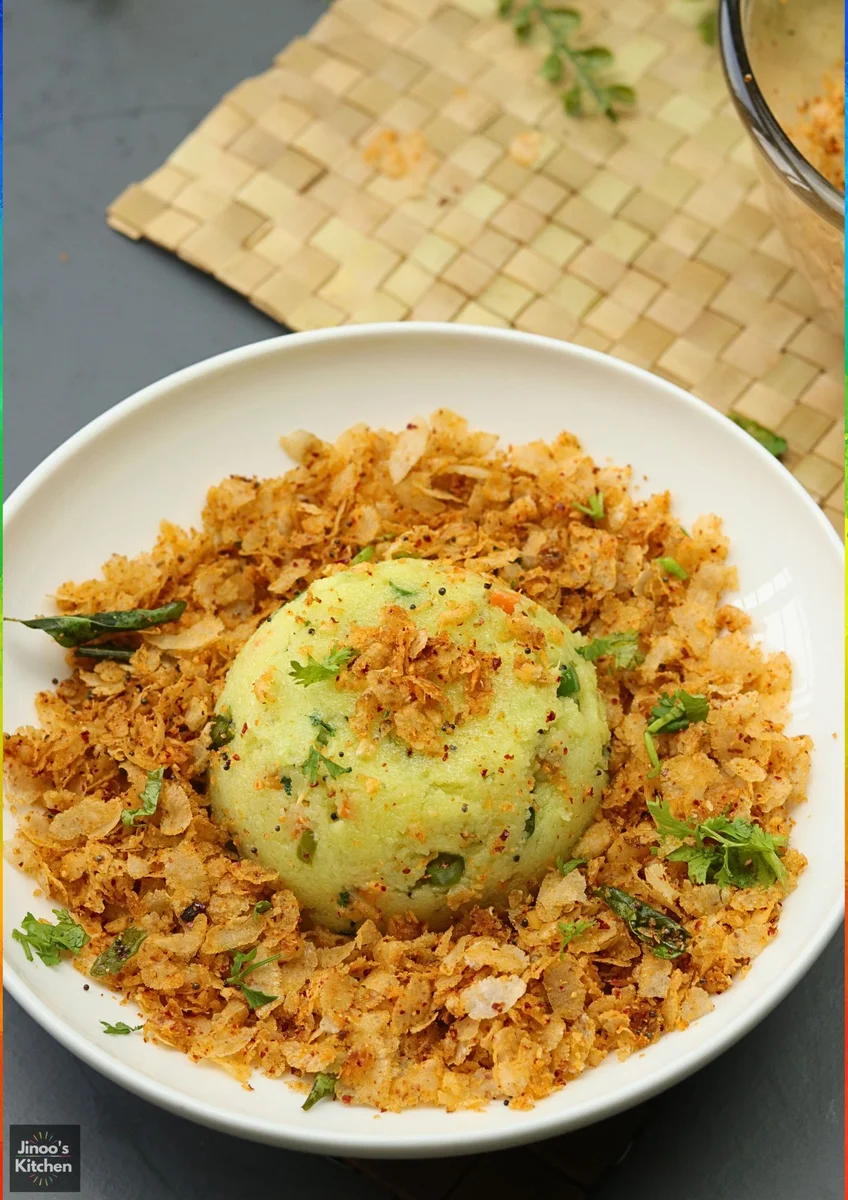
Sajjige bajil pairs soft, savoury semolina upma with coconutty, spiced poha for a South Indian dish with contrasting textures. Make it when you want a filling breakfast or brunch with two distinct preparations on one plate.
Ingredients
- 1 tbspoil
- 1 tspmustard seeds
- 1 tspsplit urad dal
- 1 tspchana dal
- 1 tbspchopped ginger
- 2green chillies, finely chopped
- 1 sprigcurry leaves
- 1carrot, finely chopped
- 3beans, finely chopped
- A pinchturmeric powder
- 180 ml (¾ cup)rava (semolina)
- To tastesalt
- 540 ml (2¼ cups)hot water
- A handfulchopped coriander leaves
- 2 tbspgrated coconut
- 1 tbsp (optional)oil
- 5byadgi red chillies
- 1 tspcoriander seeds
- ½ tspcumin seeds
- 480 ml (2 cups)thin poha (flattened rice)
- ½ tspsalt
- 120 ml (½ cup)grated coconut
- 2 tspjaggery powder
- 1 tbspoil
- 1 tspmustard seeds
- 1 sprigcurry leaves
- A pinchKashmiri red chilli powder
Instructions
- 1
Temper the spices
Heat 1 tbsp oil in a pan. Add the mustard seeds, urad dal, chana dal, ginger, green chillies and curry leaves, then sauté for 30 seconds.
- 2
Cook the vegetables
Add the chopped carrot and beans and cook for about 1 minute.
- 3
Roast the rava
Stir in a pinch of turmeric and 180 ml (¾ cup) rava. Roast over a low flame for 1–2 minutes, stirring continuously, until aromatic.
- 4
Add water
Season with salt to taste, then pour in 540 ml (2¼ cups) hot water and mix well.
- 5
Cook the upma
Cook over a medium flame until most of the water has been absorbed.
- 6
Finish the upma
Add the chopped coriander leaves and 2 tbsp grated coconut. Add another 1 tbsp oil at this stage if using, for a silkier texture.
- 7
Stir until smooth
Mix well and cook over a low flame until the upma is smooth, soft and non-sticky.
- 8
Grind the spices
Heat a drop of oil in a pan. Roast the byadgi chillies, coriander seeds and cumin seeds until aromatic, then grind to a medium-coarse powder.
- 9
Season the poha
Put the poha in a mixing bowl. Add ½ tsp salt, 120 ml (½ cup) grated coconut, the jaggery powder and the prepared spice powder. Mix, lightly crushing the poha as you go.
- 10
Make the tempering
Heat 1 tbsp oil in another pan. Add the mustard seeds, curry leaves and a pinch of Kashmiri red chilli powder. Let them crackle and turn crisp.
- 11
Combine the poha
Pour the tempering over the poha mixture and mix again until evenly combined.
What is sajjige bajil?
Sajjige bajil is a traditional Udupi-style pairing of sajjige, or semolina upma, with bajil, a seasoned poha preparation. The two components bring together the soft, cooked texture of upma and the lightly crushed, coconut-rich poha.
This version builds flavour with a tempering in each part of the dish. Vegetables and coriander brighten the upma, while roasted dried chillies, jaggery and coconut give the poha a savoury-sweet, aromatic balance.
Nutrition and macros by portion
The nutrition label shows one serving as written: 395 calories, 8g protein, 68g carbs, 12g fat.
| Portion | Adjustment | kcal | Protein | Carbs | Fat |
|---|---|---|---|---|---|
| Lighter | Use less oil and coconut | 277 kcal | 6g | 48g | 8g |
| This serving | As written | 395 kcal | 8g | 68g | 12g |
| Hungry | Serve a larger portion | 593 kcal | 12g | 102g | 18g |
The semolina and poha provide most of the carbohydrates, while the oil and grated coconut contribute much of the fat. The dals, semolina and poha supply some protein, though this is mainly a grain-based meal; serve it with a protein-rich side such as yoghurt or eggs to round out the plate.
Choosing and preparing the ingredients
Rava: The semolina is roasted briefly before adding water, which brings out its aroma. Keep it moving over a low flame so it warms evenly without browning too much.
Poha: Thin poha suits this preparation because it mixes readily with the coconut and spice powder. Handle it gently as you mix; a little crushing is called for, but it should not become a paste.
Coconut: Grated coconut goes into both components, lending each a fresh, mellow flavour. The optional oil in the upma is there for extra silkiness, not a requirement.
Getting the upma texture right
Water: Pour the hot water into the roasted rava and mix it in well. Cook until most of the liquid is absorbed, then continue over a low flame until the upma feels soft and smooth.
Stirring: Continuous stirring while the rava roasts helps it heat evenly. Once the water is added, mix thoroughly to help the grains cook without leaving dry pockets.
Building flavour in the poha
Roasted spices: Toast the byadgi chillies, coriander seeds and cumin until aromatic, then grind them to a medium-coarse powder. Avoid taking the spices too far; the goal is a fragrant blend rather than a dark, bitter one.
Tempering: The mustard seeds and curry leaves should crackle in the hot oil and turn crisp. Pour this over the poha mixture so the oil and spices are spread through it.
Timing both components
Upma first: Make the upma while the poha spices are still to be ground and mixed. It can finish cooking gently while you prepare the second part.
Poha last: The poha mixture comes together quickly, so prepare it near serving time. Once both are ready, serve them together while the upma is soft and the poha still has a little texture.
Serving sajjige bajil
Serve a portion of upma alongside a portion of masala poha so both textures remain distinct. A little extra chopped coriander can be scattered over the upma if you have some to hand.
For a fuller meal, pair it with a simple vegetable side or fresh fruit. Keep accompaniments mild if you want the toasted spices and chilli in the poha to stay prominent.
Recipe notes & tips
- Keep the rava moving as it roasts so it heats evenly.
- Use hot water for the upma as specified, and stir well when adding it.
- Grind the roasted poha spices to a medium-coarse texture rather than a fine powder.
- Lightly crush the poha while mixing, taking care not to break it down completely.
- Add the upma's optional oil only when you want a silkier finish.
- Prepare the poha close to serving time to preserve some texture.
Variations
- Adjust the heat: Use fewer byadgi chillies for a milder poha.
- Add vegetables: Include other finely chopped vegetables in the upma, keeping the pieces small.
- Boost the coconut: Add a little more grated coconut to either component for a more pronounced coconut flavour.
- Skip the optional oil: Leave out the extra tablespoon in the upma for a less rich finish.
- Balance the sweetness: Use less jaggery powder if you prefer the poha less sweet.
Common mistakes to avoid
- Rushing the rava: Roast it over a low flame for 1–2 minutes, stirring continuously, until aromatic.
- Adding water carelessly: Pour in the hot water and mix well so the rava cooks evenly.
- Overcooking the poha spices: Take them off the heat once fragrant to avoid a bitter flavour.
- Crushing the poha too much: Mix gently and only crush it slightly, as the recipe directs.
- Skipping the tempering: Let the mustard seeds and curry leaves crackle and crisp before pouring them over the poha.
How to store
Store the upma and poha separately in airtight containers in the fridge for up to 2 days. Reheat the upma gently in a pan with a small splash of water, stirring until warm; the poha is best eaten fresh, but can be warmed briefly in a pan.
Frequently asked questions
Can I make the upma ahead of time?
Yes, you can cook it ahead and refrigerate it separately from the poha. Reheat it gently with a small splash of water to restore its soft texture.
Can I use thick poha instead of thin poha?
Thin poha is specified because it mixes easily with the seasonings. Thick poha may need a different preparation, so the result will not have quite the same texture.
What is the optional tablespoon of oil for?
It is added to the upma near the end of cooking to make the texture silkier. Leave it out if you prefer.
How can I make the poha less spicy?
Use fewer byadgi chillies in the ground spice mixture. You can also omit the pinch of Kashmiri red chilli powder from the tempering.
Can I leave out the jaggery?
Yes. The poha will be less sweet, but the coconut and roasted spices will still season it.
Can I prepare the poha in advance?
You can grind the spices ahead, but mix the poha close to serving time. This helps it retain more of its texture.
Cook it from the original
This recipe comes from jinooskitchen.com. Their page has the author’s own photos, notes and tips — the best place to cook it from.
Open the recipe on jinooskitchen.com