
Beetroot Toast Bread Recipe
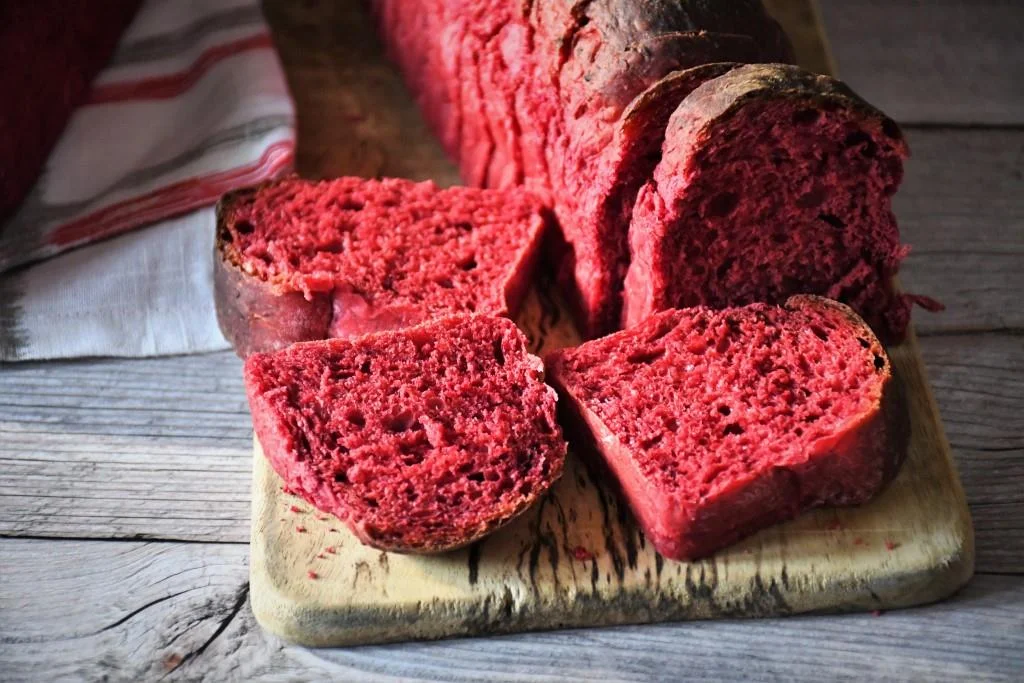
This Indian-inspired beetroot bread gets its vivid colour from a mix of roasted and boiled beetroot, worked into a yeasted dough. Allow time for the two rests and final proving, then bake it as a loaf or rolls.
Ingredients
- 5 smallbeetroots
- 100 gbread flour
- 150 ggrated beetroot
- 1–2 tbspwater
- 1 tspinstant yeast
- 300 gbread flour
- 250 ggrated beetroot
- 1 tbsporange zest
- 20 gbutter
- 1 tspsalt
- as neededwater
Instructions
- 1
Wash the beetroot
Trim the roots and stems from the beetroots and wash them thoroughly.
- 2
Prepare for roasting
Wrap three small beetroots in aluminium foil and drizzle a little olive oil over them.
- 3
Roast until tender
Bake in an oven preheated to 200°C until a knife passes easily through the beetroots.
- 4
Cool the roasted beetroot
Take them out of the oven and leave them to cool completely.
- 5
Boil the remaining beetroot
Cook the other two beetroots in a pan of water, checking with a knife to see when they are tender.
- 6
Cool the boiled beetroot
Lift the beetroots out of the water and leave them to cool completely.
- 7
Peel and grate
Peel the roasted and boiled beetroots, grate them with a large-hole grater and set them aside.
- 8
Make the pre-ferment
Mix 100 g bread flour, the yeast, 100 g grated beetroot and 1–2 tbsp water into a thick dough.
- 9
Rest the pre-ferment
Cover the dough and leave it for 45 minutes.
- 10
Mix the autolysis dough
In another bowl or a stand-mixer bowl, combine 300 g bread flour, 250 g grated beetroot and enough water to make a thick dough.
- 11
Rest the dough
As soon as the dry ingredients have come together, stop mixing, cover the bowl with cling film and leave it for 45 minutes.
- 12
Combine the doughs
Add the pre-ferment to the autolysis dough and begin kneading by hand or in a stand mixer.
- 13
Knead the dough
Knead for 5 minutes in a mixer or 7 minutes by hand. Add the butter and salt, then knead for a further 5 minutes by hand or mixer.
- 14
Let the dough rise
Transfer the dough to an oiled bowl, cover with cling film and leave until doubled in volume. This may take 45 minutes to 2 hours, depending on the climate.
- 15
Shape the loaf
Gently degas the dough. For a 5-inch cube pan, shape all of it into a large ball with a smooth top and place it in the loaf tin.
- 16
Shape the rolls
For rolls, divide the dough into 8 equal portions and leave them to rest for 5 minutes. Shape each portion into a tight roll and place them in a tin or on a baking tray.
- 17
Prove the shaped dough
Cover the loaf or rolls and leave until doubled in volume; this may take 20 minutes to 1 hour.
- 18
Preheat the oven
Heat the oven to 200°C.
- 19
Bake the bread
Bake in the preheated oven for 40 minutes in a 5-inch loaf tin, or 30 minutes for a small loaf or rolls.
- 20
Cool on a rack
When the bread is well coloured and the crust is hard, remove it from the oven. Take it out of the tin straight away and cool it on a wire rack.
- 21
Rest before slicing
Once completely cool, wrap the bread in two layers of aluminium foil and leave it for 8–12 hours before slicing.
- 22
Store the slices
Keep any leftover slices in an airtight box in the fridge.
What is beetroot toast bread?
This is a beetroot-enriched yeasted bread, made with beetroot that is both roasted and boiled before being grated into the dough. It sits within the broader tradition of Indian home baking, while using a familiar bread-making method of resting, kneading and proving.
The combination gives the dough beetroot throughout rather than relying on colouring alone. The recipe offers a tin-baked loaf or eight rolls, though the method does not say when to add the listed orange zest.
Nutrition and macros by portion
The nutrition label shows one serving as written: 940 calories, 30g protein, 198g carbs, 9g fat.
| Portion | Adjustment | kcal | Protein | Carbs | Fat |
|---|---|---|---|---|---|
| Lighter | Serve a smaller slice | 658 kcal | 21g | 139g | 6g |
| This serving | As written | 940 kcal | 30g | 198g | 9g |
| Hungry | Add another roll | 1410 kcal | 45g | 297g | 14g |
Most of the carbohydrates come from the bread flour, while the beetroot contributes additional carbohydrate and fibre. The flour supplies most of the protein, and the butter provides much of the fat; serve a portion with a protein-rich topping and vegetables to round out the plate.
Roasted and boiled beetroot
Roasting three beetroots in foil and boiling the other two gives you two preparation methods in one batch. Cook each until a knife slips in easily, then cool completely before peeling and grating.
Grating finely helps the beetroot distribute through the dough. The ingredient list gives 150 g and 250 g grated beetroot, while the pre-ferment method calls for 100 g; check the amounts as you prepare the components.
Two rests before kneading
Pre-ferment: mix the yeast with 100 g flour, beetroot and a little water, then leave it for 45 minutes. This gives the yeast time to begin working before the doughs are combined.
Autolysis: combine the other 300 g flour with 250 g beetroot and enough water to bring the mixture together. Stop mixing at that point and rest it, covered, for 45 minutes.
Kneading and dough feel
Knead the two rested mixtures together for 5 minutes in a stand mixer or 7 minutes by hand. Add the butter and salt, then continue for another 5 minutes.
The recipe describes a thick dough, so add water gradually rather than pouring in a large amount at once. Beetroot contributes moisture, and the exact amount needed can vary.
Proving and shaping
For the first rise, look for the dough to double rather than relying on the clock: the recipe allows 45 minutes to 2 hours, depending on the climate. After shaping, cover it and wait for another doubling, which may take 20 minutes to 1 hour.
For a 5-inch cube pan, shape the whole dough into one smooth ball. For rolls, divide it into eight equal portions, rest them for 5 minutes, then shape each into a tight roll.
Baking and cooling
Bake at 200°C, allowing 40 minutes for the 5-inch loaf or 30 minutes for a small loaf or rolls. The stated cues are a well-coloured bread and a hard crust.
Remove the bread from its tin as soon as it comes out of the oven, then cool it on a wire rack. Wait until it is completely cool before wrapping it and resting it for 8–12 hours.
Serving ideas
Slice the rested loaf for toast, or serve the rolls alongside soup or a savoury meal. Their beetroot colour makes them an eye-catching alternative to plain bread.
For a more balanced plate, pair a slice or roll with a protein-rich topping and vegetables. The recipe does not specify how to use the orange zest, so clarify that detail before adding it.
Recipe notes & tips
- Cool the beetroot fully before peeling and grating it.
- Add water a little at a time when bringing the flour and beetroot together.
- Use the doubling cues for both rises, as the times can vary with the climate.
- Shape the rolls tightly so they hold their form during proving.
- Remove the bread from its tin immediately after baking, as directed.
- Let the bread cool completely and rest for 8–12 hours before slicing.
Variations
- Bake as rolls: divide the dough into eight equal pieces and bake for 30 minutes.
- Use a loaf tin: shape the whole dough as a smooth ball and bake for 40 minutes in a 5-inch cube pan.
- Add the orange zest: the ingredient list includes it, but the method does not specify when to mix it in.
- Serve as toast: slice the rested loaf and toast it before adding a savoury topping.
Common mistakes to avoid
- Grating warm beetroot: let it cool completely first, as the method specifies.
- Adding too much water: pour it in gradually until the mixture forms a thick dough.
- Rushing the first rise: wait until the dough has doubled, even if that takes longer than 45 minutes.
- Slicing while warm: cool the bread fully, then leave it wrapped for 8–12 hours.
- Leaving the bread in its tin: take it out immediately after baking and cool it on a wire rack.
How to store
Store leftover slices in an airtight box in the fridge, as directed. The recipe does not give a storage duration or reheating instructions.
Frequently asked questions
Can I make a loaf or rolls?
Yes. Use all the dough in a 5-inch cube pan for a loaf, or divide it into eight portions for rolls. The recipe gives different baking times for each shape.
How long do the rises take?
The first rise may take 45 minutes to 2 hours, and the shaped dough may take 20 minutes to 1 hour. In both cases, use doubling in volume as the cue.
How do I know when the bread is baked?
The recipe says it should be well coloured with a hard crust. Bake a loaf for 40 minutes or rolls for 30 minutes at 200°C.
Why does the method use both roasted and boiled beetroot?
It prepares three beetroots by roasting and two by boiling, then has you peel and grate them together. The recipe does not explain a specific reason for using both methods.
When should I add the orange zest?
The zest appears in the ingredients, but the method does not say when to add it. The recipe leaves that detail unresolved.
Can I slice the bread as soon as it cools?
The method asks you to wait until it is completely cool, wrap it in two layers of foil and rest it for 8–12 hours before slicing.
Cook it from the original
This recipe comes from gayathriscookspot.com. Their page has the author’s own photos, notes and tips — the best place to cook it from.
Open the recipe on gayathriscookspot.com