
Classic Pound Cake
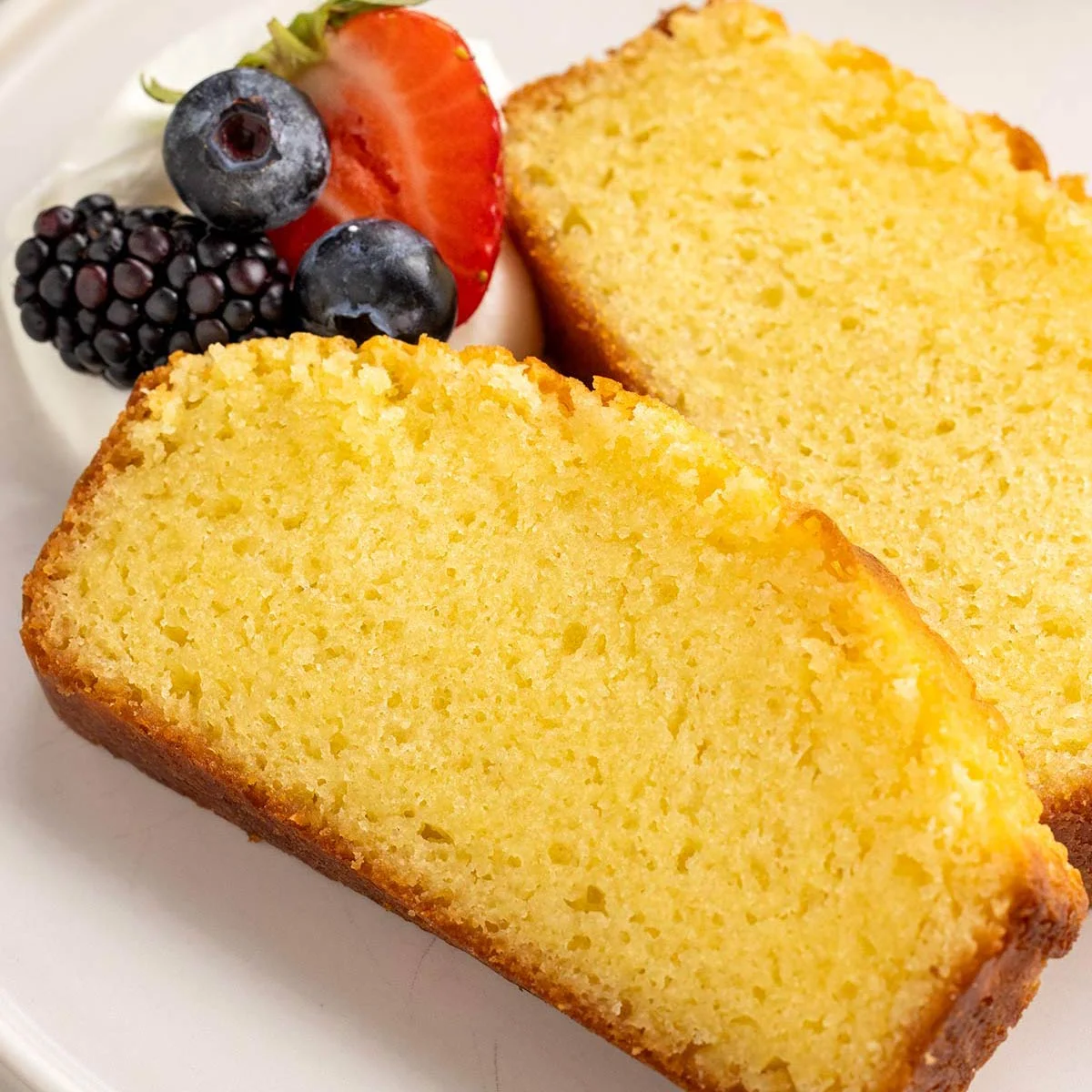
Classic American pound cake is a buttery, tender loaf with a fine crumb and a gently golden crust. It is straightforward to make and easy to serve plain or with fruit, cream or a cup of tea.
Ingredients
- 187 gplain flour
- 1 teaspoon (5 g)baking powder
- ½ teaspoon (about 2.5 g)kosher salt
- 227 gunsalted butter, softened to 18°C
- 200 ggranulated sugar
- 4 largeeggs, at room temperature
- 120 gsour cream
- 1½ teaspoons (7.5 ml)vanilla extract
Instructions
- 1
Heat the oven
Place the oven rack in the centre and preheat the oven to 176°C. Lightly grease a 23 × 13 cm loaf tin with butter, dust it with flour and tap out the excess. Alternatively, after greasing, line the tin with a parchment sling to make lifting out the cake easier.
- 2
Mix dry ingredients
Whisk the flour, baking powder and salt together in a medium bowl.
- 3
Cream butter and sugar
Using a stand mixer with a whisk attachment or a hand mixer, beat the softened butter at medium speed for 1 minute. Gradually add the sugar while mixing at medium speed for 30 seconds, then continue until the mixture is light and fluffy, about 3 minutes in total. Scrape down the bowl halfway through.
- 4
Add the eggs
With the mixer at medium speed, add the eggs one at a time, mixing for about 20 seconds after each until incorporated. Scrape down the sides of the bowl after each addition.
- 5
Add sour cream
Mix in the sour cream and vanilla at medium speed for about 15 seconds. Scrape down the sides of the bowl.
- 6
Finish the batter
Add the flour mixture and mix on low until just combined, about 10 seconds. Use a spatula to incorporate any remaining pockets of flour, taking care not to overmix.
- 7
Bake the cake
Pour the batter into the prepared tin and smooth the top with a spatula. Bake for about 45–50 minutes, until golden brown and a toothpick inserted into the centre comes out mostly clean, with a few crumbs, or the centre reaches 93–96°C.
- 8
Cool before slicing
Leave the cake in the tin for 10 minutes. Carefully run a knife or small spatula around the edges, then use the parchment sling to lift it out and transfer it to a wire rack. Let it cool completely before slicing.
What is pound cake?
Pound cake is a rich, close-crumbed cake with roots in European baking and a long history in American home kitchens. Its name refers to an old-fashioned formula built around equal weights of the main ingredients.
This version uses baking powder for lift and sour cream for moisture and a slight tang. The result is a simple loaf that works for an everyday treat or a dressed-up dessert.
Nutrition and macros by portion
The nutrition label shows one serving as written: 361 calories, 5g protein, 35g carbs, 23g fat.
| Portion | Adjustment | kcal | Protein | Carbs | Fat |
|---|---|---|---|---|---|
| Lighter | Smaller, thinner slice | 253 kcal | 4g | 25g | 16g |
| This serving | As written | 361 kcal | 5g | 35g | 23g |
| Hungry | Larger slice with berries | 542 kcal | 8g | 53g | 35g |
The flour and sugar supply most of the carbohydrate, while the butter contributes much of the fat; eggs and sour cream provide some protein. Pair a slice with fresh fruit or berries for a more balanced plate.
The ingredients that matter
Soft butter: At about 18°C, the butter can trap air as it is beaten with sugar. If it is too cold, it will not cream smoothly; if it is greasy or melted, it will not hold the same structure.
Room-temperature eggs: They blend into the creamed butter more readily than cold eggs. Add them individually so the mixture has time to incorporate each one.
Sour cream: This adds moisture and a little tang to balance the sweetness. Vanilla rounds out the flavour without overpowering the buttery cake.
Creaming for a light crumb
Beat the butter first, then add the sugar gradually and continue until the mixture looks pale and fluffy. Scraping the bowl helps keep the ingredients evenly mixed rather than leaving a layer of butter at the bottom.
Once the flour goes in, mix only until it disappears. Extra mixing can make the crumb tougher, so finish any small flour pockets by hand with a spatula.
How to check when it is done
Look for a golden surface and test the centre with a toothpick: a few moist crumbs are fine, but wet batter means the cake needs longer. The recipe also gives an internal temperature range of 93–96°C as a doneness cue.
Ovens and tins can vary, so begin checking around the 45-minute mark. If the top is colouring before the middle is ready, keep an eye on it as it finishes baking.
Cooling and slicing
A 10-minute rest in the tin lets the loaf settle before you remove it. Run a knife around the edges carefully, especially if you have not used a parchment sling.
Wait until the cake is completely cool before slicing for neater pieces. A serrated knife can help cut through the crust without compressing the soft crumb.
How to serve it
Serve slices plain, or pair them with fresh berries and softly whipped cream. A spoonful of fruit compote or a little yoghurt also complements the rich, buttery flavour.
For a simple afternoon tea, the loaf needs little more than a hot drink. Toasting a slice lightly is another way to serve it once cooled.
Recipe notes & tips
- Bring the eggs and sour cream to room temperature before mixing so they incorporate more evenly.
- Measure the flour carefully and avoid packing it into the measuring cup.
- Scrape the bowl after adding each egg to catch any mixture clinging to the sides.
- Use a parchment sling if you want to lift the loaf out without turning it over.
- Start checking the cake at 45 minutes, as baking time can vary between ovens.
Variations
- Citrus zest: Add finely grated lemon or orange zest for a bright note.
- Berry topping: Serve slices with fresh berries or a spoonful of berry compote.
- Warm spice: Add a pinch of cinnamon to the dry ingredients for a gently spiced loaf.
- Almond flavour: Replace some of the vanilla with almond extract, using it sparingly.
- Chocolate chips: Fold a small handful into the finished batter just before baking.
Common mistakes to avoid
- Butter too cold: Let it soften to about 18°C so it can cream smoothly.
- Cold eggs: Bring them to room temperature to help them blend into the butter mixture.
- Overbeating after flour: Mix only until combined, then finish any flour pockets with a spatula.
- Opening the oven early: Check near the end of the stated baking time rather than repeatedly during baking.
- Removing it too soon: Rest the loaf in the tin for 10 minutes before loosening the sides.
How to store
Once completely cool, keep the cake in an airtight container at room temperature for up to 3 days. Reheat individual slices briefly in a low oven or microwave if you prefer them warm.
Frequently asked questions
Can I make the cake without a stand mixer?
Yes. Use a hand mixer for the creaming and mixing steps, following the same order and speeds as closely as possible.
How do I know the cake is baked through?
The top should be golden, and a toothpick inserted in the centre should come out mostly clean with a few crumbs. The recipe also gives 93–96°C as an internal temperature cue.
Why did my cake turn out dense?
Butter that was too cold, eggs that did not incorporate well, or overmixing after adding the flour can affect the crumb. Follow the creaming stages and stop mixing once the flour is just combined.
Can I use a different tin?
The method is written for a 23 × 13 cm loaf tin. A different size or shape will change the depth of the batter and may change the baking time, so check for doneness rather than relying only on the clock.
Can I freeze pound cake?
Yes. Once fully cool, wrap the loaf or individual slices well and freeze. Thaw at room temperature before serving.
Cook it from the original
This recipe comes from jessicagavin.com. Their page has the author’s own photos, notes and tips — the best place to cook it from.
Open the recipe on jessicagavin.com