
Lemon Meringue Pie
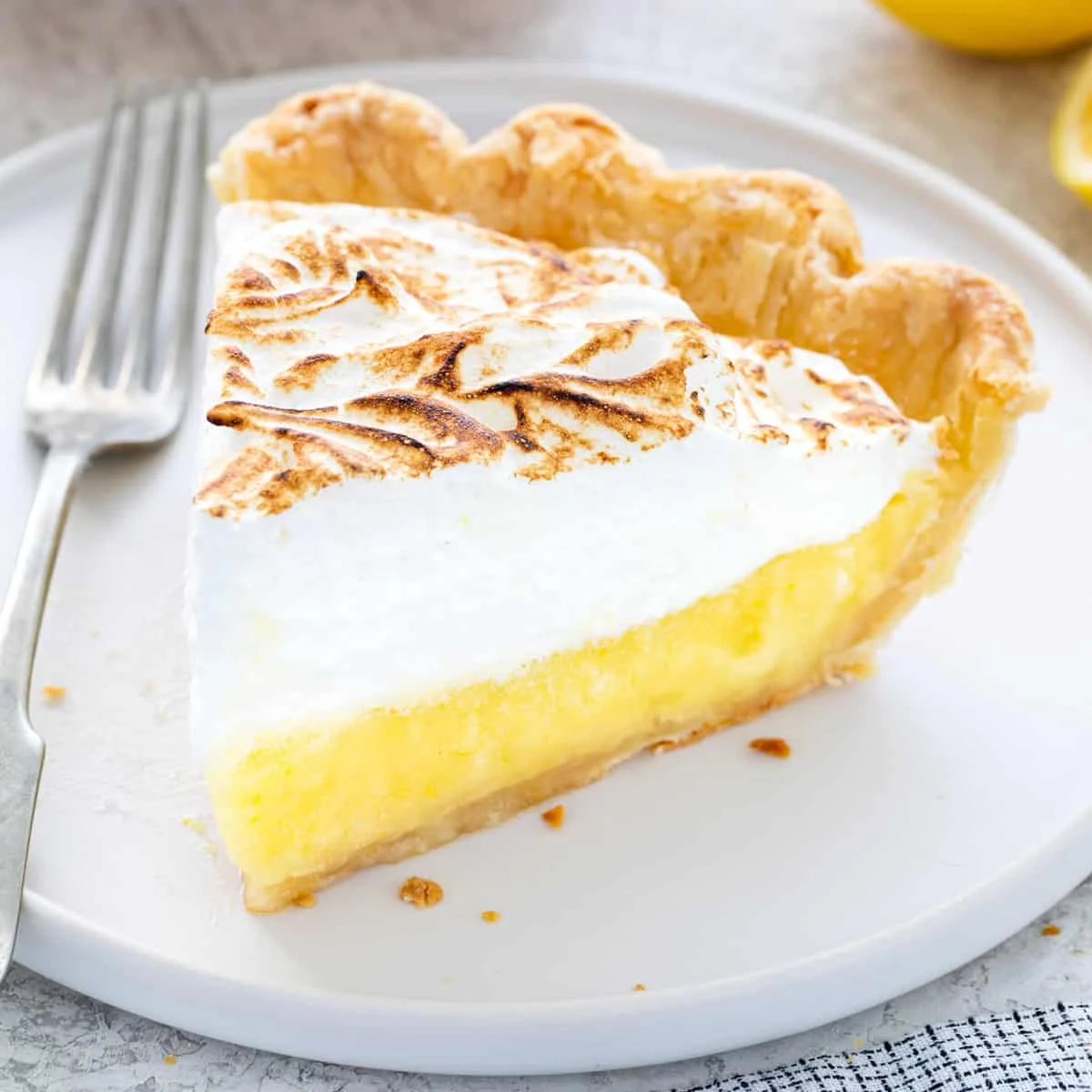
Lemon meringue pie brings together a crisp, buttery pastry case, a sharp lemon filling and a glossy meringue topping. It is a good make-ahead dessert for a celebration, as the filling needs several hours to set before you finish the pie.
Ingredients
- 188 gplain flour
- 1.5 gkosher salt
- 198 g, chilled and cut into 6 mm cubesunsalted butter
- 120 ml, ice-coldwater
- 200 g, dividedgranulated sugar
- 32 gcornflour
- 480 ml, plus 7.5 ml, dividedwater
- 4 largeegg yolks
- 2 tablespoonslemon zest
- 80 mllemon juice
- 3 gkosher salt
- 28 g, at room temperatureunsalted butter
- 4 large, at room temperatureegg whites
- 2.5 mlvanilla extract
- A pinchkosher salt
- 225 ggranulated sugar
- 120 mlwater
Instructions
- 1
Chill crust ingredients
Put ice cubes and water in a measuring jug. Cut the butter into 6 mm cubes, then refrigerate both until needed.
- 2
Cut in butter
Combine the flour and salt in a stand mixer bowl and mix with the paddle on its lowest speed for about 10 seconds. Add the chilled butter, briefly pulsing the mixer to stop flour escaping, then mix on low until coarse crumbs form, about 75 seconds. Break up any large pieces with your fingers; do not overmix, and do not expect the dough to bind yet.
- 3
Hydrate the dough
Add ice-cold water gradually, 15 ml at a time, mixing for 2–3 seconds after each addition. Use only enough to make the dough look hydrated and lumpy rather than wet or sticky; typically 75–105 ml is enough, and you may not need all 120 ml. When squeezed, the dough should hold together rather than feel dry or crumbly. Avoid overmixing.
- 4
Rest the dough
Press the dough into a disc about 2.5 cm thick and wrap it in plastic wrap. Put it in a resealable bag and refrigerate for at least 4 hours, overnight or for up to 2 days.
- 5
Roll the pastry
Leave the dough at room temperature for 5–10 minutes so it is easier to roll; if it is still too firm, wait until it becomes more pliable. Lightly flour the work surface, dough and rolling pin, then roll the pastry into a 36 cm circle just under 6 mm thick. Turn and dust it as needed to prevent sticking and help with transferring.
- 6
Shape the crust
Fit the pastry into a 23 cm pie dish, pressing it gently against the base and sides. Trim the excess, leaving a 1.3 cm overhang, then crimp the edge between your fingers. Freeze the crust for 20 minutes.
- 7
Preheat the oven
Set a rack in the centre of the oven and heat it to 190°C. Put the pie dish on a baking tray.
- 8
Bake the crust
Cover the crust with baking parchment and add pie weights, covering the base and sides without overfilling. Bake for 20 minutes. Remove it from the oven and let the weights sit for a few minutes to press down any puffed areas, then carefully lift out the parchment and weights; they will not be needed again. Bake for another 15 minutes, then gently press the base down and sides up with a spoon. Return it to the oven until golden and dry, about 10–15 minutes more. Cool completely on a wire rack for 30–40 minutes.
- 9
Start lemon filling
In a medium bowl, whisk together 100 g of the sugar and the cornflour. Whisk in 135 ml of the water and the egg yolks, then set aside. In a medium saucepan, combine 360 ml water, the remaining 100 g sugar, lemon zest, lemon juice and 3 g salt. Bring to a simmer over medium-high heat; when it reaches 87–93°C, about 3 minutes, turn off the heat.
- 10
Temper the eggs
Set the bowl with the egg mixture on a folded kitchen towel. Slowly ladle in 60 ml of the hot lemon mixture while whisking continuously, repeating until you have added 300 ml. Whisk the tempered egg mixture into the remaining lemon mixture in the saucepan. Cook over medium-high heat, whisking constantly, until thickened, about 3–5 minutes. Turn off the heat and whisk in the room-temperature butter.
- 11
Fill and chill
Immediately strain the filling through a fine-mesh sieve into a clean bowl, pressing it through with a spatula. Let it cool until warm but spreadable, about 37°C, then spread it evenly in the fully baked, cooled crust. Cover the surface directly with plastic wrap to prevent a skin forming. Refrigerate until set, about 6 hours or overnight, before making the meringue.
- 12
Prepare sugar syrup
Put the egg whites, vanilla and a pinch of salt in a stand mixer bowl fitted with a whisk, and leave them ready while you make the syrup. In a clean medium saucepan, carefully stir together the sugar and water with a wooden spoon, keeping the sides of the pan free of sugar crystals. Heat over medium-high heat until the syrup reaches 115°C, checking with a candy or instant-read thermometer.
- 13
Whip the whites
As soon as the syrup reaches temperature, start the mixer at speed 6. Whip the whites until foamy but without peaks, about 1 minute. Keep the mixer running, raise the speed to 8 and pour in the hot syrup in one steady stream over 30–45 seconds. Increase the speed to 10 and whip for 3–4 minutes, until the meringue is thick, shiny and holds a peak without becoming stiff or foamy.
- 14
Top the pie
Take the chilled, filled pie out of the fridge and transfer the whipped meringue onto it with a rubber spatula. Gently spread it over the filling with an offset spatula, leaving a rustic finish.
- 15
Toast the meringue
Use a handheld cooking torch to toast patches of the meringue until golden brown.
What is lemon meringue pie?
Lemon meringue pie layers a baked pastry shell with a tart, thickened lemon filling and a sweet whipped topping. This version builds its texture in stages: the crust is blind-baked, the filling is cooked with egg yolks and cornflour, and the meringue is made with hot sugar syrup.
The supplied cuisine label is Italian, but the recipe itself is best understood by its familiar combination of pastry, citrus curd and meringue. Its make-ahead chilling time gives the filling a chance to set before the airy topping goes on.
Nutrition and macros by portion
The nutrition label shows one serving as written: 304 calories, 3g protein, 45g carbs, 13g fat.
| Portion | Adjustment | kcal | Protein | Carbs | Fat |
|---|---|---|---|---|---|
| Lighter | Smaller pie slice | 213 kcal | 2g | 31g | 9g |
| This serving | As written | 304 kcal | 3g | 45g | 13g |
| Hungry | Larger pie slice | 456 kcal | 5g | 68g | 20g |
The pastry butter and meringue sugar contribute much of the fat and carbohydrate, while the flour and sugar also add carbohydrates; the eggs provide some protein. Pair a slice with fresh fruit, or serve it after a meal with a lighter main course.
Keep the pastry cool
Butter and water: chilling them helps keep the pastry workable and gives the crust a tender, crisp texture. Add the water gradually, stopping when a squeezed handful holds together; the full amount may not be needed.
Resting and shaping: allow the dough its full refrigerator rest, then give it a few minutes at room temperature before rolling. Freezing the shaped shell for 20 minutes helps it hold its form as it bakes.
Cook the filling smoothly
Temper the yolks: pour the hot lemon mixture in slowly while whisking, so the egg mixture warms gradually. Whisk it back into the pan and keep stirring as it thickens to help prevent lumps.
Strain and cool: passing the cooked filling through a fine-mesh sieve catches any small lumps or bits of zest. Let it become warm and spreadable before filling the crust, then cover its surface directly and chill until set.
Watch the meringue cues
Syrup temperature: bring the sugar syrup to 115°C and keep sugar crystals off the sides of the pan. A clean saucepan and careful mixing reduce the chance of crystallised sugar.
Whipping: start the mixer as soon as the syrup reaches temperature, then pour it in as a steady stream. The finished meringue should look glossy and hold a peak; stop before it turns stiff or foamy.
Plan the timing
The long total time is mostly hands-off: the pastry rests for at least 4 hours and the filled pie chills for about 6 hours or overnight. You can make the crust and filling ahead, but add the meringue after the filling has set.
Allow the crust to cool completely before adding the filling, and let the filling cool until spreadable first. These pauses help keep the layers distinct rather than warm and soft.
Serve and slice
Serve the pie chilled, cutting with a clean knife and wiping it between slices for neater portions. The tart filling and sweet meringue make it satisfying as a small dessert after a meal.
For a balanced plate, serve a slice after a meal with fruit alongside rather than adding another rich dessert. Keep the pie chilled until serving.
Recipe notes & tips
- Measure the water for the pastry gradually, since the dough may come together before all of it is used.
- Keep the pie weights to a layer over the base and sides rather than piling them high.
- Whisk continuously while tempering the egg yolks and cooking the filling.
- Cover the lemon filling with plastic wrap touching its surface while it chills.
- Use a thermometer for the syrup so you can start whipping the egg whites at the right time.
- Toast the meringue in patches for the recipe's rustic finish.
Variations
- More lemon: Add a little extra zest for a more pronounced citrus aroma.
- Lime filling: Replace the lemon juice and zest with lime for a different citrus flavour.
- Graham-style base: Use a crumb crust in place of the pastry if you prefer a biscuit-like base.
- Toasted coconut: Scatter toasted coconut over the meringue just before serving.
- Individual pies: Bake the pastry in smaller pie tins and divide the filling and meringue between them.
Common mistakes to avoid
- Overworking the pastry: Stop mixing once it looks hydrated and lumpy, then press it together before chilling.
- Adding too much water: Add it a tablespoon at a time and stop when the dough holds when pinched.
- Skipping the crust chill: Freeze the shaped shell for 20 minutes so it is cold when it goes into the oven.
- Pouring hot filling straight onto the crust: Let it cool until warm and spreadable before filling the shell.
- Rushing the set: Chill the filling for about 6 hours or overnight before adding the meringue.
- Crystallised syrup: Keep sugar off the saucepan sides and use a clean pan for the meringue syrup.
How to store
Keep the pie covered in the refrigerator and eat within 2–3 days. It is best served chilled; avoid freezing, as the filling and meringue can lose their texture when thawed.
Frequently asked questions
Can I make the pie ahead?
Yes. The pastry dough can be refrigerated for up to 2 days, and the filled pie needs about 6 hours or overnight to set. Add and toast the meringue after the filling has chilled.
How do I know when the lemon filling is thick enough?
It should thicken as you whisk it over the heat for about 3–5 minutes. Strain it while still hot, then let it cool until warm and spreadable before adding it to the crust.
Can I make the meringue without a thermometer?
The recipe calls for heating the syrup to 115°C, so a candy or instant-read thermometer is the most reliable guide. Without one, it is harder to judge the syrup accurately.
Why does the pastry dough need to rest?
Resting it in the fridge for at least 4 hours gives the dough time to chill and makes it easier to handle after resting. Let it sit at room temperature for 5–10 minutes before rolling.
Can I skip toasting the meringue?
Yes, though the recipe finishes the topping with a handheld torch until golden in spots. Without a torch, leave the meringue untoasted rather than using a different cooking method not specified here.
How should I cut neat slices?
Use a clean, sharp knife and wipe it between cuts. Cutting the pie while it is chilled also helps keep the layers together.
Cook it from the original
This recipe comes from jessicagavin.com. Their page has the author’s own photos, notes and tips — the best place to cook it from.
Open the recipe on jessicagavin.com