
Buttermilk Pancakes
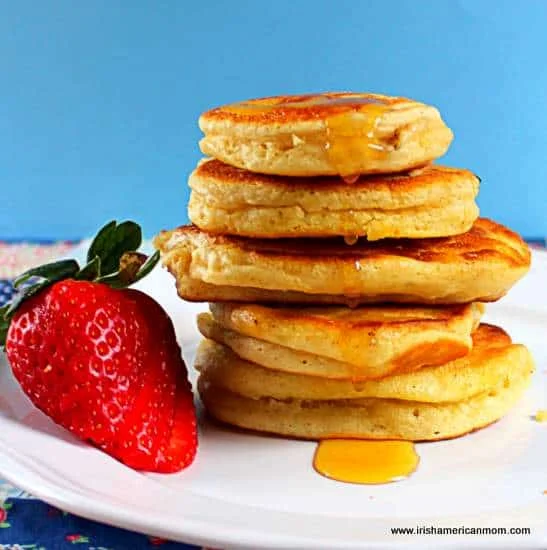
These Irish-style buttermilk pancakes are soft, fluffy and quick to make, with a gentle tang from the buttermilk. Serve them warm for breakfast or brunch with butter, jam, honey or syrup.
Ingredients
- 250 g (2 cups)plain flour
- 1 teaspoonbicarbonate of soda
- 2 teaspoonsbaking powder
- 1/2 teaspoonsalt
- 2 tablespoonssugar
- 2 mediumeggs
- 300 ml (1 1/4 cups)buttermilk
- 30 g (2 tablespoons)butter, melted
Instructions
- 1
Sift dry ingredients
Sift the flour, bicarbonate of soda, baking powder and salt into a large mixing bowl. Add the sugar and mix.
- 2
Mix wet ingredients
In a separate bowl or large jug, combine the eggs and buttermilk.
- 3
Heat the pan
Set a frying pan over medium-high heat to warm before mixing the batter. Add oil and a knob of butter, and let the butter melt.
- 4
Combine the batter
Pour the buttermilk and eggs into the dry ingredients and mix gently.
- 5
Add melted butter
Pour in the melted butter and combine gently.
- 6
Cook first side
Spoon the batter into the hot pan. Cook for 2 to 3 minutes, until small bubbles begin to appear on the surface.
- 7
Flip and finish
Turn the pancakes over and cook for a further 2 to 3 minutes on the other side.
- 8
Serve warm
Take the pancakes out of the pan and serve warm with butter, jam, honey or syrup.
What are buttermilk pancakes?
Buttermilk pancakes are a familiar breakfast dish made from a flour-based batter enriched with eggs and buttermilk. They are popular in Ireland and elsewhere, where a warm stack makes an easy breakfast or brunch.
This version combines bicarbonate of soda with baking powder, while the buttermilk adds a mild tang. Mixing the batter gently helps keep the cooked pancakes tender.
Nutrition and macros by portion
The nutrition label shows one serving as written: 190 calories, 6g protein, 29g carbs, 5g fat.
| Portion | Adjustment | kcal | Protein | Carbs | Fat |
|---|---|---|---|---|---|
| Lighter | Less butter, lighter toppings | 133 kcal | 4g | 20g | 4g |
| This serving | As written | 190 kcal | 6g | 29g | 5g |
| Hungry | Add another pancake | 285 kcal | 9g | 44g | 8g |
The flour and sugar provide most of the carbohydrates, while the butter contributes much of the fat. Eggs and buttermilk provide protein. Pair a serving with fruit for a simple way to add variety to the plate.
The dry ingredients
Leavening: bicarbonate of soda and baking powder work together to give the pancakes lift. Sifting them with the flour and salt helps distribute them through the batter.
Sugar: the small amount sweetens the batter lightly and helps the pancakes brown as they cook.
Why use buttermilk?
Buttermilk: its acidity pairs with the bicarbonate of soda, and its thickness gives the batter a fuller consistency. Measure it before mixing so the wet and dry ingredients come together as intended.
Eggs: these bind the batter and contribute structure. Whisking them together with the buttermilk first makes it easier to add the wet mixture evenly.
Mix gently
First combine: pour the wet mixture into the dry ingredients and stir only until they come together. A few small lumps are preferable to mixing the batter until completely smooth.
Finish with butter: fold in the melted butter gently. This is a brief step; avoid prolonged stirring, which can make the pancakes less tender.
Watch the pan and the bubbles
Heat: warm the pan over medium-high heat before adding the batter, then keep an eye on the pancakes as they cook. The method calls for oil and a knob of butter in the pan.
First side: cook for 2 to 3 minutes, looking for small bubbles on the surface before turning. Cook the second side for another 2 to 3 minutes.
Serve them warm
Toppings: butter, jam, honey and syrup all work with the lightly tangy pancakes. Add them just before serving so the stack is warm at the table.
For a fuller breakfast, serve the pancakes alongside fruit or yoghurt. Keep any extra toppings separate so everyone can choose their own.
Recipe notes & tips
- Sift the flour, bicarbonate of soda, baking powder and salt together before adding the sugar.
- Combine the eggs and buttermilk separately so they are ready to add to the dry ingredients.
- Mix the batter gently and stop once the ingredients come together.
- Warm the pan before you make the batter, as the method directs.
- Look for small bubbles on the surface before flipping the first side.
- Serve the pancakes soon after cooking while they are warm.
Variations
- Jam topping: spread a little jam over each warm pancake.
- Honey topping: drizzle honey over the stack just before serving.
- Syrup topping: pour syrup over the pancakes at the table.
- Butter finish: add a small piece of butter to the warm stack.
- Fruit side: serve fresh fruit alongside the pancakes.
Common mistakes to avoid
- Overmixing the batter: stir gently and stop when the ingredients have just combined.
- Flipping too soon: wait until small bubbles begin to form on the surface.
- Cooking by colour alone: use the stated 2 to 3 minutes per side and check the pancakes as they cook.
- Starting with a cold pan: warm it over medium-high heat before adding the batter.
- Leaving the pancakes to cool: serve them warm after they come out of the pan.
How to store
Let leftover pancakes cool, then store them in a covered container in the fridge and use within 2 days. Reheat in a frying pan over a low heat or in the microwave until warmed through.
Frequently asked questions
Can I make the batter ahead?
The method makes the batter just before cooking. For the fluffiest result, mix it shortly before it goes into the pan.
How do I know when to flip a pancake?
Cook the first side for 2 to 3 minutes and look for small bubbles starting to form on the surface before turning it.
Why should I mix the batter gently?
Gentle mixing helps keep the pancakes tender. Stop once the wet and dry ingredients have come together.
What can I serve with these pancakes?
The recipe suggests butter, jam, honey or syrup. Fruit or yoghurt can also be served alongside.
Can I reheat leftover pancakes?
Yes. Warm them in a frying pan over low heat or in the microwave until heated through.
Cook it from the original
This recipe comes from irishamericanmom.com. Their page has the author’s own photos, notes and tips — the best place to cook it from.
Open the recipe on irishamericanmom.com