
Garlic Mashed Potatoes
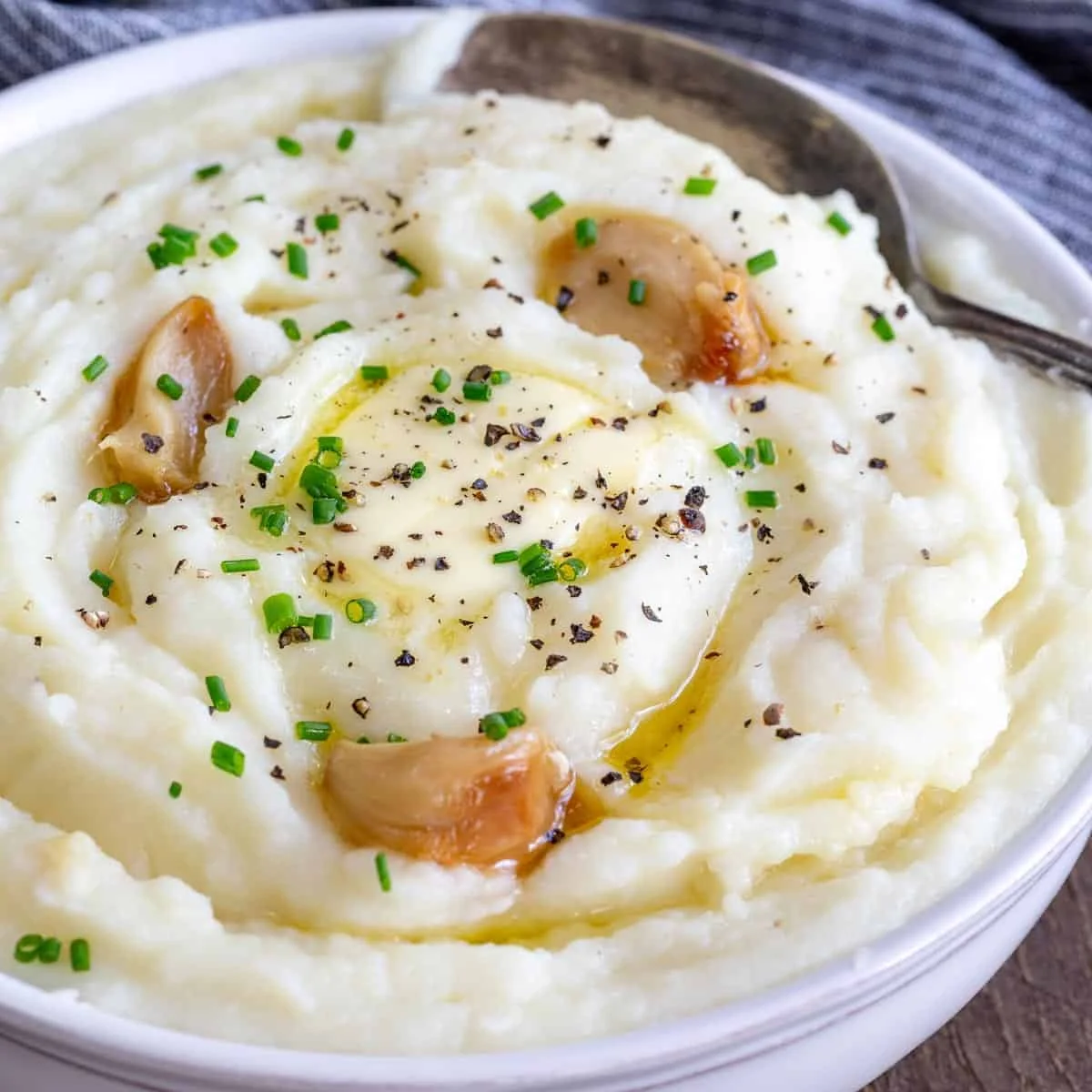
These American-style mashed potatoes get their mellow, savoury garlic flavour from a whole head of garlic roasted until tender. Butter and warm milk help give the potatoes a smooth, creamy texture.
Ingredients
- 1 headgarlic
- 5 ml (1 teaspoon)olive oil
- 1.9 litres (8 cups)water
- about 8.75 g (1 3/4 teaspoons), dividedkosher salt
- 907 g (2 pounds)russet potatoes
- 43 g (3 tablespoons)unsalted butter
- 180 ml (3/4 cup)whole milk
- to tasteblack pepper
- about 3 g (1 tablespoon), choppedchives
Instructions
- 1
Heat the oven
Set a rack in the centre of the oven and preheat it to 204°C (400°F).
- 2
Prepare the garlic
Remove the papery outer skin, keeping the cloves intact, then slice about 6 mm (¼ inch) from the top to expose them. Set the head on foil, drizzle with olive oil and wrap it tightly. Place the parcel on a baking sheet.
- 3
Roast the garlic
Roast for 40–60 minutes, until lightly browned and tender when pierced with a fork. Check after 40 minutes, then every 10 minutes until ready.
- 4
Make garlic paste
Remove the cloves by scooping out the flesh with a small knife or squeezing them from their skins. Press the cloves with a knife or spoon to make a paste, then set it aside.
- 5
Boil the water
Put the water and 1 teaspoon of the salt in a large pan and bring to the boil.
- 6
Cook the potatoes
Peel the potatoes and cut them into 2.5 cm (1-inch) pieces. Rinse them in a bowl under cool water to remove starch, then drain and add them to the boiling water. Cook for about 15 minutes, until fork-tender.
- 7
Rinse the potatoes
Drain the potatoes in a colander, then rinse them with hot water for 30 seconds to wash away any remaining starch.
- 8
Mash the potatoes
Set a food mill, potato ricer or fine-mesh sieve over the pan used to cook the potatoes to help keep them warm. Press the potatoes through in batches; if using a sieve, press them through with the back of a spoon.
- 9
Add the butter
Add the butter and fold it gently into the potatoes.
- 10
Warm the milk
Microwave the milk for 45 seconds to warm it. Whisk it with the remaining ¾ teaspoon of salt and the garlic paste.
- 11
Fold in the milk
Add the milk mixture to the potatoes in three additions, folding gently and letting each addition absorb before adding the next. Season with salt and pepper to taste.
- 12
Serve the potatoes
If necessary, rewarm the potatoes over medium heat, stirring occasionally. Finish with black pepper and chives.
What are garlic mashed potatoes?
Mashed potatoes are a familiar American side dish made by cooking potatoes until soft and mashing them with ingredients such as butter and milk. This version adds a whole head of roasted garlic for a gentler, sweeter savoury flavour than raw garlic.
Roasting the garlic while the potatoes cook makes good use of the oven time. Pressing the cooked potatoes through a mill, ricer or sieve helps create the smooth texture this recipe aims for.
Nutrition and macros by portion
The nutrition label shows one serving as written: 150 calories, 3g protein, 22g carbs, 5g fat.
| Portion | Adjustment | kcal | Protein | Carbs | Fat |
|---|---|---|---|---|---|
| Lighter | Less butter, more milk | 105 kcal | 2g | 15g | 4g |
| This serving | As written | 150 kcal | 3g | 22g | 5g |
| Hungry | Serve a larger portion | 225 kcal | 5g | 33g | 8g |
The potatoes provide most of the carbohydrates, while the butter, milk and olive oil contribute fat; the milk and potatoes also supply some protein. Pair a serving with a protein-rich main and vegetables to round out the plate.
Why roast a whole head of garlic?
Whole-head roasting softens the cloves and makes them easy to squeeze from their skins. The recipe uses olive oil and a tightly wrapped foil parcel to roast them until tender and lightly browned.
Check the garlic at 40 minutes and then every 10 minutes. It is ready when a fork can pierce it easily.
Choosing and cutting the potatoes
Russet potatoes are the specified choice here; their starchy flesh breaks down well for mashing. Peel them and cut them into even 2.5 cm pieces so they cook at a similar pace.
Cool-water rinsing before boiling and a hot-water rinse after draining are both part of this method. Drain well after each rinse so excess water does not dilute the mash.
Getting a smooth mash
Press the drained potatoes through a food mill or ricer for a fine, even result. A fine-mesh sieve works too, using the back of a spoon, though it takes more effort.
Work in batches over the still-warm cooking pan. This catches the potatoes and helps keep them warm while you mash.
Adding butter and milk
Fold in the butter first, then warm the milk before mixing it with the salt and garlic paste. Warm liquid blends more readily into the potatoes than cold milk.
Add the milk in three stages, allowing each addition to absorb before adding more. This makes it easier to judge the texture as you go.
How to judge doneness
The potatoes are ready to drain when a fork slips into a piece easily after about 15 minutes of boiling. If they still feel firm in the centre, give them a little longer and check again.
Once mashed, the potatoes should be soft and smooth enough to fold gently. Stir in the milk gradually and stop when the mixture reaches the consistency you prefer.
Serving ideas
Serve the potatoes warm, with chives and black pepper scattered over the top. They pair well with a roast dinner or other savoury mains.
For a balanced plate, add a vegetable side and a protein source. The potatoes themselves provide the main starchy component of the meal.
Recipe notes & tips
- Wrap the garlic tightly in foil so it roasts in its own steam.
- Check the garlic from 40 minutes onwards, as roasting time can vary.
- Cut the potatoes into similarly sized pieces for more even cooking.
- Keep the cooking pan nearby when mashing to catch the potatoes and retain warmth.
- Warm the milk before folding it into the mash.
- Add the milk in three stages and taste before adding extra salt.
Variations
- Herb finish: Swap the chives for finely chopped parsley.
- Extra pepper: Add more freshly ground black pepper before serving.
- Richer mash: Use a little more butter while folding it into the potatoes.
- Lighter texture: Add the warm milk gradually and stop when the mash reaches your preferred consistency.
- Rustic style: Mash the cooked potatoes by hand instead of pressing them through a sieve or ricer.
Common mistakes to avoid
- Cutting uneven pieces: They cook at different rates, so aim for pieces about 2.5 cm across.
- Skipping the fork test: Drain only once the potatoes are fork-tender.
- Using cold milk: Warm it for 45 seconds in the microwave before mixing it with the garlic paste.
- Adding all the milk at once: Fold it in over three additions so it can absorb gradually.
- Overworking the mash: Fold gently after pressing the potatoes to help keep the texture smooth.
- Forgetting to taste: Check the seasoning before serving and adjust with salt and pepper.
How to store
Refrigerate leftovers in a covered container for up to 3–4 days. Reheat gently in a pan over medium heat, stirring occasionally; add a splash of milk if the potatoes seem too firm.
Frequently asked questions
Can I roast the garlic ahead of time?
Yes. Roast it in advance, make the paste and refrigerate it in a covered container until you are ready to prepare the potatoes.
How do I know when the potatoes are cooked?
After about 15 minutes, pierce a piece with a fork. It should be tender all the way through.
Can I mash the potatoes without a ricer?
Yes. The recipe suggests a food mill, ricer or fine-mesh sieve. If using a sieve, press the potatoes through with the back of a spoon.
Why is the milk warmed first?
Warm milk folds into the potatoes more readily than cold milk. The recipe warms it for 45 seconds in the microwave.
Can I reheat the mashed potatoes?
Yes. Rewarm them over medium heat, stirring occasionally, as directed. A splash of milk can help loosen them if they have firmed up.
Can I make the texture less smooth?
For a more rustic result, mash by hand rather than pressing the potatoes through a fine-mesh sieve, mill or ricer.
Cook it from the original
This recipe comes from jessicagavin.com. Their page has the author’s own photos, notes and tips — the best place to cook it from.
Open the recipe on jessicagavin.com