
Beef & Pork Bolognese Sauce
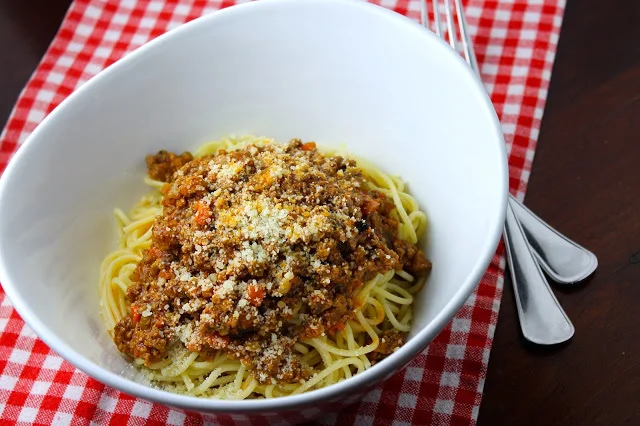
This slow-cooked Bolognese combines lean beef and pork with finely chopped vegetables, mushrooms, wine and tomato paste. A long, uncovered simmer brings the flavours together into a hearty sauce for pasta or polenta.
Ingredients
- 30 ml (2 tablespoons)olive oil
- 150 g (1 cup)onion, finely chopped
- 3 clovesgarlic, minced
- 100 g (1 cup)celery, finely chopped
- 130 g (1 cup)carrot, finely chopped
- 907 g (2 pounds)lean minced beef
- 454 g (1 pound)lean minced pork
- 150 g (2 cups)portobello mushrooms, finely chopped
- 3 tablespoonsdried oregano
- 4bay leaves
- 480 ml (2 cups)white wine
- 225 g (1 cup)tomato paste
- 720–960 ml (3–4 cups)water
- to tastecoarse sea salt
- to tastefreshly ground black pepper
Instructions
- 1
Soften the vegetables
Pour the olive oil into a deep pan and set it over medium heat. Add the onion, garlic, celery and carrots; sauté for 10–15 minutes, stirring occasionally.
- 2
Brown the meat
Raise the heat to medium-high and add the beef and pork. Cook for about 15–20 minutes, stirring occasionally, until the meat is browned.
- 3
Cook the mushrooms
Stir in the portobello mushrooms and cook for about 5 minutes.
- 4
Add the herbs
Add the oregano and bay leaves, then stir to combine.
- 5
Reduce the wine
Pour in the wine and cook until the liquid has reduced by half.
- 6
Add tomato and water
Stir in the tomato paste, then add the water and stir again. Bring the mixture to the boil.
- 7
Simmer the sauce
Once boiling, turn the heat down. Season with salt and pepper, then simmer uncovered for one hour, adding more water as needed.
- 8
Check the seasoning
Taste the sauce and adjust the seasoning.
What is Bolognese sauce?
Bolognese is a meat-based sauce associated with Bologna in northern Italy, traditionally cooked slowly so the meat and aromatic vegetables meld. This version uses both beef and pork, with mushrooms and tomato paste adding savoury depth.
The method builds flavour in stages: soften the vegetables, brown the meat, reduce the wine, then let everything simmer together.
Nutrition and macros by portion
The nutrition label shows one serving as written: 290 calories, 26g protein, 10g carbs, 15g fat.
| Portion | Adjustment | kcal | Protein | Carbs | Fat |
|---|---|---|---|---|---|
| Lighter | Use less sauce | 203 kcal | 18g | 7g | 11g |
| This serving | As written | 290 kcal | 26g | 10g | 15g |
| Hungry | Serve a larger portion | 435 kcal | 39g | 15g | 23g |
Beef and pork provide most of the protein and fat, while the tomato paste, vegetables and wine contribute carbohydrates. Pasta or another accompaniment will add more carbohydrates to the plate; serve a moderate amount of sauce with a generous portion of vegetables if you want a more balanced meal.
The vegetable base
Fine chopping: cut the onion, celery, carrot and mushrooms into small, even pieces so they mix through the sauce rather than remaining in large chunks.
Gentle start: give the onion, garlic, celery and carrot their full 10–15 minutes over medium heat. Stir now and then so they soften without catching.
Choosing and browning the meat
Beef and pork: the two meats bring different savoury qualities to the sauce. Lean mince works well here, though it may need an occasional stir to prevent sticking as it browns.
Room in the pan: use a deep, wide pan if possible. If the meat is crowded, it can release liquid and steam rather than brown; keep stirring and allow the stated cooking time.
Reducing the wine
Half volume: after adding the white wine, let it cook until about half the liquid remains before adding the tomato paste. This concentrates the wine's flavour and gives the next ingredients a thicker base.
Watch the pan: the reduction time can vary with the pan's width and heat. Look for visibly less liquid, rather than relying on a fixed number of minutes.
Getting the simmer right
Uncovered cooking: simmer the sauce gently for one hour, as directed. A quiet simmer helps the sauce thicken while letting moisture escape.
Adjusting consistency: add water as needed during cooking. Stir from time to time and check the bottom of the pan so the sauce does not catch.
How to serve it
Pasta: spoon the sauce over a shape that can hold it, such as tagliatelle or rigatoni, and toss together before serving.
Other pairings: serve it with polenta or use it in a baked pasta dish. A simple green salad alongside provides a fresh contrast to the rich sauce.
Recipe notes & tips
- Chop the vegetables finely and evenly so they soften at a similar rate.
- Stir the meat as it browns, scraping the pan to loosen any browned bits.
- Let the wine reduce by half before adding the tomato paste.
- Keep the sauce at a gentle simmer rather than a vigorous boil.
- Add the water gradually during simmering, using only as much as needed for the consistency you want.
- Remove the bay leaves before serving.
Variations
- Fresh herbs: replace some dried oregano with fresh oregano near the end of cooking.
- Different mushrooms: use another finely chopped mushroom variety in place of the portobellos.
- Red wine: use red wine instead of white for a deeper wine flavour.
- More tomato: add extra tomato paste for a more pronounced tomato character.
- Pasta bake: layer the finished sauce with pasta and bake it as part of a pasta dish.
Common mistakes to avoid
- Crowding the pan: the meat may steam rather than brown; use a wide, deep pan and stir as it cooks.
- Rushing the vegetables: they may remain firm; give them the full 10–15 minutes over medium heat.
- Skipping the wine reduction: too much liquid remains; cook it until the volume is roughly halved.
- Boiling hard: the sauce can catch on the bottom; lower the heat once it reaches a boil.
- Adding too much water: the sauce may turn thin; add water gradually and only as needed.
- Leaving bay leaves in the sauce: remove all four before serving.
How to store
Cool the sauce and refrigerate it in a covered container for up to 3 days, or freeze it for up to 3 months. Reheat gently in a pan until piping hot, adding a splash of water if it has thickened.
Frequently asked questions
Can I make this sauce ahead?
Yes. Cook it through, cool it promptly and refrigerate in a covered container. Reheat gently before serving.
How do I know when the sauce is ready?
After the one-hour simmer, it should be thick and cohesive, with the meat and vegetables tender. Adjust the seasoning before serving.
Can I use red wine instead of white?
Yes. Red wine can be used in the same amount, though it will give the sauce a deeper wine flavour.
What if the sauce gets too thick?
Stir in a little water at a time until it reaches the consistency you prefer.
Do I need to drain the fat after browning the meat?
The method does not call for draining. If there is more fat in the pan than you want, spoon some off before adding the mushrooms.
Can I freeze the sauce?
Yes. Freeze it in suitable covered containers for up to 3 months, then thaw and reheat gently until piping hot.
Cook it from the original
This recipe comes from enrilemoine.com. Their page has the author’s own photos, notes and tips — the best place to cook it from.
Open the recipe on enrilemoine.com