
Pollo al Horno (Roasted Chicken)
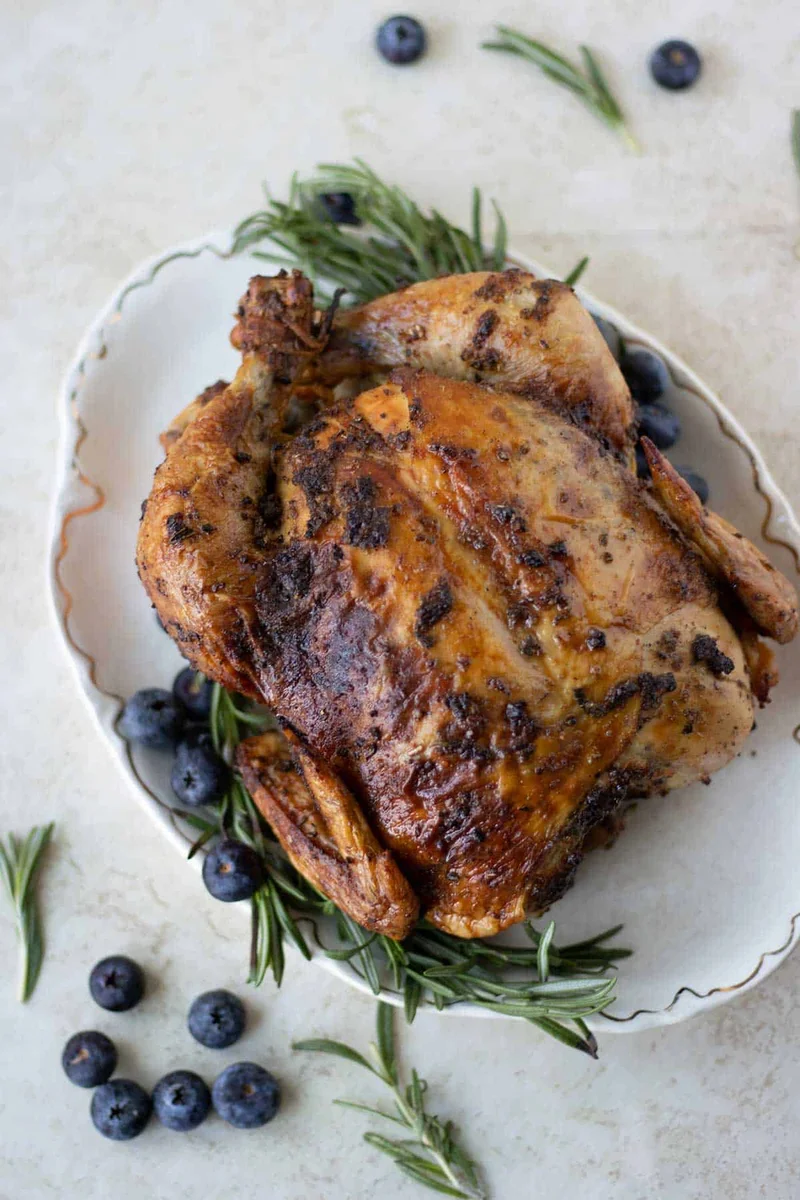
Pollo al horno is a whole chicken roasted with garlic butter, herbs, lemon and rosemary. It makes a flavourful centrepiece with straightforward preparation, well suited to a weeknight dinner or a relaxed family meal.
Ingredients
- 2.27 kg (5 lb)whole chicken
- 57 g (4 tablespoons)butter
- 12.5 ml (2 1/2 teaspoons; about 4 cloves)garlic paste
- 30 ml (2 tablespoons)salt
- 1.25 ml (1/4 teaspoon)black pepper
- 5 ml (1 teaspoon)onion powder
- 1.25 ml (1/4 teaspoon)ground thyme
- 1/2lemon
- 2 sprigsrosemary
- 7.5 ml (1/2 tablespoon)dried oregano
- 15 ml (1 tablespoon)oil
Instructions
- 1
Preheat the oven
Heat the oven to 200°C (400°F).
- 2
Mix the seasonings
Combine the salt, black pepper, onion powder and ground thyme in a small bowl and set aside. In another bowl, mix the butter with the garlic and 1 teaspoon of the seasoning mixture.
- 3
Butter the chicken
Remove the giblets from inside the chicken. Carefully loosen the skin with your hands or a butter knife, then spread the garlic butter underneath it on both sides.
- 4
Season the chicken
Stir the oil into the remaining seasoning mixture. Rub 1 teaspoon inside the chicken, then spread the rest over its exterior. Rub the oregano over the whole chicken.
- 5
Fill and tie
Put the rosemary and lemon inside the chicken. Tie the legs together with cooking twine.
- 6
Roast the chicken
Set the chicken on a rack in a baking pan and place it on the oven’s bottom rack. Roast for 1 hour and 45 minutes.
- 7
Baste and rotate
After 40 minutes, baste the chicken and rotate the pan so it colours evenly.
- 8
Rest and serve
Once cooked, leave the chicken to rest for about 10 minutes before serving.
What is pollo al horno?
Pollo al horno means oven-roasted chicken in Spanish, and versions of the dish are enjoyed across Latin America and beyond. This recipe pairs a whole bird with garlic butter, dried herbs, lemon and rosemary for a savoury, aromatic roast.
The butter is tucked under the skin, where it can flavour the meat as it cooks, while the seasoned oil and oregano coat the outside. Lemon and rosemary inside the cavity lend fragrance to the chicken.
Nutrition and macros by portion
The nutrition label shows one serving as written: 484 calories, 34g protein, 2g carbs, 37g fat.
| Portion | Adjustment | kcal | Protein | Carbs | Fat |
|---|---|---|---|---|---|
| Lighter | Less butter, remove skin | 339 kcal | 24g | 1g | 26g |
| This serving | As written | 484 kcal | 34g | 2g | 37g |
| Hungry | Larger chicken portion | 726 kcal | 51g | 3g | 56g |
Most of the carbohydrates in this dish come from the small amounts in the garlic and seasonings; the butter and oil supply most of the fat, while the chicken provides the protein. Pair a portion with plenty of vegetables and a measured serving of potatoes, rice or bread for a more complete plate.
The seasoning blend
Salt and pepper: these make up the base of the seasoning, with onion powder and thyme adding savoury notes. Reserve some of the mixture for the garlic butter and the inside of the bird.
Oregano: rub it over the exterior as directed, rather than mixing it into the oil-seasoning blend. This keeps the recipe’s two layers of seasoning distinct.
Getting the butter under the skin
Loosen the skin gently with your fingers or a butter knife, taking care not to tear it. Work the garlic butter beneath the skin on both sides, spreading it as evenly as you can.
If the butter is very firm, let it soften enough to mix and spread easily. Keep the chicken on a tray while handling it to contain any juices.
Roasting and browning
Rack position: the recipe calls for the chicken to roast on the oven’s bottom rack at 200°C (400°F). A rack inside the baking pan lets hot air circulate around the bird.
Even colour: baste after 40 minutes and rotate the pan at the same time. Oven browning can vary from side to side, so check the chicken as it nears the end of its stated 1 hour and 45 minutes.
How to check doneness
A meat thermometer gives the clearest check: measure the thickest part of the thigh without touching bone and make sure it reaches 74°C. If it has not reached that temperature, continue roasting and check again.
Rest the cooked chicken for about 10 minutes before carving. This also gives you time to bring side dishes to the table.
What to serve with it
The chicken’s savoury herbs and lemon work well with roast potatoes, rice or bread to catch the juices. For a balanced plate, add a green vegetable or a crisp salad.
Carve the bird and serve the breast and leg portions with any pan juices. Keep the sides simple so the garlic, rosemary and oregano remain the focus.
Recipe notes & tips
- Pat the chicken dry before seasoning if its surface is damp.
- Use a rack in the baking pan as specified so the chicken is lifted above the pan.
- Loosen the skin carefully to avoid tearing it while making room for the butter.
- Set a timer for the 40-minute basting and pan rotation.
- Let the chicken rest for about 10 minutes before carving.
Variations
- Extra lemon: serve with additional lemon wedges alongside the roast.
- Fresh herbs: use fresh thyme in place of the ground thyme, keeping the recipe’s seasoning step.
- More garlic: increase the garlic paste slightly for a stronger garlic flavour.
- Crispier skin: leave the chicken uncovered in the fridge for a few hours before roasting, then season as directed.
- Simple sides: serve with roast potatoes and a green vegetable to make it a fuller meal.
Common mistakes to avoid
- Tearing the skin: loosen it gently with your fingers or a butter knife.
- Uneven butter: spread the garlic butter beneath the skin on both sides of the chicken.
- Skipping the rotation: turn the pan after 40 minutes to encourage even colouring.
- Crowding the cavity: put only the specified lemon and rosemary inside the chicken.
- Carving too soon: let the chicken rest for about 10 minutes before serving.
How to store
Refrigerate leftover chicken in a covered container within 2 hours and use within 3–4 days. Reheat portions until steaming hot throughout, or enjoy the cold meat in salads or sandwiches.
Frequently asked questions
Can I prepare the chicken ahead?
You can season and butter the chicken ahead, then keep it covered in the fridge until you are ready to roast it. Keep raw chicken separate from ready-to-eat foods.
How do I know when the chicken is done?
Check the thickest part of the thigh with a meat thermometer, avoiding the bone; it should reach 74°C. Continue roasting if needed.
Do I need to baste the chicken?
The recipe directs you to baste after 40 minutes. Do this when you rotate the pan, then let the chicken roast until cooked.
Can I use dried rosemary instead of sprigs?
The recipe specifies two rosemary sprigs inside the chicken. Dried rosemary can be used if needed, though it will not be the same as the whole sprigs.
Why should I rest the chicken?
Resting for about 10 minutes gives the juices time to settle before carving and serving.
What can I do with leftovers?
Remove the meat from the bones and use it in sandwiches, salads or a simple rice dish. Refrigerate it promptly in a covered container.
Cook it from the original
This recipe comes from foodmetamorphosis.com. Their page has the author’s own photos, notes and tips — the best place to cook it from.
Open the recipe on foodmetamorphosis.com