
All trussed up and in to the oven you go!
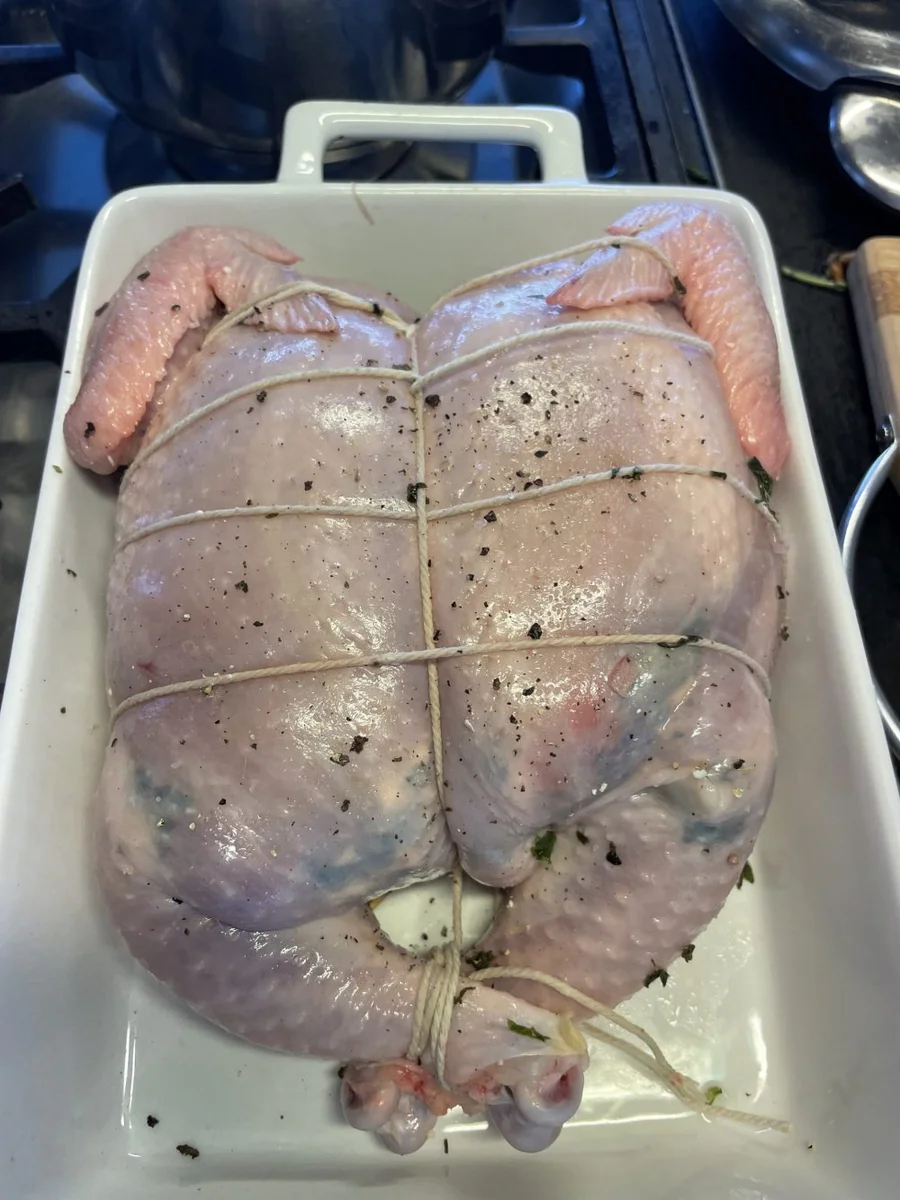
A deboned chicken filled with spinach, feta, olives and herbs, then trussed and roasted until cooked through. It is a French-inspired centrepiece that makes a little carving practice worthwhile, with the stuffing adding plenty of savoury flavour.
Ingredients
- 1 wholechicken, deboned
- 2 tbspextra-virgin olive oil
- 2 tbspbutter
- 1 wholered onion, finely chopped
- 1spring onion, finely chopped
- 3 clovesgarlic, finely chopped
- to tastepreserved lemon
- 300 g prepared (about 800 g fresh before cooking and squeezing)spinach, finely chopped
- 55 ggreen olives
- 8 gparsley
- 8 goriganum
- 4 grosemary
- 150 gfeta
- to tastesalt
- to tasteblack pepper
- a few thick sliceslemon
Instructions
- 1
Debone the chicken
Set the chicken breast-side up on a clean work surface and remove the wishbone carefully, avoiding splintering it. Turn the chicken over, make a cut down the skin along the back, and ease the skin away from the carcass towards the oysters, starting at the wing joints. Trim the wing tips for stock if you like, or leave the wings attached for structure. Find the leg and wing joints, cut the sinews, crack the ball joints and pull the bones free. Once the joints are detached, separate the carcass from the skin. Keep the carcass and removed bones for stock, and strip the tenderloins from the breastbone. Put the deboned chicken in a bowl and refrigerate while you prepare the filling.
- 2
Cook the spinach
Heat the olive oil and butter in a large pot over medium-high heat. When sizzling, add the red onion and cook for 2–3 minutes. Stir in the spring onion and cook for about 1 minute, then add the garlic, preserved lemon and spinach. Cook for about 2 minutes, stirring until combined, and season to taste.
- 3
Finish the filling
Take the pot off the heat. Add the olives, parsley, origanum, rosemary and feta, then stir to combine.
- 4
Fill and truss
Lay the chicken flat on a clean work surface and season the open cavity with salt and pepper. Add the filling and spread it evenly, pushing some into the legs and wings. Bring the chicken back into its whole shape and truss it so it stays together during cooking. Season the outside and rub it with olive oil.
- 5
Brown the chicken
Add olive oil to the base of a heavy cast-iron pot and heat it on high. Brown the chicken on all sides, starting with the sides that had bones, as these take longer to cook.
- 6
Roast and rest
Transfer the chicken to a covered casserole dish with a few thick slices of lemon. Roast for 45–50 minutes, or until the juices from the thigh run clear. Rest uncovered for 15 minutes before carving so the juices can settle.
What is stuffed deboned chicken?
This is a whole chicken with its carcass and limb bones removed, filled, reshaped and trussed before roasting. Deboning makes it easier to portion the bird and gives the stuffing a place to sit inside the meat.
The recipe pairs a French-style roast with a Mediterranean-leaning mixture of spinach, preserved lemon, olives, herbs and feta. The rich, salty filling contrasts with the mild chicken, while trussing helps the bird hold its shape.
Nutrition and macros by portion
The nutrition label shows one serving as written: 500 calories, 48g protein, 8g carbs, 32g fat.
| Portion | Adjustment | kcal | Protein | Carbs | Fat |
|---|---|---|---|---|---|
| Lighter | Less butter and feta | 350 kcal | 34g | 6g | 22g |
| This serving | As written | 500 kcal | 48g | 8g | 32g |
| Hungry | Larger chicken portion | 750 kcal | 72g | 12g | 48g |
Chicken and feta provide most of the protein, while the chicken skin, olive oil, butter and feta contribute much of the fat. The spinach, onion and filling provide some carbohydrates, with the chicken itself contributing very little. Balance a portion with plenty of vegetables or salad and a modest serving of potatoes or bread.
Getting the filling right
Spinach: Cook fresh spinach and squeeze out as much moisture as possible before chopping, or use 300 g prepared spinach. Excess water can make the filling loose and damp.
Preserved lemon: Add it to taste, since its intensity and saltiness vary. Chop it finely so its flavour is spread through the filling.
Feta and olives: Stir these in after taking the pan off the heat. Their salty flavour seasons the mixture, so taste before adding extra salt.
Handling the deboned chicken
Work carefully around the joints and keep the knife close to the bones, taking care not to cut through the skin. The skin needs to remain intact enough to contain the filling once the chicken is reshaped.
The recipe suggests keeping the wings attached for structure. Save the removed carcass and bones for stock, or freeze them until you are ready to use them.
Trussing and browning
Even filling: Spread the mixture across the opened chicken and push it into the leg and wing areas, without forcing so much in that the skin is strained.
Secure shape: Truss the chicken firmly enough to hold it together, but avoid cutting into the skin with the twine. Browning every side, beginning with the former bone-in sides, helps develop colour before roasting.
Checking doneness and resting
The recipe gives a roasting time of 45–50 minutes and says to check that the juices from the thigh run clear. The oven temperature is not specified in the supplied method, so use your usual reliable roasting setup for a chicken of this size and check that it is cooked through.
Rest the chicken uncovered for 15 minutes before carving. This gives the juices time to settle and makes the stuffed bird easier to slice neatly.
Serving the chicken
Serve slices with the spinach, feta and olive filling visible in each portion. Roast potatoes or crusty bread make a substantial accompaniment, while a simply dressed green salad can keep the plate fresh.
The recipe roasts the chicken with thick slices of lemon in the casserole. Spoon any cooking juices over the carved meat for extra flavour.
Recipe notes & tips
- Squeeze cooked spinach thoroughly before chopping it for the filling.
- Taste the filling before salting, as both preserved lemon and feta can be salty.
- Keep the chicken skin intact while working around the bones so it can enclose the stuffing.
- Use kitchen twine to secure the bird evenly and help it retain its shape.
- Start browning with the former bone-in sides, which the recipe notes take longer.
- Leave the roasted chicken to rest uncovered for 15 minutes before carving.
Variations
- Use fresh herbs: Swap in other soft herbs you have, keeping the total quantity similar.
- Add more lemon: Increase the preserved lemon slightly for a sharper, saltier filling.
- Try black olives: Replace the green olives with black olives for a deeper, milder olive flavour.
- Make it milder: Use less preserved lemon and olives, then adjust the seasoning after mixing.
- Serve with greens: Add steamed green vegetables or a crisp salad alongside the roast.
Common mistakes to avoid
- Wet spinach: It can loosen the filling; squeeze out all excess moisture before chopping.
- Torn skin: It may let the stuffing escape; cut carefully around the bones and joints.
- Overfilling: It can make reshaping difficult; spread the mixture evenly and leave room to close the chicken.
- Excess salt: Feta, olives and preserved lemon are already salty; taste the filling before seasoning further.
- Skipping the rest: The juices can run out when carving; rest the bird uncovered for 15 minutes.
- Guessing doneness from time alone: Check the thigh juices as well as the 45–50-minute cooking time.
How to store
Refrigerate leftover chicken and stuffing in a covered container within 2 hours, and use within 3 days. Reheat portions until piping hot throughout, using an oven or microwave; add a splash of water or stock if the meat seems dry.
Frequently asked questions
Can I use frozen spinach?
Yes. Thaw it fully, then squeeze out as much liquid as possible before chopping and measuring 300 g prepared spinach.
How much preserved lemon should I use?
The recipe does not give a quantity, so add it to taste. Start with a small amount, mix it through, and taste before adding more.
Can I prepare the stuffing ahead?
You can make the filling ahead and refrigerate it in a covered container. Let it cool before filling the chicken, and keep the chicken chilled until you are ready to cook.
What if I do not want to debone the chicken myself?
Ask a butcher to debone it while leaving the skin intact. The recipe's method also points to a step-by-step deboning video.
What oven temperature should I use?
The supplied method does not state an oven temperature. Use a reliable roasting temperature appropriate for your oven and confirm the chicken is cooked through rather than relying on the stated time alone.
Can I leave out the feta?
Yes, though the filling will be less creamy and salty. Taste it after mixing and adjust the seasoning to suit.
Cook it from the original
This recipe comes from freshkitchen.co.za. Their page has the author’s own photos, notes and tips — the best place to cook it from.
Open the recipe on freshkitchen.co.za