
Spaghetti all’Amatriciana
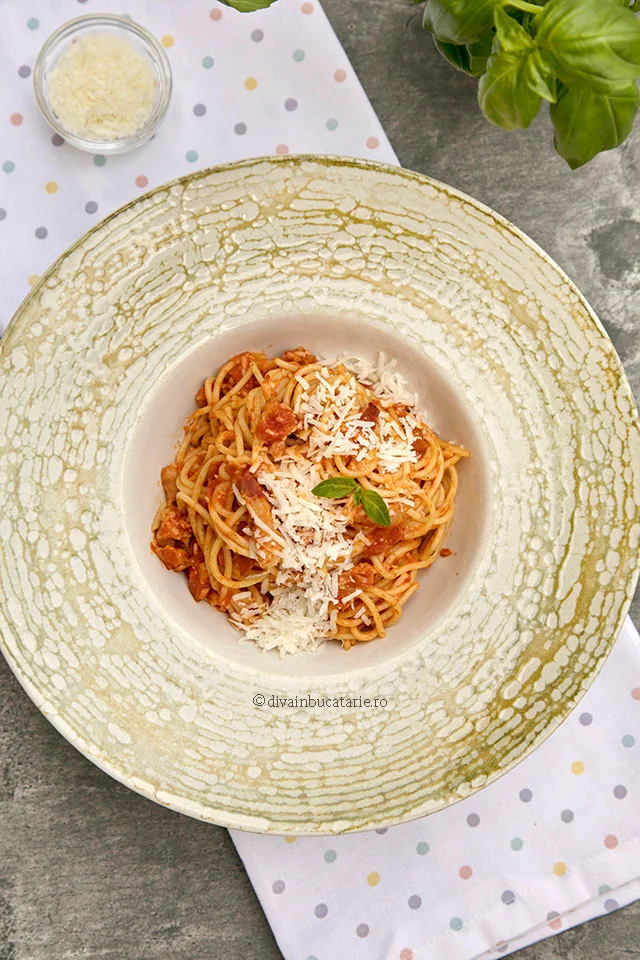
Spaghetti all’Amatriciana pairs pasta with a tomato sauce flavoured with browned pork, white wine, chilli and Pecorino Romano. It makes a hearty meal with a short simmer that brings the sauce together while the spaghetti cooks.
Ingredients
- 250 gdurum wheat spaghetti
- 400 gtomato pulp
- 120 gunsmoked, dry-cured pork fat
- 80 gPecorino Romano
- 50 mlwhite wine
- to tasteolive oil
- to tastesalt
- to tastefreshly ground black pepper
- 1chilli
Instructions
- 1
Prepare the cheese
Bring a pan of water to the boil for the pasta. While it heats, grate the Pecorino Romano.
- 2
Deseed the chilli
Halve the chilli lengthways and remove the seeds.
- 3
Cook the spaghetti
When the water boils, salt it and add the spaghetti. Cook for 8 minutes.
- 4
Heat the oil
Warm a little olive oil in a very wide, deep frying pan.
- 5
Brown the pork
Add the pork, cut into strips, and cook until nicely browned.
- 6
Add the wine
Pour in the white wine and let it cook until the alcohol has evaporated.
- 7
Simmer the tomato
Remove the pork from the pan and add the chilli. Cook for about 1 minute, then add the tomato pulp and season with salt and pepper.
- 8
Return the pork
After about 8 minutes of simmering, remove the chilli, return the pork to the pan and let everything cook together a little longer.
- 9
Combine with pasta
Add the spaghetti to the sauce, turn off the heat and gently toss. If the sauce has reduced too much, add 50 ml of pasta cooking water.
- 10
Finish with cheese
Sprinkle over the grated cheese and toss once more.
What is spaghetti all’Amatriciana?
Amatriciana is a pasta dish associated with Amatrice in central Italy, commonly made with pork, tomato and cheese. This version uses spaghetti and unsmoked, dry-cured pork, with white wine and chilli adding flavour to the tomato sauce.
The short simmer lets the pork season the tomatoes, while tossing the pasta in the pan helps the sauce cling to the strands.
Nutrition and macros by portion
The nutrition label shows one serving as written: 530 calories, 19g protein, 50g carbs, 27g fat.
| Portion | Adjustment | kcal | Protein | Carbs | Fat |
|---|---|---|---|---|---|
| Lighter | Use less pork and cheese | 371 kcal | 13g | 35g | 19g |
| This serving | As written | 530 kcal | 19g | 50g | 27g |
| Hungry | Add more spaghetti | 795 kcal | 29g | 75g | 41g |
The spaghetti supplies most of the carbohydrates, while the pork and Pecorino contribute much of the fat and protein. A side of green vegetables or salad can round out the plate without changing the pasta itself.
The key ingredients
Pork: Cut it into strips so it browns evenly and gives the sauce savoury richness. The listed pork is unsmoked, so the result will be less smoky than versions made with smoked bacon.
Pecorino Romano: Grate it before cooking so it is ready to add at the end. Its salty, sharp flavour seasons the pasta as it melts into the warm sauce.
Chilli: Halving and deseeding it makes it easy to remove after it has infused the tomatoes. Leave some seeds in if you prefer more heat.
Brown the pork well
Give the strips time to colour in the hot pan before adding the wine. Browning builds flavour; stirring too often or crowding the pan can make the pork release moisture instead.
Once the wine is in, let it reduce until its alcohol has evaporated before moving on to the tomatoes.
Watch the sauce texture
Simmer the tomato mixture gently for about 8 minutes, then return the pork and cook everything together briefly. The sauce should be thick enough to coat the spaghetti but still loose enough to toss.
Pasta water: Keep some cooking water before draining. Add the specified 50 ml if the sauce has reduced too much; its starch helps loosen and bind the sauce.
Coordinate the cooking
The spaghetti cooks for 8 minutes, while the tomato sauce simmers for about 8 minutes. Start the sauce as the pasta cooks so both are ready to combine without the spaghetti waiting too long.
Cooking times can vary by pasta brand, so check the spaghetti near the end of its stated cooking time and use the texture you prefer.
Serve it simply
Serve the pasta straight after tossing, while the cheese is soft and the sauce is glossy. A simple green salad or cooked vegetables make a fresh contrast to the rich pork and cheese.
Taste before adding extra salt at the table, since the pork and Pecorino can both be salty.
Recipe notes & tips
- Grate the Pecorino before you start cooking so it is ready to stir in.
- Use a wide, deep pan to give the pork room to brown and the pasta room to toss.
- Save pasta cooking water before draining the spaghetti.
- Remove the chilli after simmering to keep its flavour without leaving pieces in the sauce.
- Taste the sauce before adding more salt, as the pork and cheese may already season it.
Variations
- More heat: Leave some chilli seeds in the pan for a spicier sauce.
- Milder flavour: Use less chilli or remove it sooner.
- Different pasta: Try another long pasta shape and cook it according to its packet instructions.
- Extra vegetables: Serve with a side of greens rather than changing the sauce.
- Cheese at the table: Reserve a little grated Pecorino to sprinkle over each serving.
Common mistakes to avoid
- Pale pork: Let the pan heat and brown the strips before adding the wine.
- Burnt chilli: Cook it for about 1 minute, then add the tomato pulp.
- Over-reduced sauce: Loosen it with up to 50 ml of pasta cooking water.
- Clumped cheese: Grate the Pecorino finely and toss it through the hot pasta off the heat.
- Over-salted sauce: Season cautiously and taste after the pork and cheese are combined.
How to store
Refrigerate leftovers in a covered container for up to 3 days. Reheat gently in a pan with a splash of water, stirring until hot throughout.
Frequently asked questions
Can I use another pasta shape?
Yes. Use a similar amount of another pasta shape and cook it according to its packet instructions.
How spicy is this recipe?
It has one chilli, which is simmered briefly and then removed. For less heat, remove the seeds or use less chilli.
Can I skip the white wine?
The method uses wine to deglaze the pan and reduce before the tomatoes go in. You can leave it out, though the finished sauce will have a different flavour.
What if my sauce is too thick?
Stir in up to 50 ml of the reserved pasta cooking water, as suggested in the method.
When should I add the Pecorino?
Add it after turning off the heat, then toss the pasta and sauce together.
Can I make the sauce ahead?
You can cook the tomato and pork sauce ahead and refrigerate it, then reheat it gently while the spaghetti cooks. Combine with freshly cooked pasta and finish with the Pecorino.
Cook it from the original
This recipe comes from divainbucatarie.ro. Their page has the author’s own photos, notes and tips — the best place to cook it from.
Open the recipe on divainbucatarie.ro