
Orange roulade filled with chocolate
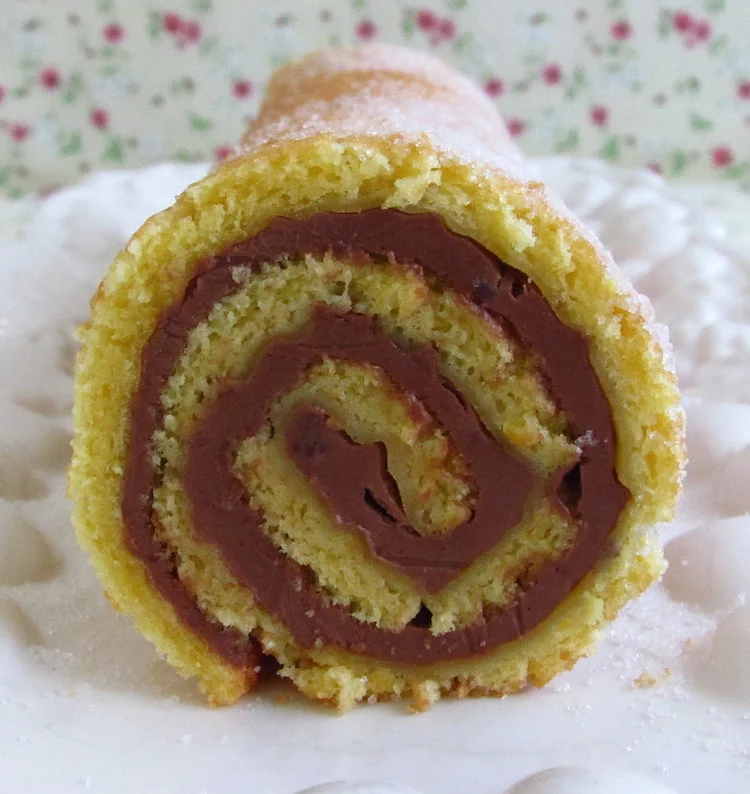
This Portuguese-style orange roulade pairs a light, citrus-scented sponge with a smooth chocolate and margarine filling. It makes a celebratory-looking dessert from familiar ingredients and is rolled while warm to help it hold its shape.
Ingredients
- 4eggs
- 100 gsugar
- 100 gplain flour
- Juice of 1orange
- Zest of 1orange
- 1 teaspoonbaking powder
- 50 gsoftened margarine
- To dustsugar
- 75 gdark chocolate
- 50 gicing sugar
- 75 gsoftened margarine
Instructions
- 1
Preheat the oven
Heat the oven to 180°C.
- 2
Whisk the whites
Separate the eggs. Whisk the whites until stiff peaks form, then keep them in the fridge.
- 3
Mix the sponge
Using an electric mixer on medium speed, beat the yolks with the sugar and orange zest until very creamy. Add the softened margarine and orange juice, and mix for about 2 to 3 minutes. Turn the mixer to its lowest speed, add the flour mixed with the baking powder, and beat until smooth and creamy. Gently fold in the whisked egg whites with a spatula.
- 4
Bake the sponge
Grease a 36 x 30 cm baking tray, line it with baking paper, and spread the mixture over it with a spatula. Bake for about 15 minutes, until lightly golden; the timing depends on your oven.
- 5
Roll while warm
When the sponge is cooked, remove it from the oven and dust it with sugar. Cover it with a clean tea towel and turn it out onto the work surface. Remove the tray and carefully peel away the baking paper. Trim the edges with a knife, then use the tea towel to roll the sponge carefully from one side to the other. Set it aside.
- 6
Melt the chocolate
Break the chocolate into pieces, put them in a bowl, and melt them in the microwave.
- 7
Make the filling
With an electric mixer on medium speed, beat the icing sugar and softened margarine until creamy and smooth. Add the melted chocolate while continuing to beat.
- 8
Fill and serve
Unroll the sponge and spread the chocolate cream over it with a spatula. Roll it up again slowly so it does not break, removing the tea towel as you go. Transfer the roulade to a serving plate and serve.
What is an orange roulade?
A roulade is a thin sponge cake rolled around a filling, a style of dessert found in several European baking traditions. This Portuguese recipe brings orange into the sponge through both juice and zest, then pairs its fresh aroma with a chocolate cream.
The method helps the delicate cake bend without cracking: it is rolled in a tea towel while warm, then unrolled, filled and rolled again.
Nutrition and macros by portion
The nutrition label shows one serving as written: 248 calories, 5g protein, 23g carbs, 12g fat.
| Portion | Adjustment | kcal | Protein | Carbs | Fat |
|---|---|---|---|---|---|
| Lighter | Smaller slice, fresh fruit | 174 kcal | 3g | 16g | 8g |
| This serving | As written | 248 kcal | 5g | 23g | 12g |
| Hungry | Larger slice | 372 kcal | 7g | 35g | 17g |
The flour and sugars provide most of the carbohydrates, while the margarine and chocolate contribute much of the fat; eggs add protein, with a smaller amount also coming from the flour and chocolate. Serve a slice with fresh fruit to add contrast and round out the plate.
Orange in the sponge
Zest: it brings fragrant citrus oils to the batter, so grate only the coloured outer skin and avoid the bitter white pith.
Juice: it adds orange flavour and moisture. Measure the juice from one orange as specified, and have it ready before mixing.
Keeping the sponge light
Egg whites: whisk them to stiff peaks, then fold them in gently with a spatula. A light touch helps retain the air needed for a tender sponge.
Flour: add it with the baking powder at the mixer's lowest speed, then stop once the batter is smooth. Overmixing at this stage can make the cake less delicate.
The warm roll
Sugar and cloth: dust the baked sponge with sugar, cover it with a tea towel and turn it out before it cools. Roll it carefully with the towel, working from one side to the other.
Edges: trim them after peeling away the baking paper, as directed. Handle the cake gently; the first roll sets its shape for filling.
Chocolate cream
Melted chocolate: break it into pieces and melt it in the microwave, then add it to the beaten icing sugar and softened margarine while mixing. This distributes the chocolate through the filling.
Rolling again: spread the cream over the unrolled sponge and roll slowly, pulling the towel away as you go. Slow, even pressure helps avoid squeezing the filling out.
When is it done?
Bake the sponge for about 15 minutes at 180°C, until it is lightly golden. The recipe notes that the exact time depends on the oven, so begin checking towards the end of baking.
The method gives a colour cue rather than a detailed test. Avoid leaving the sponge in the oven longer than needed, as a drier cake is harder to roll.
Serving the roulade
Transfer the finished cake to a serving plate and serve as a dessert or with tea or coffee. Slice with a sharp knife, using a gentle sawing motion to keep the spiral neat.
Its orange-and-chocolate flavour suits simple accompaniments such as fresh orange segments or unsweetened tea; neither is required by the recipe.
Recipe notes & tips
- Have the tea towel and sugar ready before the sponge comes out of the oven.
- Use a tray measuring 36 x 30 cm so the sponge bakes to the thickness intended by the recipe.
- Fold the egg whites in gently rather than beating them into the batter.
- Let the chocolate cool briefly after melting so it is easier to incorporate into the margarine mixture.
- Spread the filling in an even layer, leaving the sponge easy to roll without forcing it.
Variations
- Extra orange: add a little more finely grated orange zest to the sponge.
- Chocolate choice: use another type of chocolate if you prefer a milder or more intense filling.
- Citrus swap: use lemon zest and juice for a sharper flavour.
- Fruit filling: add a thin layer of orange marmalade beneath the chocolate cream.
- Decorative finish: dust the finished roulade with a little icing sugar before serving.
Common mistakes to avoid
- Overbaked sponge: it can crack when rolled; check for light golden colour at around 15 minutes.
- Rough folding: knocking air out of the egg whites can make the sponge denser; fold them in gently.
- Waiting to roll: a cooling sponge is less pliable; roll it with the tea towel while warm.
- Uneven filling: thick patches can make rolling awkward; spread the chocolate cream evenly.
- Fast rerolling: the sponge may split or push out the filling; roll slowly and remove the towel as you go.
How to store
Keep the roulade covered in the fridge and eat within 3 days. Bring a slice briefly towards room temperature before serving; the recipe does not specify a reheating method.
Frequently asked questions
Can I make the roulade ahead?
Yes. Keep it covered in the fridge and serve it within 3 days. Its texture is easiest to slice when the filling has had time to set.
Why did my sponge crack?
It may have cooled too much before the first roll or baked until too dry. Roll it carefully while warm, as the method directs.
How do I know when the sponge is baked?
The recipe gives about 15 minutes at 180°C and says to look for a lightly golden colour. Ovens vary, so check near the end of that time.
Can I melt the chocolate without a microwave?
The recipe specifies a microwave. You can melt it gently using another suitable method, taking care not to let water or steam get into the chocolate.
Can I use butter instead of margarine?
The recipe calls for softened margarine in both the sponge and the filling. Butter would change the flavour and texture, so the result may differ.
How many portions does it make?
The recipe is listed as 12 servings. Slice the roulade into 12 pieces for that serving count.
Cook it from the original
This recipe comes from foodfromportugal.com. Their page has the author’s own photos, notes and tips — the best place to cook it from.
Open the recipe on foodfromportugal.com