
Simple Vegetarian Jollof Rice
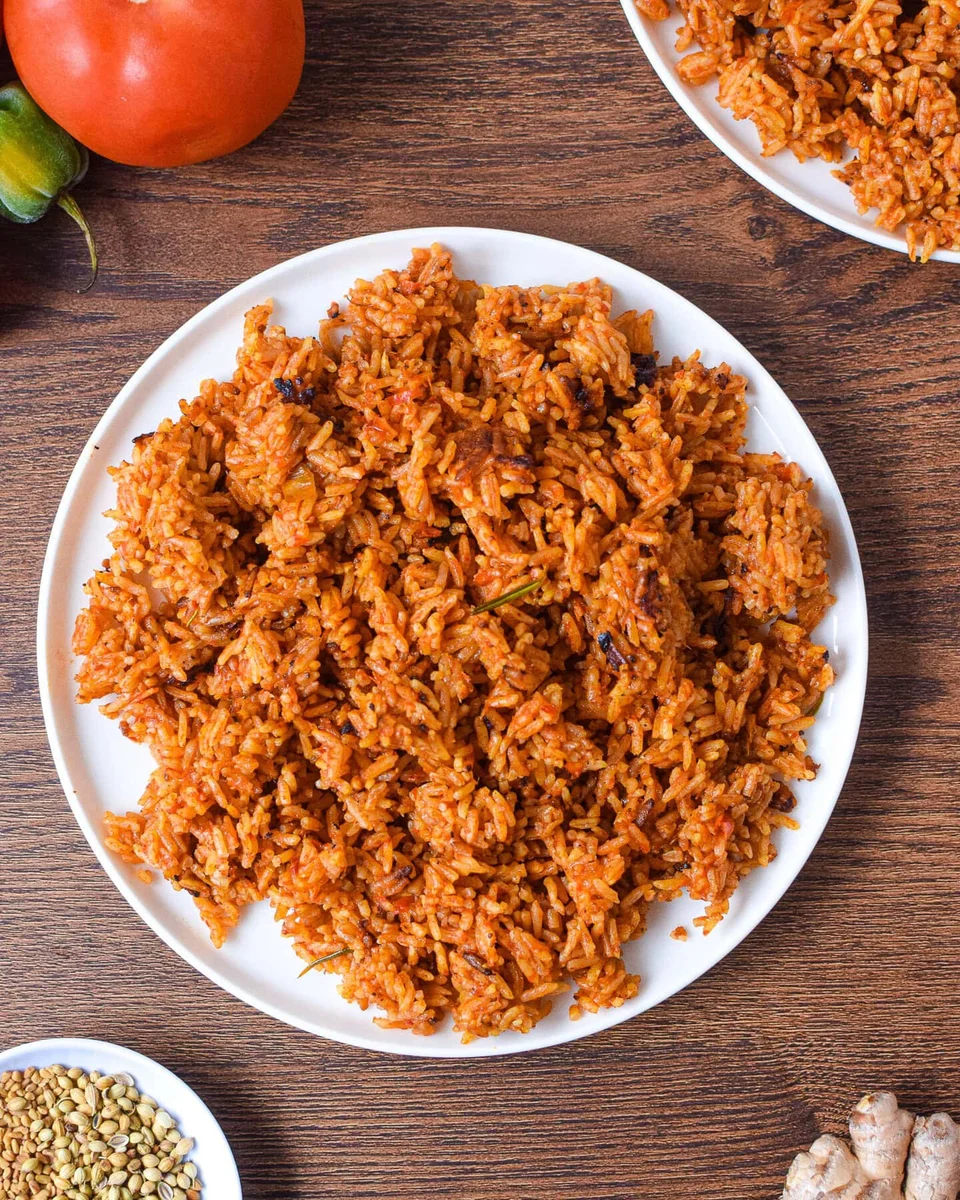
This Ghanaian-inspired vegetarian jollof rice cooks jasmine rice in a deeply flavoured tomato, pepper and spice stew. It takes time for the sauce to reduce and the rice to steam, but most of that time is hands-off.
Ingredients
- 3 mediumplum tomatoes
- 1–2Scotch bonnet peppers
- 1 largered bell pepper
- 80 ml (⅓ cup)vegetable oil
- 1 medium (¼ finely diced, ¾ roughly chopped)onion
- 2 thumb-sized piecesfresh ginger
- 4 clovesgarlic
- 60 ml (¼ cup)tomato paste
- 2 tablespoonsvegetable Better Than Bouillon paste
- 450 g (2½ cups)long-grain jasmine rice
- ⅛ teaspoonbicarbonate of soda (only useful for acidic tomatoes)
- 1 teaspoonanise seeds
- 1 teaspooncoriander seeds
- 1 teaspoonfenugreek seeds
- ½ teaspooncloves
- 2 teaspoonscurry powder
- 1bay leaf
- 1 teaspoondried rosemary
- 2 (or ¼ teaspoon ground nutmeg)calabash nutmegs (optional)
- 60 ml (¼ cup)water, for blending
- 240 ml (1 cup)water, for cooking the rice
Instructions
- 1
Cook the purée
Blend the tomatoes with the Scotch bonnets and red pepper. Cook the purée in a separate pot over medium-high heat for at least 15 minutes, preparing the remaining ingredients as it reduces.
- 2
Blend the aromatics
Blend the roughly chopped onion with the garlic, ginger and 60 ml (¼ cup) water until smooth. Set the paste aside.
- 3
Heat the oil
Warm the vegetable oil in a large pot over medium heat for a few minutes.
- 4
Soften the onion
Add the finely diced onion to the hot oil and sauté until soft and translucent.
- 5
Fry the paste
Stir in the onion, garlic and ginger paste. Fry the mixture for 5–10 minutes to evaporate its excess water.
- 6
Cook the tomato
Add the tomato paste and cook over medium-low heat for 5 minutes.
- 7
Reduce the sauce
Once the onion and tomato paste base has cooked down, add the reduced tomato and pepper purée and mix well. Cook over medium-low heat for about 15 minutes. While it cooks, grind the whole spices, leaving out the bay leaf.
- 8
Season the stew
After 15 minutes, add the ground spices and bouillon paste and mix well. Cook for another 5–10 minutes, until the sauce is ready and oil has separated on top.
- 9
Check seasoning
Taste the stew: it should taste more seasoned and saltier than you want the finished rice to be. Adjust with more salt or bouillon paste if needed.
- 10
Wash the rice
Rinse the jasmine rice thoroughly to remove excess starch, which can make the cooked rice sticky.
- 11
Coat the rice
Add the washed rice to the stew and stir thoroughly. Turn the heat to low, cover the pot and cook for 5 minutes.
- 12
Steam the rice
After 5 minutes, add 240 ml (1 cup) water and mix well. Place a piece of baking parchment between the pot and its lid to trap steam, then cook for about 20 minutes without opening the pot.
- 13
Stir and steam
After 20 minutes, pour any water collected on the parchment back into the pot and mix the rice well to prevent it catching. Cover again with the parchment in place and cook uninterrupted for another 20 minutes before checking.
- 14
Check for doneness
Check the rice after the second 20-minute cooking period. If it is still a little firm, cover the pot and cook for a further 5–10 minutes, until done.
- 15
Serve the jollof
Serve the finished jollof rice with a side of protein and coleslaw.
What is jollof rice?
Jollof is a West African one-pot rice dish, with well-known Ghanaian and Nigerian versions among others. Its defining base is a cooked tomato and pepper sauce that seasons the rice as it steams.
This vegetarian version builds flavour through a reduced pepper purée, aromatics, bouillon and a blend of spices. Jasmine rice is used here, so thorough rinsing and careful steaming help keep the grains from turning sticky.
Nutrition and macros by portion
The nutrition label shows one serving as written: 440 calories, 7g protein, 68g carbs, 14g fat.
| Portion | Adjustment | kcal | Protein | Carbs | Fat |
|---|---|---|---|---|---|
| Lighter | Use less oil | 308 kcal | 5g | 48g | 10g |
| This serving | As written | 440 kcal | 7g | 68g | 14g |
| Hungry | Serve a larger portion | 660 kcal | 11g | 102g | 21g |
Most of the carbohydrates come from the jasmine rice, while the vegetable oil is the main source of fat. The bouillon paste contributes some protein and sodium, though this is primarily a rice-based dish; add a protein-rich side and vegetables to make a more balanced plate.
Build a concentrated tomato base
Pepper purée: cooking the tomatoes and peppers separately for at least 15 minutes reduces their water before they go into the main pot. This helps the rice cook in a thick sauce rather than a watery one.
Tomato paste: frying it after the aromatic paste deepens the base before the purée is added. Let the sauce reduce until oil separates on top, as the recipe describes.
Handle the aromatics and spices
Onion paste: blending the roughly chopped onion with garlic, ginger and water makes a smooth mixture that needs 5–10 minutes of frying to lose its extra moisture. Keep stirring so it cooks evenly.
Whole spices: grind the anise, coriander, fenugreek and cloves, along with the other listed spices, except the bay leaf. Leave the bay leaf whole in the stew; calabash nutmeg is optional, with ground nutmeg offered as a substitute.
Get the rice texture right
Rinsing: wash jasmine rice well to remove excess surface starch, which can make it clump. Drain it before adding it to the stew so it does not bring extra rinsing water into the pot.
Steaming: keep the heat low and the pot covered for the stated cooking intervals. The parchment under the lid helps hold steam in, while the brief stir between the two 20-minute periods helps check that the rice is not catching.
Season the stew before adding rice
Taste the sauce before the rice goes in. It should taste more intense and salty than you want the finished dish to taste, because the rice will take up seasoning as it cooks.
The bouillon paste contributes savoury seasoning, so adjust it cautiously. The recipe suggests adding salt or more bouillon if the stew needs it.
Choose your heat level
Scotch bonnet: one pepper gives a milder starting point than two, though the heat also depends on the peppers themselves. For a gentler result, use one; for more heat, use two.
Pepper seeds and membranes can add extra heat, so handle the chillies carefully when blending. Avoid touching your eyes, and wash your hands and equipment after preparing them.
What to serve with it
The recipe suggests serving the rice with a side of protein and coleslaw. The cool, crisp slaw contrasts with the warm, spiced rice.
For a vegetarian plate, pair it with a plant-based protein and vegetables. Keep the accompaniments relatively simply seasoned so the jollof remains the focus.
Recipe notes & tips
- Rinse the jasmine rice thoroughly and drain it before adding it to the stew.
- Let the tomato and pepper purée reduce separately for at least 15 minutes.
- Fry the blended onion, garlic and ginger paste long enough to evaporate its excess water.
- Taste and adjust the sauce before adding the rice, as the rice will absorb its seasoning.
- Keep the pot closed during each 20-minute steaming period.
- Check the rice at the end and give it another 5–10 minutes if it is still firm.
Variations
- Milder heat: use one Scotch bonnet instead of two.
- Nutmeg swap: use ¼ teaspoon ground nutmeg in place of the calabash nutmegs.
- Acidic tomatoes: add the listed ⅛ teaspoon bicarbonate of soda only if the tomatoes taste acidic.
- Vegetarian protein: serve with a plant-based protein alongside the rice.
- Extra vegetables: add a vegetable side, keeping it separate so the rice can steam as directed.
Common mistakes to avoid
- Skipping the purée reduction: the rice can end up too wet; cook the purée for at least 15 minutes first.
- Leaving excess starch on the rice: it can turn sticky; rinse the jasmine rice thoroughly.
- Adding rice before tasting: the finished dish may be bland; adjust the stew's seasoning first.
- Opening the pot too soon: steam escapes and interrupts cooking; leave it closed for the full 20-minute intervals.
- Using high heat to steam: the bottom can catch before the rice cooks; lower the heat and cover the pot.
- Stopping while the grains are firm: cover the pot and cook for another 5–10 minutes.
How to store
Cool leftovers promptly and refrigerate them in a covered container for up to 3 days. Reheat until piping hot, adding a small splash of water if the rice seems dry.
Frequently asked questions
Can I use a different type of rice?
This method is written for long-grain jasmine rice, which is rinsed thoroughly before cooking. Other rice varieties can need different amounts of water or cooking time, so check the grains as they finish.
How can I make the jollof less spicy?
Start with one Scotch bonnet rather than two. The heat varies from pepper to pepper, so taste the sauce carefully before adding the rice.
Why does the sauce need to reduce?
Reducing the purée cooks off some of its water before it is mixed with the rice. The recipe also cooks the finished sauce until oil separates on top, which is a cue that it has cooked down.
Why rinse jasmine rice so well?
Rinsing removes excess surface starch that can make the grains sticky. Drain the rice before stirring it into the stew.
What can I use instead of calabash nutmeg?
The recipe gives ¼ teaspoon ground nutmeg as an alternative. The calabash nutmegs are optional.
How do I know when the rice is cooked?
Check the grains after the second 20-minute steaming period. If they are still a little hard, cover the pot and cook for another 5–10 minutes.
Cook it from the original
This recipe comes from eatwithafia.com. Their page has the author’s own photos, notes and tips — the best place to cook it from.
Open the recipe on eatwithafia.com