
Vegetarian Senegalese Mafe
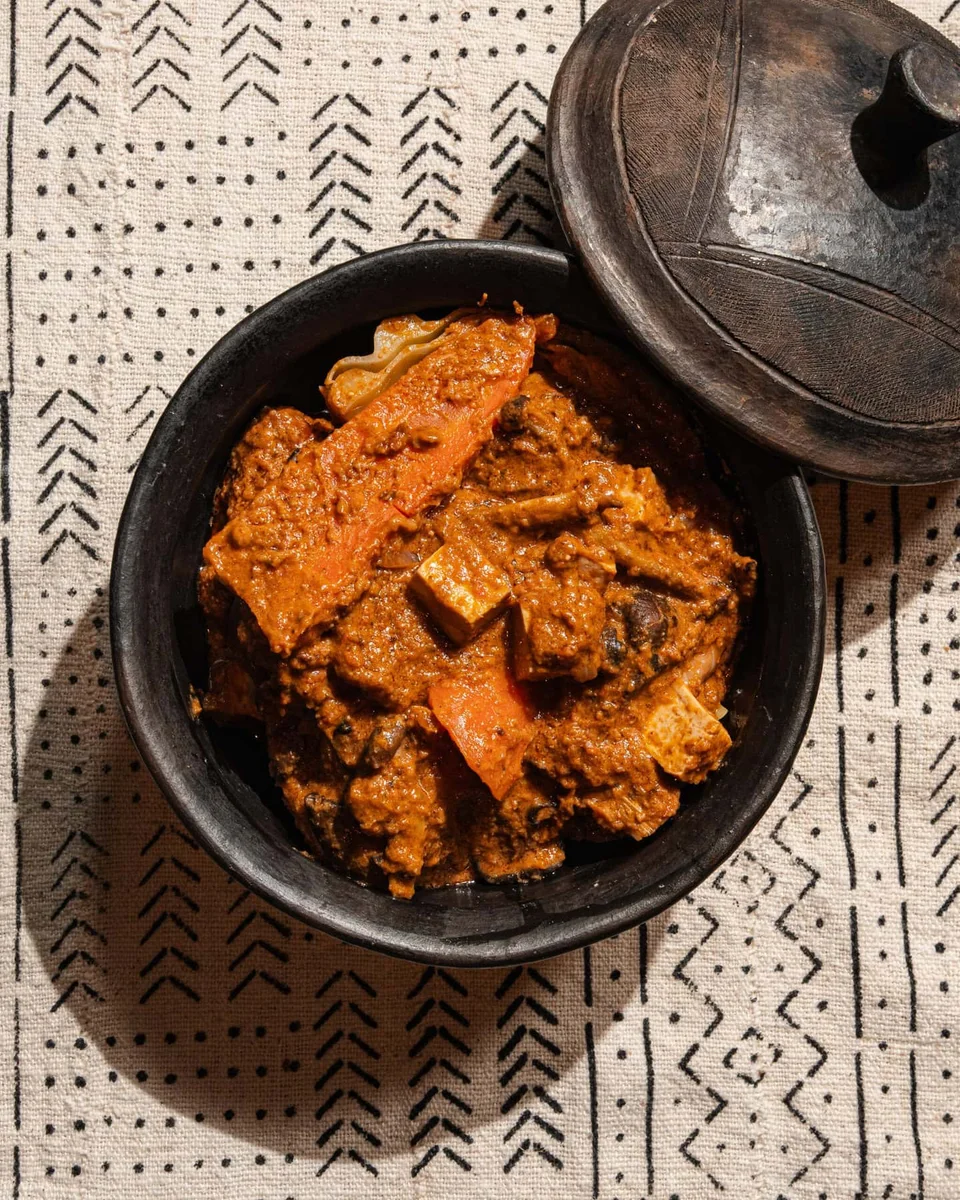
This plant-based Senegalese mafe is a rich peanut stew with tomatoes, aromatic nokoss and tender vegetables, finished with crispy mushrooms. It is a warming one-pot meal to serve with rice or fonio.
Ingredients
- 2 large handfulsfresh mushrooms, preferably oyster
- 3 tablespoons (45 ml)vegetable oil
- 1 smallonion, diced
- 2 tablespoons (about 30 g)tomato paste
- 120 g (½ cup)100% natural peanut butter
- 500 ml (2 cups)water
- 3tomatoes
- 1Scotch bonnet pepper
- 2–3 tablespoonsNokoss
- 1½ teaspoonsfermented locust beans
- 1vegetable bouillon cube
- ¼cabbage, split in two
- 1 largecarrot, cut in two
- 1 chunkpumpkin, cut in half
Instructions
- 1
Fry the mushrooms
Heat the vegetable oil in a pot and fry the mushrooms until crispy.
- 2
Soften the onion
Remove the mushrooms from the pot. Keep the heat at medium-low and sauté the diced onion in the oil until soft.
- 3
Cook the tomato paste
Add the tomato paste and sauté it in the oil over medium-low heat for 3–5 minutes, watching closely so it does not burn.
- 4
Add the peanut
Blend the peanut butter with 500 ml (2 cups) of water and pour it into the pot. The mixture may look watery, but it will thicken as it cooks. Bring it to the boil.
- 5
Add the tomatoes
Blend the tomatoes with the Scotch bonnet pepper, then pour the mixture into the pot. Cook for 15 minutes. If the Nokoss is not ready, use this time to prepare it.
- 6
Simmer the stew
After 15 minutes, add the Nokoss, fermented locust beans, vegetable bouillon cube and whole vegetables. Cook over medium-low heat for 25–30 minutes, until the sauce thickens and oil pools on top.
- 7
Serve the mafe
Serve the stew with rice or fonio.
What is Senegalese mafe?
Mafe, also spelled mafé, is a West African peanut stew associated with Senegal and neighbouring countries. Its defining feature is a savoury, thickening sauce made with peanut butter, often cooked alongside tomatoes and vegetables.
This version is fully plant-based, with mushrooms, cabbage, carrot and pumpkin in the pot. Nokoss and fermented locust beans bring aromatic depth, while the mushrooms are fried separately so they can keep some crispness.
Nutrition and macros by portion
The nutrition label shows one serving as written: 440 calories, 14g protein, 34g carbs, 30g fat.
| Portion | Adjustment | kcal | Protein | Carbs | Fat |
|---|---|---|---|---|---|
| Lighter | Use less oil | 308 kcal | 10g | 24g | 21g |
| This serving | As written | 440 kcal | 14g | 34g | 30g |
| Hungry | Add more rice | 660 kcal | 21g | 51g | 45g |
Peanut butter and vegetable oil provide much of the energy and fat, while rice or fonio served alongside adds most of the meal’s carbohydrate. The mushrooms and vegetables contribute some protein and fibre, but the stew is not a high-protein dish on its own. Serve it with a generous portion of vegetables and choose a moderate serving of rice or fonio to balance the plate.
Building the flavour base
Onion: cook it gently in the mushroom oil until soft rather than browned. This gives the sauce a mellow base.
Tomato paste: give it 3–5 minutes over medium-low heat, stirring and watching carefully. It can catch on the bottom if left unattended.
Nokoss and locust beans: add these with the vegetables after the tomato and peanut mixture has cooked. They contribute the stew’s distinctive savoury, aromatic character.
Getting the peanut sauce right
Blend the peanut butter with the measured water before adding it to the pot. The mixture will initially seem thin, but it thickens as it simmers.
Bring it to the boil as directed, then keep the later cooking over medium-low heat. Stir if needed to prevent the thickening sauce from sticking to the base.
Choosing and preparing the vegetables
Mushrooms: oyster mushrooms are suggested, but the method works with other fresh mushrooms too. Fry them until crisp, then take them out while the stew cooks.
Large pieces: the cabbage, carrot and pumpkin are added whole or in large sections. This keeps them from disappearing into the sauce during the 25–30-minute simmer.
How to tell when it is ready
Timing: simmer the tomato mixture for 15 minutes before adding the Nokoss, locust beans, bouillon and vegetables. Then allow another 25–30 minutes over medium-low heat.
Texture: the sauce should thicken and oil should pool on top; the recipe identifies this as the sign that the stew is ready. Check that the vegetables are tender before serving.
Serving the stew
Serve the mafe with rice or fonio to soak up the thick peanut sauce. Add the reserved crispy mushrooms when serving so they retain more texture.
The vegetable pieces make the stew hearty, while the grain provides a simple base. If the sauce thickens further before serving, loosen it with a little water.
Recipe notes & tips
- Use unsweetened, 100% peanut butter so the sauce stays savoury.
- Keep the heat medium-low while cooking the tomato paste and simmering the thick sauce.
- Watch the tomato paste closely during its 3–5-minute sauté to stop it catching.
- Blend the peanut butter with the water before adding it to the pot for a smoother mixture.
- Fry the mushrooms until crisp and keep them out of the stew until serving.
- Prepare the Nokoss while the tomato mixture cooks if it is not ready beforehand.
Variations
- Use another mushroom: swap oyster mushrooms for a different fresh variety and fry until crisp.
- Adjust the heat: use less Scotch bonnet for a milder stew.
- Change the grain: serve with fonio instead of rice.
- Add more cabbage: increase the cabbage while keeping the same simmering method.
- Make it ahead: cook the stew in advance and reheat gently before serving.
Common mistakes to avoid
- Burning the tomato paste: keep the heat medium-low and watch it throughout its 3–5-minute sauté.
- Worrying about a thin sauce: the peanut mixture starts watery, so let it cook until it thickens.
- Cooking too quickly: maintain medium-low heat during the final 25–30 minutes so the vegetables and sauce can simmer.
- Skipping the visual cue: look for a thickened sauce with oil pooling on top before serving.
- Losing the mushroom crunch: remove the fried mushrooms from the pot and add them back when serving.
How to store
Refrigerate leftovers in a covered container for up to 3 days. Reheat gently in a saucepan, adding a splash of water if the peanut sauce has thickened; store the crispy mushrooms separately if possible.
Frequently asked questions
Can I use a different type of mushroom?
Yes. Oyster mushrooms are preferred, but other fresh mushrooms can be used. Fry them until crisp as directed.
Why does the peanut mixture look so watery?
It is expected to look thin when first added. The sauce thickens as it cooks.
How spicy is this mafe?
The Scotch bonnet adds heat, and the exact strength depends on the pepper. Use less if you prefer a milder stew.
What is Nokoss?
Nokoss is an aromatic seasoning mixture used in this recipe. The recipe calls for 2–3 tablespoons; prepare it separately if needed.
Can I make the stew without fermented locust beans?
They add a distinctive savoury flavour. The recipe does not specify a substitute, so leaving them out will change the flavour.
What should I serve with mafe?
Serve it with rice or fonio, as suggested in the method.
Cook it from the original
This recipe comes from eatwithafia.com. Their page has the author’s own photos, notes and tips — the best place to cook it from.
Open the recipe on eatwithafia.com