
Harina de Maiz
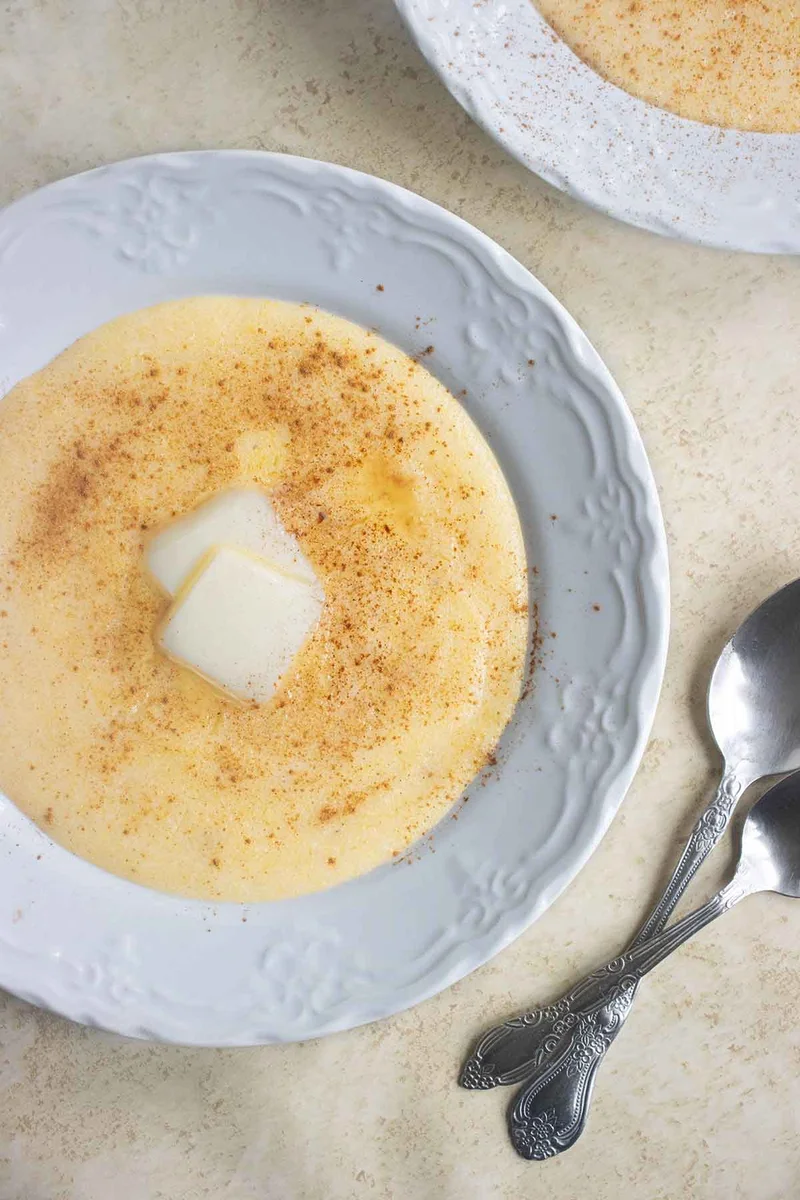
Harina de maíz is a warm, creamy Latin American cornmeal porridge with a gentle sweetness and vanilla aroma. It comes together in one pan, making it a comforting breakfast or quick hot meal.
Ingredients
- 75 g (6 tablespoons)sugar
- 80 g (½ cup)cornmeal
- 1.5 g (¼ teaspoon)salt
- 600 ml (2½ cups)milk
- 5 ml (1 teaspoon)vanilla extract
Instructions
- 1
Mix the ingredients
Put the sugar, cornmeal and salt in a medium-sized pan and mix them together. Set the heat to medium-high, then add the milk and vanilla extract and stir to combine.
- 2
Cook and serve
Stir as the cornmeal cooks for 7 minutes. Serve and enjoy.
What is harina de maíz?
Harina de maíz means cornmeal in Spanish, and the name is also used for sweet, cooked cornmeal porridge in parts of Latin America. It is served warm and can be enjoyed at breakfast or whenever a hot, filling bowl sounds good.
This version combines cornmeal and milk with sugar, salt and vanilla. The steady stirring helps the grains cook into a creamy porridge.
Nutrition and macros by portion
The nutrition label shows one serving as written: 480 calories, 14g protein, 79g carbs, 12g fat.
| Portion | Adjustment | kcal | Protein | Carbs | Fat |
|---|---|---|---|---|---|
| Lighter | Use less sugar | 336 kcal | 10g | 55g | 8g |
| This serving | As written | 480 kcal | 14g | 79g | 12g |
| Hungry | Serve a larger bowl | 720 kcal | 21g | 119g | 18g |
The cornmeal and sugar provide most of the carbohydrates, while the milk contributes protein and much of the fat. Pair a bowl with fresh fruit for a simple way to add variety to the plate.
Choosing the ingredients
Cornmeal: Use plain, finely or medium-ground cornmeal for a smooth porridge. Coarser grains may need longer cooking to soften.
Milk: Milk gives the porridge its richness and body. Whole milk makes it fuller, while lower-fat milk keeps the flavour lighter.
Vanilla and sugar: Vanilla adds a sweet aroma, while sugar provides the main sweetness. The salt rounds out the flavour.
Stirring for a smooth texture
Initial mixing: Combine the dry ingredients before adding the milk so the cornmeal is more evenly dispersed. Stir again as the liquid goes into the pan.
During cooking: Keep stirring while the porridge cooks for 7 minutes, paying attention to the bottom and corners of the pan. This helps prevent sticking and breaks up lumps.
Checking when it is ready
The porridge should look creamy, with the cornmeal softened after the stated 7 minutes of cooking. If it is still gritty, continue cooking and stirring until the texture suits you.
It thickens as it stands, so serve it soon after cooking for a looser consistency. Take care when stirring, as hot porridge can bubble.
Serving it warm
Serve the porridge hot in bowls, either on its own or with fresh fruit for a bright contrast. A small splash of milk can loosen it if it has thickened while you set the table.
Because it is sweet and substantial, it can work as breakfast or as a simple hot snack.
Making the recipe your own
Adjust the sweetness to taste the next time you make it, keeping in mind that reducing the sugar changes the balance of the original recipe. You can also finish each bowl with a little extra milk.
For a different flavour, add a pinch of cinnamon or serve with sliced banana. Keep additions modest so the warm cornmeal remains the focus.
Recipe notes & tips
- Use a medium-sized pan with enough room to stir without splashing.
- Mix the sugar, cornmeal and salt before pouring in the milk.
- Stir continuously during the 7-minute cooking time, especially across the base of the pan.
- Serve promptly if you prefer a softer, looser porridge.
- Add a splash of milk to the bowl if the porridge thickens before serving.
Variations
- Cinnamon finish: Sprinkle a little cinnamon over each bowl before serving.
- Fresh fruit: Top with sliced banana or another fruit for a fresh contrast.
- Less sweet: Reduce the sugar to suit your taste.
- Richer bowl: Use whole milk for a fuller texture.
- Looser porridge: Stir a little extra milk into the finished porridge.
Common mistakes to avoid
- Skipping the initial mix: Combine the dry ingredients first so the cornmeal disperses more evenly.
- Adding milk without stirring: Mix as you pour to help avoid lumps.
- Leaving the pan unattended: Stir throughout the 7-minute cook to reduce sticking.
- Cooking over excessive heat: Keep the heat at medium-high and stir carefully to prevent scorching.
- Serving it after it thickens: Serve soon after cooking, or loosen it with a splash of milk.
How to store
Cool leftovers promptly and refrigerate in a covered container for up to 3 days. Reheat gently in a pan or microwave, stirring in a little milk to loosen the porridge.
Frequently asked questions
What does harina de maíz mean?
It means cornmeal in Spanish. The name is also used for sweet cornmeal porridge in parts of Latin America.
Can I use coarse cornmeal?
Yes, but it may take longer to soften and the porridge may have a more textured finish. Keep stirring and cook until the grains are tender.
How do I stop the porridge from going lumpy?
Mix the dry ingredients first, stir as you add the milk, and keep stirring while it cooks.
Can I make it less sweet?
Yes. Reduce the sugar to your taste; the listed amount gives the recipe its sweet profile.
Why has the porridge thickened after cooking?
Cornmeal porridge continues to thicken as it stands. Stir in a little milk to loosen it before serving or reheating.
Cook it from the original
This recipe comes from foodmetamorphosis.com. Their page has the author’s own photos, notes and tips — the best place to cook it from.
Open the recipe on foodmetamorphosis.com