
Chicharrones de Pollo (crispy fried chicken)
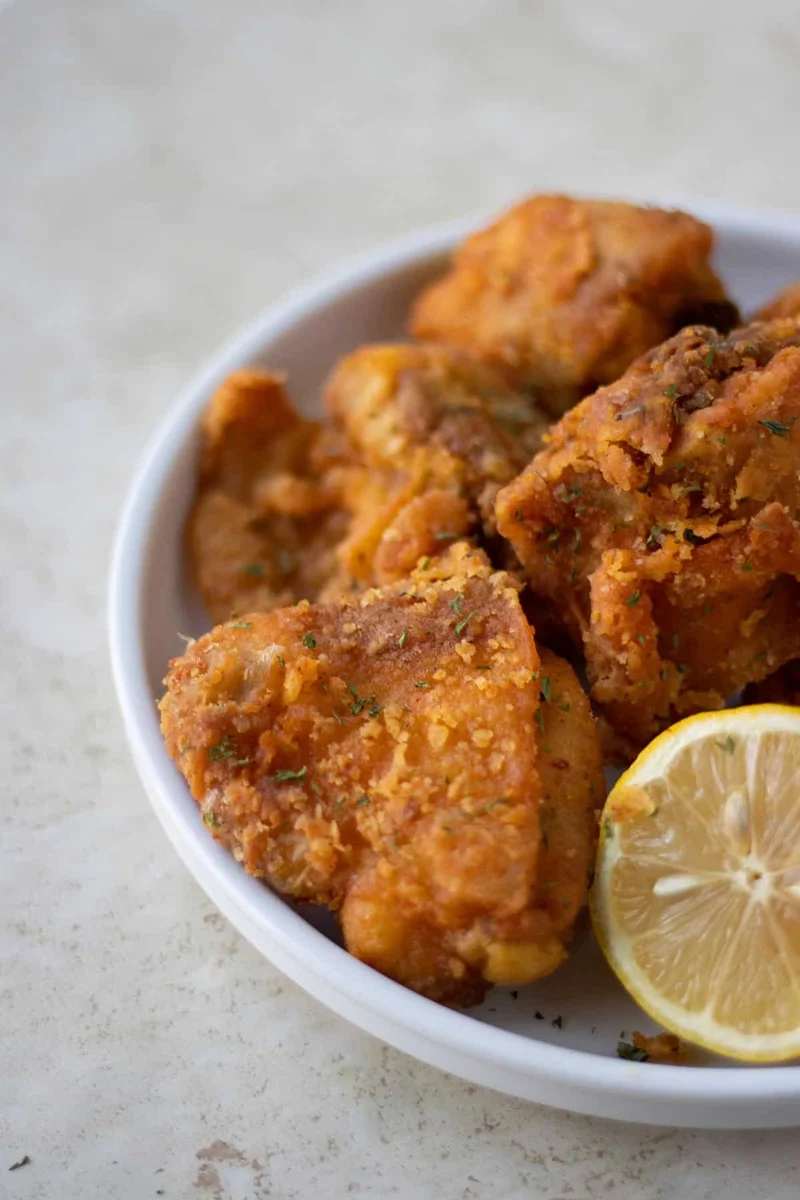
Puerto Rican chicharrones de pollo are chicken pieces seasoned with citrus and spices, coated in a flour-and-cornstarch mixture, then fried until crisp. They make a flavourful, crunchy main that comes together in about 30 minutes.
Ingredients
- 240 ml (1 cup)oil
- 1,134 g (2½ lb)chicken thighs
- 1lemon
- 1½ teaspoonssazón
- 1 teaspoononion powder
- ½ teaspoonblack pepper
- 1 teaspoondried oregano
- 2 teaspoonsadobo
- 1¼ teaspoonssalt
- 125 g (1 cup)plain flour
- 60 g (½ cup)cornflour
Instructions
- 1
Cut the chicken
Cut large chicken thighs into three pieces and smaller ones into two. Put the pieces in a large bowl, squeeze the lemon over them and mix well.
- 2
Mix the seasoning
In a small bowl, combine the salt, sazón, adobo, onion powder, black pepper and dried oregano. Set aside 1 tablespoon of this mixture for the flour, then season the chicken with the rest and mix until every piece is covered.
- 3
Coat the chicken
Combine the flour, cornflour and reserved seasoning in a large bowl. Coat each piece of chicken well, lifting the skin where possible so some flour gets underneath, then shake off any excess.
- 4
Fry in batches
Heat the oil in a large pan over medium-high heat. Fry the chicken in two batches for 6 minutes on each side; for a crunchier result, fry for 1 extra minute per side. Remove the chicken from the oil and serve.
What are chicharrones de pollo?
Chicharrones de pollo are crisp, seasoned pieces of fried chicken associated with Puerto Rican cooking. The name refers to their crunchy finish, rather than requiring pork crackling.
This version uses lemon and a savoury seasoning blend before a light coating of flour and cornflour. The two starches help create a crisp exterior while the chicken remains the centre of the dish.
Nutrition and macros by portion
The nutrition label shows one serving as written: 660 calories, 39g protein, 40g carbs, 37g fat.
| Portion | Adjustment | kcal | Protein | Carbs | Fat |
|---|---|---|---|---|---|
| Lighter | Serve with more vegetables | 462 kcal | 27g | 28g | 26g |
| This serving | As written | 660 kcal | 39g | 40g | 37g |
| Hungry | Add a larger portion | 990 kcal | 59g | 60g | 56g |
The chicken supplies most of the protein, while the flour and cornflour contribute most of the carbohydrates. The frying oil and chicken skin account for much of the fat; serve with vegetables or salad to balance the plate.
The seasoning and coating
Seasoning: Sazón, adobo, oregano, onion powder and black pepper give the chicken its savoury, aromatic flavour. Saving a tablespoon for the coating helps season the crust as well as the meat.
Coating: Flour gives the pieces an even outer layer, while cornflour helps keep that layer crisp. Shake off loose flour so it does not fall into the oil and brown too quickly.
Getting an even coating
Chicken pieces: Cutting the thighs into two or three pieces makes them easier to coat and fry. Keep the pieces reasonably similar in size so they cook at a similar pace.
Skin: Lift it gently where possible and work some of the flour underneath. This helps coat the surface, but avoid pulling the skin off the pieces.
Frying for a crisp finish
Oil: Heat the oil over medium-high heat as directed, then add the chicken carefully. Frying in two batches gives the pieces room in the pan.
Doneness: Follow the stated 6 minutes per side, adding 1 minute per side if you want a crunchier coating. If the coating darkens too quickly, lower the heat slightly.
How to serve the chicken
Serve the pieces soon after frying, while the coating is crisp. A fresh salad or vegetables make a simple contrast to the rich, crunchy chicken.
Rice, beans or fried plantain can turn the chicken into a fuller meal. Keep the side dishes straightforward so the seasoned coating stays the focus.
Recipe notes & tips
- Pat the chicken dry if it is very wet after adding the lemon so the coating adheres more evenly.
- Reserve the tablespoon of seasoning before mixing the rest into the chicken.
- Lift the skin gently to tuck flour underneath without tearing it away.
- Shake each piece over the bowl to remove excess flour before frying.
- Fry in two batches as directed rather than crowding the pan.
- For a crunchier coating, use the extra minute per side specified in the method.
Variations
- Add garlic: Include garlic powder in the seasoning mix for a more savoury flavour.
- Use chicken drumsticks: Cut them into smaller pieces where possible and allow for differences in cooking time.
- Increase the citrus: Serve with extra lemon wedges for a brighter finish.
- Add heat: Mix a little cayenne pepper into the flour coating.
- Serve with a dip: Offer a simple garlic or citrus dip alongside the chicken.
Common mistakes to avoid
- Crowding the pan: The pieces can cook unevenly; fry them in the two batches specified.
- Skipping the reserved seasoning: Set aside 1 tablespoon before seasoning the chicken so the coating is flavoured too.
- Leaving excess flour on: It can fall into the oil and brown; shake each piece before frying.
- Pulling off the skin: Lift it only enough to coat underneath, keeping it attached to the chicken.
- Frying too briefly: Follow the 6 minutes per side, or add 1 extra minute per side for a crunchier coating.
How to store
Refrigerate leftover chicken in a covered container within 2 hours and eat within 3–4 days. Reheat in an oven until hot throughout; the coating may be less crisp after storage.
Frequently asked questions
Can I make these without the skin?
Yes, though the texture will differ from the skin-on version. The method still works with the flour coating.
Why is the seasoning divided?
The recipe reserves 1 tablespoon for the flour mixture and uses the rest on the chicken. This seasons both the meat and the coating.
Can I fry all the chicken at once?
The method calls for two batches. Keeping to that helps the pieces fry without overcrowding the pan.
How do I make the coating crunchier?
Fry each side for 1 extra minute, as suggested in the method. Watch the coating so it does not become too dark.
Can I prepare the chicken ahead?
You can cut and season the chicken ahead and keep it covered in the refrigerator. Coat it shortly before frying for the best texture.
Cook it from the original
This recipe comes from foodmetamorphosis.com. Their page has the author’s own photos, notes and tips — the best place to cook it from.
Open the recipe on foodmetamorphosis.com