
Spaghetti alla carbonara
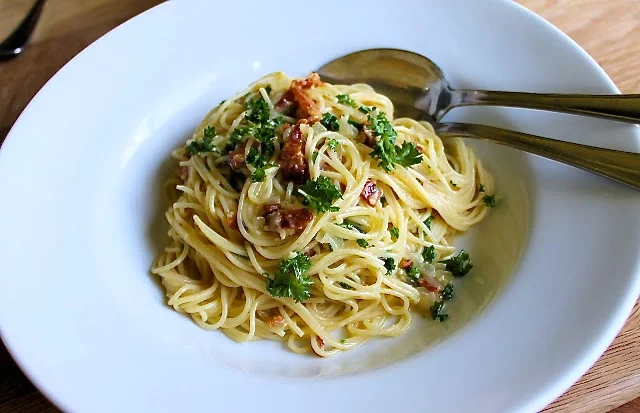
This is a quick, savoury spaghetti dish with crisp bacon, onion softened in the pan, white wine and an egg-and-Parmesan coating. It makes a generous family meal and comes together in about 25 minutes.
Ingredients
- 1 packagespaghetti (or vermicelli)
- 113 g (¼ lb)frozen bacon, finely chopped
- 15 ml (1 tbsp)olive oil
- 1onion, finely chopped
- 240 ml (1 cup)white wine
- 4eggs, beaten
- 50 g (½ cup)finely grated Parmesan cheese (or Parmigiano Reggiano)
- 15 g (1 cup)flat-leaf or curly parsley, chopped
- to tastefreshly ground black pepper
Instructions
- 1
Boil the water
Bring a pot of water to the boil for the pasta.
- 2
Brown the bacon
Cook the bacon in a frying pan over medium heat until golden brown, about 5 minutes.
- 3
Drain the bacon
Take the bacon off the heat and drain it on absorbent kitchen paper.
- 4
Soften the onion
Using the bacon fat left in the same pan, sauté the onion until translucent, about 5 minutes.
- 5
Reduce the wine
Pour in the wine and cook until almost all the liquid has evaporated.
- 6
Take off heat
Remove the pan from the heat.
- 7
Cook the pasta
Meanwhile, cook the pasta until al dente. Reserve a little cooking water, then drain.
- 8
Cool the pasta
Run some cool water over the pasta to stop it cooking, then drain it.
- 9
Mix eggs and cheese
In a bowl, combine the beaten eggs with the grated cheese.
- 10
Add bacon mixture
Add the onion and bacon to the egg mixture and stir well.
- 11
Loosen if needed
If the mixture needs loosening, stir in a little of the reserved pasta water.
- 12
Combine with pasta
Add the pasta and mix until combined.
- 13
Finish the pasta
Add black pepper and parsley.
- 14
Serve warm
Serve warm, with extra cheese.
What is spaghetti alla carbonara?
Carbonara is an Italian pasta dish associated with Rome, usually made by coating hot pasta with eggs, cheese and cured pork. This version adds onion, white wine and parsley, giving it a distinct, savoury character.
The egg and Parmesan mixture provides the coating, while pasta water can help bring it together. The recipe’s cool-water rinse is intended to stop the pasta cooking, though it also cools it and can make the sauce less cohesive.
Nutrition and macros by portion
The nutrition label shows one serving as written: 500 calories, 24g protein, 55g carbs, 21g fat.
| Portion | Adjustment | kcal | Protein | Carbs | Fat |
|---|---|---|---|---|---|
| Lighter | Use less bacon | 350 kcal | 17g | 39g | 15g |
| This serving | As written | 500 kcal | 24g | 55g | 21g |
| Hungry | Add extra pasta | 750 kcal | 36g | 83g | 32g |
Most of the carbohydrates come from the pasta, while the bacon, eggs, cheese and olive oil contribute much of the fat and protein. Pair a serving with salad or green vegetables to add freshness and balance the plate.
The bacon and onion base
Bacon: cook it until golden so it brings both savoury flavour and rendered fat to the pan. Drain it on kitchen paper as directed, but keep the fat in the pan for the onion.
Onion: cook it until translucent rather than browned, then let the wine reduce until nearly gone. This leaves the onion flavour in the pan without a pool of liquid.
Getting the egg mixture right
Eggs and cheese: stir them together in a bowl before adding the bacon and onion. Mixing off the heat helps avoid scrambling the eggs when they meet the warm ingredients.
Pasta water: reserve a little before draining, as the recipe directs. Add it gradually only if the mixture needs loosening; too much can make the coating watery.
Pasta texture and timing
Al dente: begin checking the pasta near the packet’s suggested cooking time and drain it as soon as it still has a slight bite. Vermicelli may cook faster than spaghetti, so check it early.
Temperature: the recipe calls for running cool water over the drained pasta. For a warmer, more cohesive coating, work promptly and use only a brief rinse, then combine the pasta with the mixture while it is still warm.
Choosing the pasta and cheese
Pasta: spaghetti is the named choice, while vermicelli is the suggested alternative. Either works, but thinner strands need careful timing so they do not turn soft.
Cheese: finely grated Parmesan (or Parmigiano Reggiano) mixes more readily with the eggs than larger shreds. Keep extra cheese ready for serving, as the method suggests.
Serving the dish
Parsley and pepper: add them at the end to keep their fresh, aromatic notes noticeable. Season the finished pasta with freshly ground black pepper to taste.
Serve it warm soon after combining, with extra cheese at the table. A simple green salad or steamed green vegetables make a fresh side alongside the rich pasta.
Recipe notes & tips
- Finely chop the bacon so it browns evenly in the pan.
- Keep the rendered bacon fat in the skillet to cook the onion.
- Reserve the pasta water before draining, since it is difficult to recover afterwards.
- Grate the Parmesan finely so it blends more evenly into the egg mixture.
- Check vermicelli early, as thin pasta can become soft quickly.
- Serve the pasta as soon as it is combined for the best texture.
Variations
- Use vermicelli: swap it for the spaghetti as suggested, and check for doneness early.
- Choose Parmigiano Reggiano: use it in place of the Parmesan for the cheese option noted in the recipe.
- Pick your parsley: use either flat-leaf or curly parsley, as listed.
- Add more pepper: grind extra over each serving at the table.
- Serve with extra cheese: offer additional grated cheese alongside the warm pasta.
Common mistakes to avoid
- Overcooking the bacon: take it off the heat once golden, after about 5 minutes.
- Browning the onion: cook it until translucent, about 5 minutes, rather than letting it darken.
- Leaving too much wine: reduce it until almost completely evaporated before removing the pan from the heat.
- Forgetting pasta water: reserve a little before straining so you can loosen the mixture if needed.
- Adding too much pasta water: stir it in a little at a time only if the mixture needs it.
- Rinsing for too long: use only enough cool water to stop the pasta cooking, then drain it promptly.
How to store
Refrigerate leftovers in a covered container and eat within 2 days. Reheat gently in a pan or microwave, stirring often; a small splash of water can help loosen the pasta. The egg coating may become firmer after chilling and reheating.
Frequently asked questions
Can I use vermicelli instead of spaghetti?
Yes. Vermicelli is the alternative named in the recipe, but it is thinner, so check it early and stop cooking when it is al dente.
Why should I save some pasta water?
The recipe uses it to loosen the egg, cheese, bacon and onion mixture if necessary. Add it gradually so the coating does not become watery.
Should I rinse the pasta?
The method calls for a cool-water rinse to stop the cooking. Keep it brief, as rinsing can cool the pasta and make the coating less cohesive.
How do I avoid scrambling the eggs?
Mix the eggs and cheese in a bowl, then combine them with the bacon and onion after taking the pan off the heat. Add the pasta promptly and stir well.
Can I make this ahead?
It is best served just after it is combined, so the coating stays at its best. You can chop the onion and parsley and grate the cheese ahead of time.
What can I serve with carbonara?
A green salad or steamed green vegetables make a fresh accompaniment. Serve the pasta warm with extra cheese, as the recipe suggests.
Cook it from the original
This recipe comes from enrilemoine.com. Their page has the author’s own photos, notes and tips — the best place to cook it from.
Open the recipe on enrilemoine.com