
Easy steak and kidney pie with puff pastry
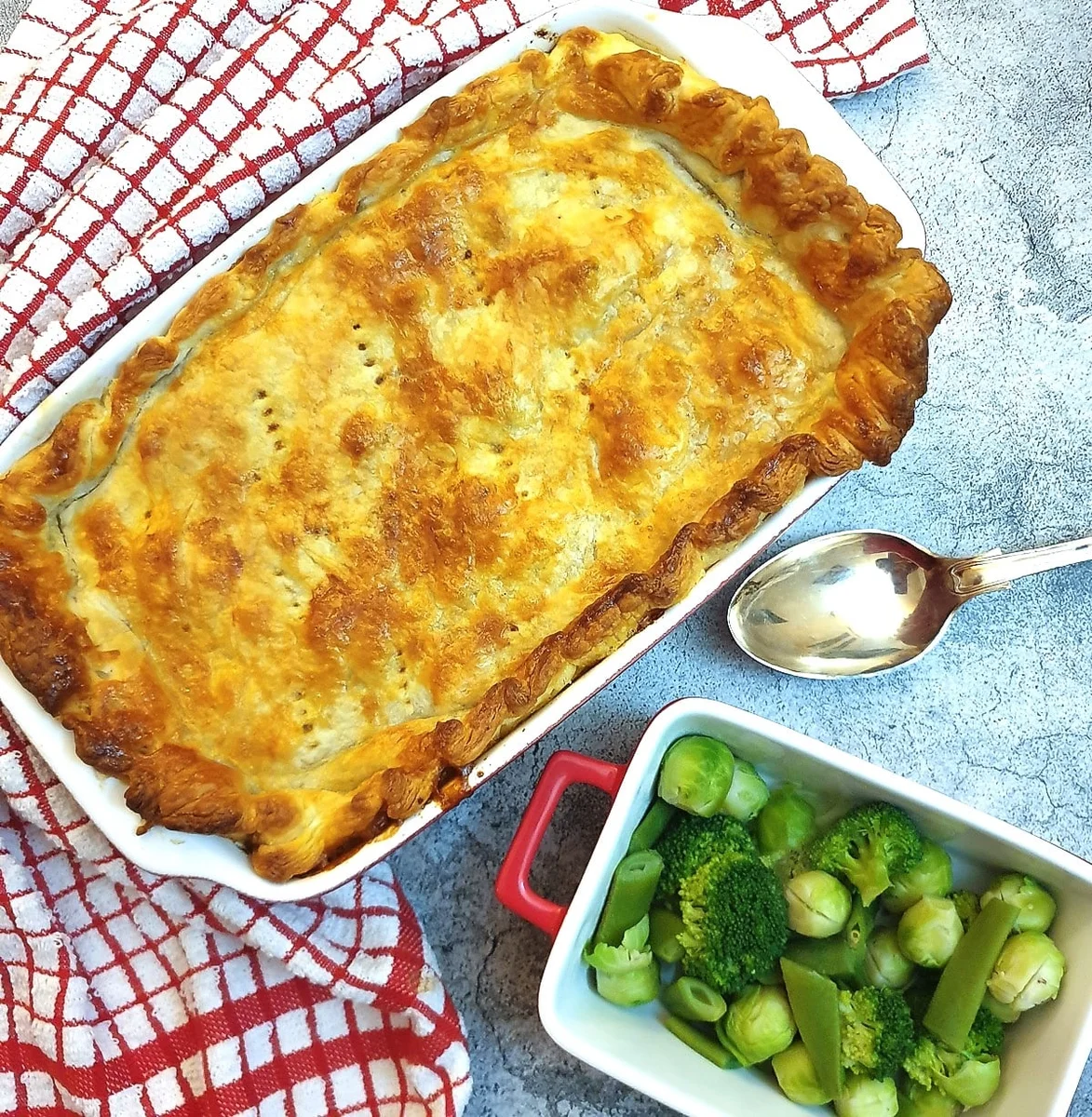
This British steak and kidney pie pairs a savoury, slow-cooked filling with a crisp puff pastry lid. It is a comforting main for a family meal, especially served with steamed vegetables.
Ingredients
- 450 g (1 lb)stewing steak, cubed
- 225 g (8 oz)ox kidney, coarsely chopped
- 30 ml (2 tablespoons)plain flour, for coating the beef
- 2 mediumonions, chopped
- 3 mediumpotatoes, cubed
- 1 largecarrot, sliced
- ¼–½ smallwhite cabbage, shredded
- 240 ml (1 cup)beef stock
- 30 ml (2 tablespoons)tomato purée
- 2 mediumtomatoes, chopped
- 30 ml (2 tablespoons)Worcestershire sauce
- 30 ml (2 tablespoons)olive oil
- 15 ml (1 tablespoon)cornflour, mixed with a little cold water to make a thin paste; use if needed
- 5 ml (1 teaspoon), or to tastesalt
- to tasteground black pepper
- Approximately ½ rollpuff pastry
- 1egg, beaten
Instructions
- 1
Prepare the meat
Cut the steak into bite-sized pieces and chop the kidney into pieces about 1.25 cm (½ inch) wide. If using a whole kidney, remove and discard the inner fat and core.
- 2
Mix the flour
Combine the flour with the salt.
- 3
Chop the vegetables
Peel the vegetables and cut them into small cubes, about 1.25 cm (½ inch) wide. Smaller pieces work best in the pie.
- 4
Shred the cabbage
Finely shred the cabbage into strips about 6 mm (¼ inch) wide.
- 5
Chop the tomatoes
Chop the tomatoes; there is no need to peel them.
- 6
Prepare the stock
If using a stock cube, dissolve it in 240 ml (1 cup) of boiling water. Stir in the Worcestershire sauce and tomato purée.
- 7
Coat the beef
Pat the beef dry with a paper towel, then coat it with the flour and salt mixture.
- 8
Brown the steak
Heat the oil in a pan over a medium heat and fry the steak, stirring continuously, until well browned. Avoid crowding the pan, or the meat may release moisture and boil rather than fry. Transfer the browned steak to the pressure cooker.
- 9
Soften the onions
Gently fry the onions in the same pan until they start to soften, adding a little more oil if needed. Add them to the steak in the pressure cooker.
- 10
Add the filling
Add the chopped kidney, tomatoes and shredded cabbage to the pressure cooker. Pour in the prepared stock and stir to combine.
- 11
Cook the meat
Select the pressure cooker's stew function, or its highest setting, and cook for 20 minutes. Allow the pressure to release.
- 12
Cook the vegetables
Stir in the carrots and potatoes, then cook on the Meat function, or the second-highest setting, for 15 minutes. Allow the pressure to release.
- 13
Thicken the gravy
Stir the filling and check the gravy. The flour coating should have thickened it; if it is still too thin, stir in the cornflour paste, using the browning function to keep the cooker hot, until it reaches the thickness you prefer.
- 14
Check seasoning
Taste the filling and add black pepper and more salt if needed.
- 15
Heat the oven
Preheat the oven to 200°C (400°F).
- 16
Cool the filling
Transfer the filling to a baking dish and leave it to cool. Adding pastry while the filling is hot can make it soggy and stop it rising properly.
- 17
Cover with pastry
Cut enough pastry from the roll to cover the dish; about half a roll was needed. If using a block, roll it out to around 3 mm (⅛ inch) thick.
- 18
Seal the pastry
Crimp the pastry edges against the dish with your fingers. Prick the pastry with a fork to let steam escape as the pie bakes.
- 19
Brush the pastry
Brush the pastry with a little of the beaten egg. Place the pie dish on a baking sheet to catch any gravy that bubbles over.
- 20
Bake the pie
Bake for 25–30 minutes in the preheated oven, until the pastry is golden and well risen.
- 21
Serve hot
Remove the pie from the oven and serve hot, with extra vegetables if you like.
What is steak and kidney pie?
Steak and kidney pie is a British savoury pie, built around beef and kidney in a rich gravy beneath pastry. It belongs to a long tradition of hearty meat pies, with the kidney adding a distinctive savoury depth.
This version uses a pressure cooker to tenderise the meat and cook the filling in stages, then finishes the pie with a puff pastry lid. Cooling the filling before adding the pastry helps it bake up crisp and risen.
Nutrition and macros by portion
The nutrition label shows one serving as written: 674 calories, 44g protein, 63g carbs, 28g fat.
| Portion | Adjustment | kcal | Protein | Carbs | Fat |
|---|---|---|---|---|---|
| Lighter | More vegetables, less pastry | 472 kcal | 31g | 44g | 19g |
| This serving | As written | 674 kcal | 44g | 63g | 28g |
| Hungry | Larger pie portion | 1011 kcal | 66g | 95g | 41g |
The potatoes and pastry provide much of the carbohydrate, while the olive oil and puff pastry contribute fat. Beef and kidney supply most of the protein; serve the pie with extra steamed vegetables to balance the plate.
The meat and flour coating
Beef and kidney: Cut the meat into small, fairly even pieces so they are easy to eat in the finished pie. If starting with a whole kidney, remove its central fat and core before chopping.
Flour and salt: Coating the beef before browning gives it a savoury crust and helps thicken the gravy as the filling cooks. Patting the meat dry first makes browning easier.
Build flavour before pressure cooking
Brown the steak: Fry it in batches if necessary, keeping the pieces in a single layer. A crowded pan cools down, making the beef more likely to release liquid than brown.
Soften the onions: Use the same pan so they pick up flavour left from the steak. The stock, tomato purée and Worcestershire sauce then bring the filling together with a deep, tangy gravy.
Why the vegetables go in stages
First additions: Kidney, tomatoes and cabbage cook with the beef during the first 20-minute pressure-cooking stage. This gives the meat time to become tender and lets the cabbage soften into the gravy.
Potatoes and carrot: Add these for the next 15 minutes on the Meat setting. Staggering them this way helps them keep their shape rather than becoming overly soft.
Get the gravy and pastry right
Gravy: Check its thickness after pressure cooking. The flour on the beef may be enough; if the gravy is still thin, stir in the cornflour paste while using the browning function.
Pastry: Let the filling cool before covering it, then seal the edges and prick the top. The vents allow steam to escape, while the beaten egg helps the pastry brown.
Check for doneness
Filling: After each pressure-cooking stage, allow the pressure to release before opening the cooker. The finished gravy should coat the filling rather than run thinly around it.
Pastry: Bake for 25–30 minutes at 200°C, until the lid is well risen and golden. If it needs more time, use the pastry's colour and rise as your cues.
What to serve with the pie
Steamed vegetables: Serve with freshly steamed vegetables, as suggested with the recipe. Their freshness and lighter texture make a simple contrast to the rich filling and pastry.
At the table: Let the pie settle briefly after baking so it is easier to portion. Spoon plenty of filling and gravy into each serving.
Recipe notes & tips
- Pat the beef dry before coating it so it browns more readily.
- Brown the steak without crowding the pan; work in batches if needed.
- Cut the potatoes and carrots into similarly sized small pieces for even cooking.
- Check the gravy before adding cornflour, as the flour coating may already have thickened it enough.
- Cool the filling fully before laying on the pastry to help it rise and crisp.
- Set the baking dish on a tray to catch any gravy that bubbles over.
Variations
- Use stock cubes: Dissolve a beef stock cube in boiling water to make the stock.
- Adjust the cabbage: Use anywhere from a quarter to half of a small white cabbage to suit your preference.
- Add more vegetables: Serve with extra steamed vegetables alongside the pie.
- Use block pastry: Roll it to about 3 mm (⅛ inch) thick before covering the dish.
Common mistakes to avoid
- Crowding the pan: The steak can release liquid and boil instead of browning; fry it in batches.
- Adding hot filling to pastry: The pastry can turn soggy and rise poorly; let the filling cool first.
- Skipping the steam vents: Steam can get trapped under the lid; prick the pastry with a fork.
- Thickening too soon: The gravy may already be thick enough from the flour; check it before adding cornflour paste.
- Cutting uneven vegetables: Pieces may cook at different rates; keep the potatoes and carrots small and similar in size.
How to store
Refrigerate leftover pie in a covered container once cooled and eat within 2 days. Reheat until piping hot throughout; the pastry may soften after storage.
Frequently asked questions
Can I make this without a pressure cooker?
This method is written for a pressure cooker, with separate stew and Meat settings. The recipe does not give timings for cooking the filling on the hob or in a conventional oven.
Can I use a stock cube?
Yes. Dissolve a beef stock cube in 240 ml (1 cup) of boiling water, then mix in the Worcestershire sauce and tomato purée.
Do I need to peel the tomatoes?
No. Chop them without peeling, as directed.
Why should I cool the filling before adding the pastry?
Hot filling can make the pastry soggy and interfere with its rise. Let the filling cool in the baking dish before covering it.
How do I know the pie is ready?
Bake for 25–30 minutes at 200°C. The pastry should be golden brown and well risen.
What if the gravy is too thin?
Mix the cornflour with a little cold water to make a thin paste, then stir it into the filling while using the pressure cooker's browning function. Add enough to thicken the gravy to your liking.
Cook it from the original
This recipe comes from foodleclub.com. Their page has the author’s own photos, notes and tips — the best place to cook it from.
Open the recipe on foodleclub.com