
Homemade bolognese sauce
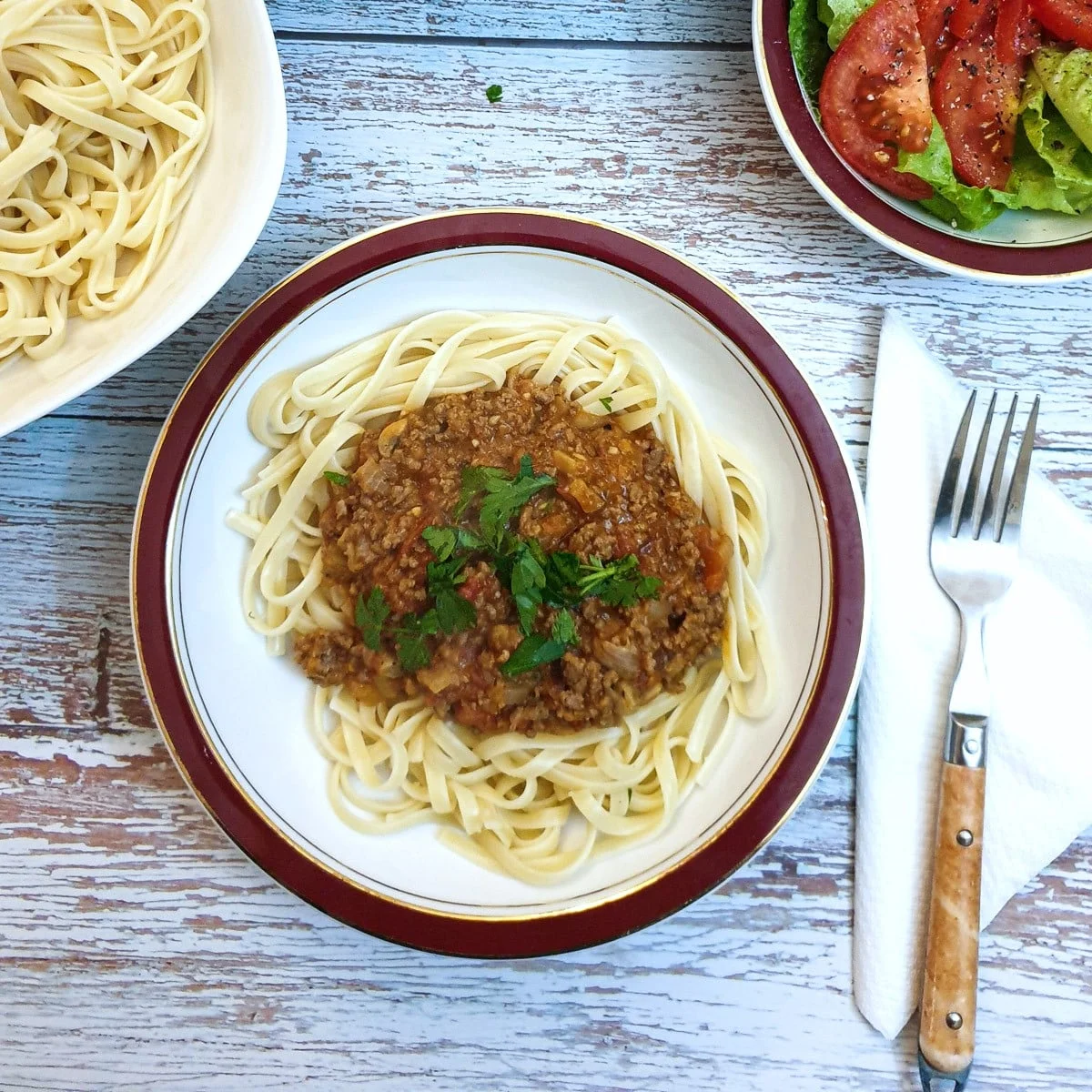
This slow-simmered beef bolognese is a hearty tomato sauce with finely chopped vegetables and dried herbs. Make it ahead for an easy family meal, or freeze half for another day.
Ingredients
- 450 g (1 pound)minced beef
- 2 mediumonions, finely chopped
- 120 g (4 ounces)mushrooms, finely chopped
- 1 stickcelery, finely chopped
- 2 largetomatoes, finely chopped
- 1 mediumcarrot, finely grated
- 2 clovesgarlic, finely minced
- 390 g (14 ounces)tin of chopped tomatoes
- ½ tinwater
- 1 teaspoon (optional)sugar
- 1–2 tablespoonsolive oil
- 2 teaspoonsdried mixed herbs
- to tastesalt and freshly ground black pepper
Instructions
- 1
Brown the beef
Heat 1 tablespoon of olive oil in a large sauté pan. Stir-fry the minced beef until browned and crumbly, then set it aside.
- 2
Soften the vegetables
Add another tablespoon of oil to the same pan and cook the onions, garlic, celery and mushrooms until the mushrooms turn translucent. For a gentler approach, lower the heat, cover the pan and let the vegetables sweat for about 5 minutes, watching to make sure they do not brown.
- 3
Add fresh produce
Stir in the fresh tomatoes and grated carrot, and cook until the tomatoes begin to soften.
- 4
Combine the sauce
Return the beef to the pan and add the remaining ingredients. Stir everything together and bring the sauce to the boil.
- 5
Simmer slowly
Turn the heat down to a very low simmer, cover the pan and cook for 1 hour and 30 minutes.
- 6
Serve the sauce
Serve over spaghetti or linguine, with chopped parsley or grated Parmesan as an optional garnish.
What is bolognese sauce?
Bolognese is a meat-based sauce associated with Bologna in northern Italy, typically cooked slowly so its ingredients meld into a rich, savoury sauce. This version combines minced beef with fresh and tinned tomatoes, vegetables and dried herbs.
Finely chopping or grating the vegetables helps them soften into the sauce during the long simmer, adding flavour without leaving large pieces.
Nutrition and macros by portion
The nutrition label shows one serving as written: 367 calories, 39g protein, 22g carbs, 14g fat.
| Portion | Adjustment | kcal | Protein | Carbs | Fat |
|---|---|---|---|---|---|
| Lighter | More vegetables, less pasta | 257 kcal | 27g | 15g | 10g |
| This serving | As written | 367 kcal | 39g | 22g | 14g |
| Hungry | Larger pasta portion | 551 kcal | 58g | 33g | 21g |
The beef supplies most of the protein and contributes fat, while the tomatoes, vegetables and optional sugar provide much of the carbohydrate. Serve a measured portion over pasta and add vegetables or salad alongside to balance the plate.
Building the flavour
Beef: Browning it first gives the sauce a savoury base. Break up the mince as it cooks so it is crumbly rather than in large clumps.
Vegetables: The onions, garlic, celery and mushrooms are cooked gently before the tomatoes and carrot go in. Sweating rather than browning them keeps their flavour mellow.
The gentle vegetable step
Low heat: The onions, garlic, celery and mushrooms need time to soften without catching. Covering the pan while they sweat for about 5 minutes helps them release moisture.
Watch the pan: Stir or check the vegetables as they cook, especially if the heat is very low; they should turn soft and the mushrooms translucent, not take on colour.
Why simmer it slowly?
A very low simmer gives the beef and vegetables time to mingle with the tomatoes and herbs. Keep the lid on as directed and check occasionally that the sauce is not sticking or boiling vigorously.
The finished sauce should be thick and cohesive, with tender vegetables and no raw-tasting tomato edge. If it seems to be catching, lower the heat further.
Choosing the tomatoes
Fresh tomatoes: Chopped fresh tomatoes and grated carrot go in before the tinned tomatoes. Cook them just until the tomatoes start to soften.
Tinned tomatoes: The chopped tomatoes provide the main body of the sauce. The half-tin of water helps rinse out the tin and adds liquid for the long simmer.
How to serve it
Pasta: Serve the sauce over spaghetti or linguine, as suggested in the method. Cook the pasta separately according to its packet instructions.
Finishing touches: Chopped parsley or grated Parmesan are optional garnishes. A simple green salad or cooked vegetables can round out the meal.
Making it ahead
The long cooking time makes this sauce well suited to preparing in advance. Cool any portion you are saving promptly, then refrigerate or freeze it in a suitable container.
For a double batch, scale the ingredients up and use a pan large enough to hold everything; allow extra time for the larger quantity to heat through before simmering.
Recipe notes & tips
- Use a large sauté pan so the beef can brown rather than crowding together.
- Break the mince into small pieces as it cooks for a more even, crumbly texture.
- Keep the vegetables at a gentle heat during their covered 5-minute sweat.
- Use the empty tomato tin to measure the half-tin of water.
- Keep the sauce at a very low simmer for the full 1 hour and 30 minutes.
- Cool portions you plan to store before packing them into containers.
Variations
- Add chilli: Stir in a little chilli with the dried herbs for a warmer sauce.
- Use fresh herbs: Replace the dried mixed herbs with a suitable amount of fresh herbs to taste.
- Try another mince: Use minced turkey or pork in place of beef, adjusting the cooking until thoroughly cooked.
- Make it meatier: Add extra mushrooms, chopped finely, with the other vegetables.
- Finish with cheese: Offer grated Parmesan at the table as an optional topping.
Common mistakes to avoid
- Crowding the beef: It can steam instead of browning; cook it in batches if your pan is too small.
- Browning the vegetables: They may catch or develop a stronger flavour; lower the heat and cover them while they sweat.
- Adding the carrot too late: Add it with the fresh tomatoes so it has time to soften.
- Boiling the sauce hard: A vigorous boil can make it catch; reduce the heat to a very low simmer.
- Skipping the long simmer: The sauce will have less time for its flavours to combine; allow the full 1 hour and 30 minutes.
How to store
Refrigerate cooled sauce in a covered container and use within 3 days, or freeze it for up to 3 months. Defrost frozen sauce in the fridge and reheat in a saucepan until piping hot, stirring occasionally.
Frequently asked questions
Can I make the sauce ahead?
Yes. Cook it as directed, cool it promptly and refrigerate it in a covered container. Reheat until piping hot before serving.
Can I freeze bolognese sauce?
Yes. Freeze cooled sauce in a suitable container, leaving a little room for expansion. Defrost it in the fridge before reheating.
Can I use only tinned tomatoes?
The recipe includes both fresh and tinned tomatoes. For the closest result, use both as listed; replacing the fresh tomatoes will change the sauce's texture and flavour.
How do I know the sauce is ready?
After the 1 hour and 30 minute simmer, the vegetables should be tender and the sauce should look thick and cohesive. Keep it at a very low simmer throughout.
What pasta goes best with this sauce?
The recipe suggests spaghetti or linguine. Either works well for serving the sauce.
Can I leave out the sugar?
Yes. Sugar is listed as optional, so you can omit it without changing the method.
Cook it from the original
This recipe comes from foodleclub.com. Their page has the author’s own photos, notes and tips — the best place to cook it from.
Open the recipe on foodleclub.com