
Puerto Rican Pernil
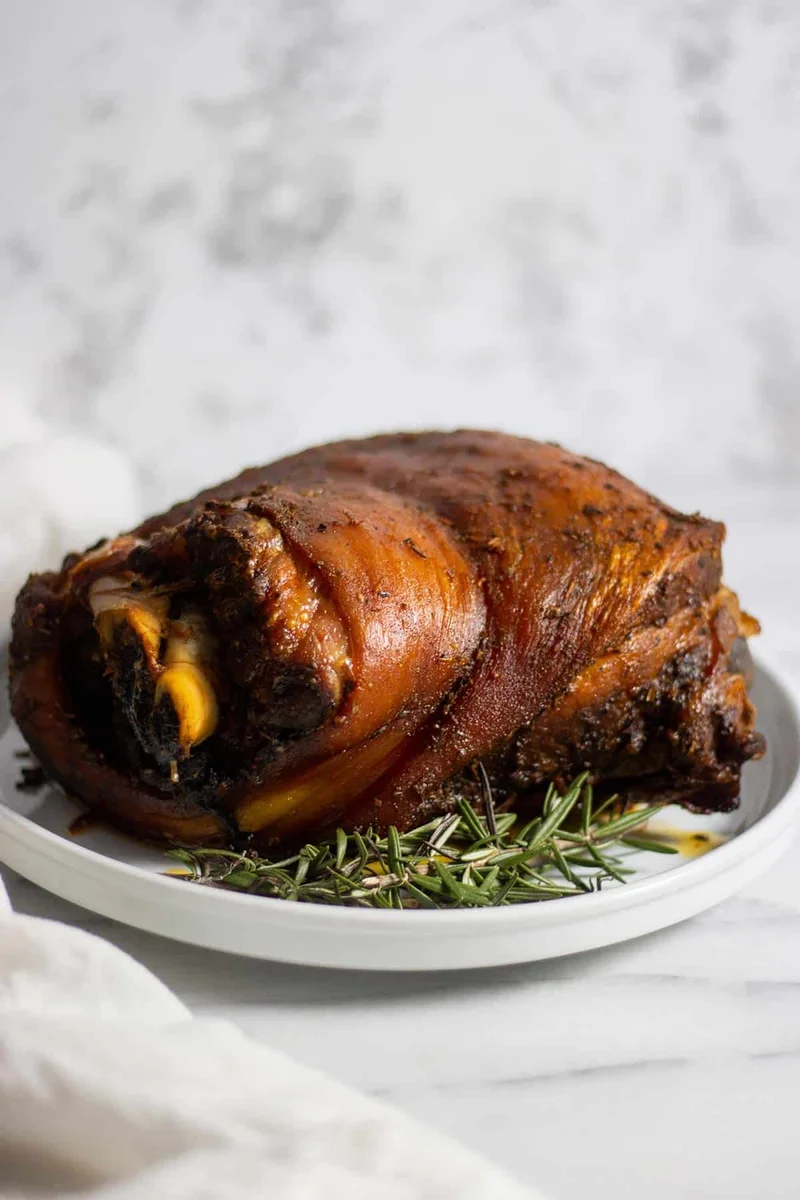
Puerto Rican pernil is slow-roasted pork shoulder seasoned with garlic, adobo, sazón and herbs, finished with crisp skin. The long, gentle cook makes it a generous centrepiece for a family meal or a special gathering.
Ingredients
- 3.18 kg (7 pounds)pork shoulder
- 60 ml (1/4 cup)oil
- 2 tablespoonssalt
- 2 tablespoonsadobo
- 3 teaspoons (or 2 packets)sazón
- 3 clovesgarlic
- 1 teaspoonground thyme
- 1 tablespoondried oregano
Instructions
- 1
Preheat the oven
Heat the oven to 250°F/100°C.
- 2
Mix the seasoning
Mince the garlic and put it in a small bowl. Add the oil, salt, adobo, sazón, thyme and oregano, then mix everything together.
- 3
Season the pork
Place the pork skin-side down and make 4–6 deep cuts in the other side, deep enough to fit at least half a finger. Rub the oil mixture over the whole joint, working some into each cut.
- 4
Roast the pork
Put the pork in a lidded roasting pan, cover and cook for 4 hours. Raise the oven to 350°F/180°C, uncover the pan and cook for a further 3 hours. For very crisp skin, raise the heat to 450°F/230°C and cook for 15 minutes, then serve.
What is Puerto Rican pernil?
Pernil is a Puerto Rican-style roast pork, traditionally made with a large shoulder seasoned with garlic and a savoury blend of herbs and spices. It is often served as a celebratory centrepiece, with the contrast between tender meat and crisp skin as part of its appeal.
This version uses a slow, covered roast followed by an uncovered finish. The seasoning is worked into cuts in the meat, helping flavour reach beyond the surface.
Nutrition and macros by portion
The nutrition label shows one serving as written: 348 calories, 38g protein, 1g carbs, 20g fat.
| Portion | Adjustment | kcal | Protein | Carbs | Fat |
|---|---|---|---|---|---|
| Lighter | Serve with extra vegetables | 244 kcal | 27g | 1g | 14g |
| This serving | As written | 348 kcal | 38g | 1g | 20g |
| Hungry | Take a larger portion | 522 kcal | 57g | 2g | 30g |
The pork shoulder provides most of the protein and fat, while the oil adds further fat; the seasoning contributes very little carbohydrate. Pair a portion with vegetables or a fresh salad for a more balanced plate.
The seasoning blend
Garlic: mince it finely so it mixes evenly with the oil and can be pressed into the cuts.
Adobo and sazón: these bring the recipe’s distinctive savoury seasoning. The recipe allows either three teaspoons of sazón or two packets.
Herbs: thyme and oregano round out the mixture. Stir everything together before seasoning the pork so each part gets an even share.
Make the cuts count
Score the meat side, not the skin, while the joint is turned skin-side down. Make 4–6 deep cuts, then work seasoning into each opening as well as across the rest of the pork.
Keep the seasoning on the skin side light enough that the final high-heat stage can crisp it. Take care when handling the seasoned joint, as the cuts can make it awkward to move.
Slow roasting and crisp skin
Covered cooking at the recipe’s low oven setting gives the pork a long, gentle roast. Keep the lid on for the first 4 hours, then uncover the pan after raising the temperature to 350°F/180°C for the next 3 hours.
The final 15 minutes at 450°F/230°C are specifically for crisping the skin. Watch closely during this hotter stage, and take the pork out once the skin is as crisp as you like.
How to tell it is ready
The recipe relies on its stated cooking times rather than a temperature check: 4 hours covered, 3 hours uncovered and, if desired, 15 minutes at high heat for the skin. The meat should be tender enough to serve easily after the long roast.
If the skin needs more colour, keep a close eye on it during the final hot stage rather than leaving it unattended.
Serving ideas
Serve the pernil as the main dish, as the recipe suggests, or carve it at the table so everyone can take tender meat and crisp skin. Rice, beans or a simple salad make practical accompaniments.
Because the pork is rich and well seasoned, a fresh or simply prepared side can balance the plate without competing with its flavour.
Recipe notes & tips
- Pat the pork skin dry before roasting if you want to encourage a crisp finish.
- Make the seasoning cuts on the meat side with the skin facing down.
- Press seasoning into every cut as well as rubbing it over the surface.
- Keep the roasting pan covered for the first 4 hours as directed.
- Watch the pork carefully during the final 15 minutes at high heat.
Variations
- Citrus accent: Add a little citrus zest to the seasoning for a bright note.
- Extra garlic: Increase the garlic for a more pronounced savoury flavour.
- Herb balance: Adjust the thyme and oregano to suit your preferred herb flavour.
- Skinless joint: Use a skinless pork shoulder, skipping the crisp-skin finish.
- Sazón choice: Use either three teaspoons of sazón or two packets, as specified.
Common mistakes to avoid
- Shallow cuts: Seasoning will stay near the surface; make 4–6 deep cuts in the meat side.
- Missed openings: The flavour may not reach into the cuts; work seasoning into each one.
- Uncovering too soon: The first stage is meant to be covered; keep the lid on for 4 hours.
- Skipping the temperature change: Raise the oven to 350°F/180°C after the first 4 hours.
- Leaving the skin unattended: It can overbrown at high heat; check it during the final 15 minutes.
How to store
Refrigerate leftover pork in a covered container and use within 3–4 days. Reheat until piping hot; warm it gently so the meat stays tender, and use a hot oven briefly to crisp the skin again.
Frequently asked questions
Can I prepare the seasoning ahead?
Yes. Mix the oil, garlic, salt, adobo, sazón, thyme and oregano ahead, then keep it covered in the refrigerator until you are ready to season the pork.
Can I cook the pork without skin?
Yes, though you will not have skin to crisp in the final high-heat stage. Follow the covered and uncovered roasting stages as written.
How many cuts should I make?
The recipe calls for about 4–6 cuts in the side opposite the skin. Make them deep enough to fit at least half a finger, then work seasoning into each.
How do I get the skin crisp?
After the covered and uncovered roasting stages, raise the oven to 450°F/230°C and cook for 15 minutes. Keep an eye on the skin during this final stage.
Can I use a different cut of pork?
The recipe is written for pork shoulder. A different cut may cook differently, so the stated timing and texture may not apply in the same way.
What should I serve with pernil?
Rice, beans or a simple salad are straightforward accompaniments. A fresh side works particularly well alongside the richly seasoned pork.
Cook it from the original
This recipe comes from foodmetamorphosis.com. Their page has the author’s own photos, notes and tips — the best place to cook it from.
Open the recipe on foodmetamorphosis.com