
Bibimbap with rice
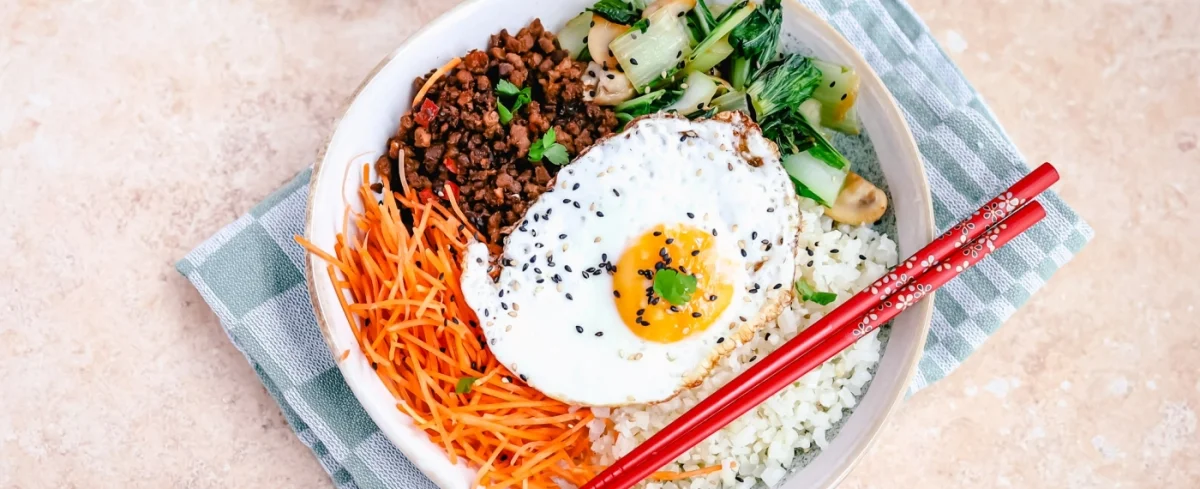
Bibimbap is a Korean rice bowl topped with vegetables, seasoned beef and a fried egg. This quick version combines brown rice, pak choi, mushrooms and julienned carrot for a mix of savoury, spicy and fresh flavours.
Ingredients
- 70 gbrown rice
- 75 gmushrooms
- 1 headShanghai pak choi
- ½red chilli
- 1 clove (5 g)garlic
- 1½ tbsp (15 ml)olive oil or another oil
- 100 glean minced beef
- 1 tbsp (10 ml)soy sauce
- 1 tsp (5 g)sambal
- 1egg
- 50 gjulienned carrot
Instructions
- 1
Cook the rice
Cook the rice according to the packet instructions.
- 2
Prepare the vegetables
Clean the mushrooms and quarter them. Trim a slice from the base of the pak choi and separate the leaves. Slice the pak choi into strips, keeping the green parts apart from the white. Finely chop the chilli and crush the garlic.
- 3
Cook the beef
Heat half the oil in a small pan and fry the chilli and garlic for 2 minutes. Add the minced beef, soy sauce and sambal, stir to combine and cook for 4 minutes.
- 4
Stir-fry vegetables
Heat the remaining oil in a pan. Stir-fry the mushrooms with the white parts of the pak choi for 4 minutes. Add the green parts and cook for a further 2 minutes, then transfer the vegetables to a plate.
- 5
Fry the egg
In the same pan, fry the egg over a low heat for 4 minutes, until the white has set.
- 6
Assemble the bowl
Arrange the beef beside the vegetables on the plate, with the carrot and rice. Place the fried egg on top. Season with a little pepper and salt to taste.
What is bibimbap?
Bibimbap is a Korean dish whose name is commonly understood as “mixed rice”. It brings warm rice together with a selection of toppings, often including vegetables, meat and egg.
This version keeps the components distinct until serving, with brown rice, crisp carrot, pak choi, mushrooms and spicy minced beef. The fried egg adds a rich finish, and the toppings can be mixed through the rice at the table.
Nutrition and macros by portion
The nutrition label shows one serving as written: 682 calories, 36g protein, 59g carbs, 33g fat.
| Portion | Adjustment | kcal | Protein | Carbs | Fat |
|---|---|---|---|---|---|
| Lighter | Use less oil | 477 kcal | 25g | 41g | 23g |
| This serving | As written | 682 kcal | 36g | 59g | 33g |
| Hungry | Add more rice | 1023 kcal | 54g | 89g | 50g |
The rice and carrot provide most of the carbohydrates, while the oil and egg contribute much of the fat. Minced beef and egg supply protein, with the rice and vegetables adding smaller amounts. To balance the plate, add extra non-starchy vegetables such as cucumber or greens.
Build flavour with the beef
Chilli and garlic: frying them briefly in oil gives the beef a fragrant, savoury base. Add the meat after 2 minutes so the aromatics have time to flavour the oil without cooking for too long.
Soy and sambal: soy sauce seasons the mince while sambal brings heat. Stir both through the beef so the flavour coats it evenly.
Keep the pak choi lively
White stems: cook these with the mushrooms for 4 minutes, as they need a little longer to soften. Cut the strips to a similar size so they cook evenly.
Green leaves: add them for the final 2 minutes. This shorter time helps them wilt while retaining more colour and texture.
Cook the mushrooms well
Quartering the mushrooms gives them substantial pieces that sit well alongside the rice and other toppings. Stir-fry them with the pak choi stems for the full 4 minutes.
Use a pan with room to move the vegetables around. If they are crowded, they may release moisture and soften rather than fry.
Time the egg and rice
Rice first: start it according to its packet instructions, since cooking times vary by brand. The vegetables and beef can be prepared while it cooks.
Egg last: fry it over low heat for 4 minutes, stopping when the white has set. This keeps the yolk soft if that is how you like it.
Serve it as a bowl
Arrange the rice, beef, vegetables and carrot together, then place the egg on top. Keeping the toppings separate makes the bowl colourful and lets each person mix everything together as they eat.
For a more substantial meal, serve it with an extra portion of vegetables. A simple cucumber salad can also bring a cool, crisp contrast to the chilli and sambal.
Recipe notes & tips
- Get the rice cooking first so it is ready while you prepare the toppings.
- Keep the pak choi leaves and stems separate so you can add them at different times.
- Stir the beef as it cooks to break up any large clumps.
- Cut the mushrooms into evenly sized quarters for more consistent cooking.
- Taste the beef before serving, as soy sauce and sambal bring different levels of salt and heat.
Variations
- Use plant-based mince: cook it with the same chilli, garlic, soy sauce and sambal.
- Swap the rice: use white rice if you prefer a softer, milder base.
- Change the greens: replace pak choi with spinach or another quick-cooking leafy vegetable.
- Add sesame: finish the bowl with toasted sesame seeds for a nutty note.
- Adjust the heat: use less sambal or chilli for a milder bowl.
Common mistakes to avoid
- Cooking all the pak choi together: add the stems first and the leaves later so the greens do not overcook.
- Crowding the vegetables: use a roomy pan so the mushrooms and pak choi can stir-fry rather than steam.
- Overcooking the egg: fry it over low heat and stop once the white has set.
- Adding the carrot to the hot pan: keep it as a fresh topping for a crisp contrast.
- Forgetting to separate the pak choi parts: set the green leaves aside before cooking the stems.
How to store
Store leftover rice and toppings in an airtight container in the fridge for up to 2 days. Reheat the rice, beef and vegetables until hot; the fried egg is best cooked fresh, as its texture changes when reheated.
Frequently asked questions
Can I use white rice instead of brown rice?
Yes. Cook it according to its packet instructions, as white rice may take a different amount of time.
Can I make this bibimbap vegetarian?
Use plant-based mince in place of the beef and cook it with the same seasonings. Check that the soy sauce and sambal suit your requirements.
How can I make the bowl less spicy?
Use less sambal and reduce or omit the red chilli. You can add more heat at the table if needed.
Can I prepare the components ahead?
You can cook the rice and beef ahead and refrigerate them. Stir-fry the vegetables and fry the egg close to serving for the best texture.
What does bibimbap mean?
The name is commonly translated as “mixed rice”. The toppings are arranged over the rice and mixed together as you eat.
Cook it from the original
This recipe comes from fitchef.nl. Their page has the author’s own photos, notes and tips — the best place to cook it from.
Open the recipe on fitchef.nl