
Slow-cooker beef silverside
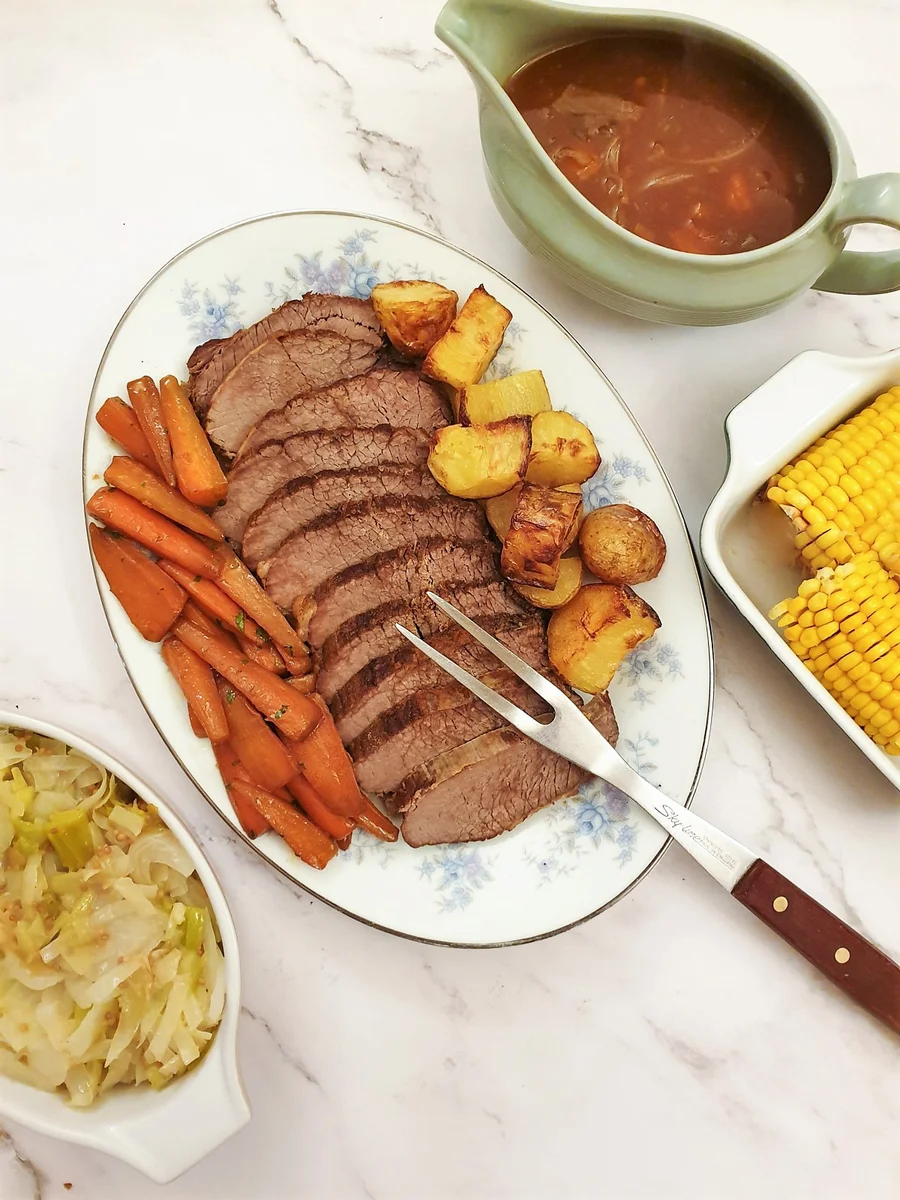
Slow-cooker beef silverside is a British-style roast joint cooked gently with vegetables, stock and a little Worcestershire sauce. Searing the beef first adds colour, while the long, low cooking time makes it tender enough to serve with gravy and traditional sides.
Ingredients
- 700 g (1½ lb)beef silverside joint
- 1 mediumonion
- 1 mediumcarrot
- 1 stalkcelery
- 240 ml (1 cup), or 1 beef stock cube dissolved in 240 ml (1 cup) boiling waterbeef stock
- 1 tablespoon (15 ml)tomato purée
- 1 tablespoon (15 ml)Worcestershire sauce
- to tastesalt and black pepper
- 2 tablespoons (30 ml)sunflower oil
- 1 tablespoon (about 8 g)cornflour
- 2 tablespoons (30 ml)water
Instructions
- 1
Season the beef
Season the silverside with salt and black pepper to taste.
- 2
Sear the joint
Heat the sunflower oil in a frying pan and brown the beef on all sides. Turn off the heat and leave the joint in the pan while you prepare the vegetables.
- 3
Slice the vegetables
Peel the onion and carrot, then slice them thinly along with the celery. Arrange the vegetables across the base of the slow cooker.
- 4
Add the beef
Set the seared silverside on top of the vegetables.
- 5
Mix the cooking liquid
Stir the tomato purée and Worcestershire sauce into the beef stock, then pour the mixture into the slow cooker.
- 6
Slow-cook the beef
Cover and cook on low for 6–8 hours, until a fork pierces the meat easily. A small joint may be ready after 6 hours; larger joints may need longer. If short on time, cook on high for 5–6 hours, though the longer, lower setting is recommended.
- 7
Rest the joint
Transfer the beef to a plate, cover it with foil and leave it to rest for 20 minutes.
- 8
Serve the beef
Serve hot with Yorkshire puddings, roast potatoes and a selection of vegetables.
- 9
Make chunky gravy
For chunky gravy, tip the slow-cooker stock and vegetables into a saucepan and warm over a low heat. Mix 1 tablespoon of cornflour with 2 tablespoons of water to make a slurry, then gradually stir it into the gravy until it reaches your preferred thickness. You may not need all the slurry.
- 10
Make smooth gravy
For smooth gravy without vegetables, strain the stock and vegetables through a wire-mesh strainer into a saucepan. Discard the vegetables or keep them warm to serve on the side, then thicken the stock as described for chunky gravy.
- 11
Blend the gravy
For gravy blended with vegetables, tip the slow-cooker stock and vegetables into a saucepan and blend until smooth with an immersion blender. Thicken it as described for chunky gravy.
What is beef silverside?
Silverside is a lean cut of beef from the hindquarter, often used for British-style roasting and braising. This version cooks it slowly with onion, carrot and celery, then uses the cooking liquid as the base for gravy.
The gentle, extended cooking suits this joint, while browning it first gives the meat a deeper colour. The three gravy choices let you keep the vegetables chunky, strain them out or blend them into the sauce.
Nutrition and macros by portion
The nutrition label shows one serving as written: 415 calories, 54g protein, 6g carbs, 18g fat.
| Portion | Adjustment | kcal | Protein | Carbs | Fat |
|---|---|---|---|---|---|
| Lighter | More vegetables, less oil | 291 kcal | 38g | 4g | 13g |
| This serving | As written | 415 kcal | 54g | 6g | 18g |
| Hungry | Larger beef portion | 623 kcal | 81g | 8g | 27g |
The beef supplies most of the protein, while the stock and vegetables contribute a modest amount of carbohydrate; the sunflower oil and beef account for much of the fat. Serve with vegetables and choose a moderate portion of roast potatoes or Yorkshire pudding to balance the plate.
The vegetables and cooking liquid
Vegetable bed: sliced onion, carrot and celery sit beneath the beef as it cooks. Their juices mingle with the stock and help form the gravy base.
Stock mixture: tomato purée adds savoury depth, while Worcestershire sauce brings a tangy, seasoned note. Stir both into the stock before pouring it into the slow cooker.
Why sear the beef first?
Browning: sear the joint on all sides in the hot oil before it goes into the slow cooker. This adds colour and browned flavour to the finished dish.
Pan juices: the recipe leaves the beef in the pan while you prepare the vegetables, then transfers it to the cooker. There is no need to add another browning step later.
How to tell when it is ready
Fork test: the stated cue is that a fork should pierce the meat easily. Begin checking at 6 hours on low, particularly for a smaller joint, and allow longer if needed.
Cooking setting: low for 6–8 hours is the recommended approach. The recipe offers 5–6 hours on high as a quicker alternative, but favours the longer, lower setting.
Resting and slicing
Rest: move the cooked joint to a plate, cover it with foil and leave it for 20 minutes before serving. This gives you time to finish the gravy and prepare the sides.
Carving: slice the rested beef for serving. Keep the slices together until you are ready to bring the platter to the table so they stay warm.
Choose a gravy texture
Chunky: keep the cooked vegetables in the stock and thicken the mixture with cornflour slurry. Stir the slurry in gradually, stopping when the gravy is as thick as you like.
Smooth: strain out the vegetables before thickening the stock, or blend the vegetables into the liquid for a smooth, fuller-bodied gravy. The recipe suggests keeping strained vegetables warm to serve separately.
What to serve alongside
Traditional sides: serve the beef hot with Yorkshire puddings, roast potatoes and a selection of vegetables, as the recipe suggests.
Gravy: spoon your chosen version over the beef and sides, or serve it in a jug so everyone can add their own.
Recipe notes & tips
- Pat the beef dry before seasoning so it browns more readily in the pan.
- Turn the joint as needed to brown every side evenly.
- Start checking a small joint at 6 hours on low, using the easy-to-pierce fork test.
- Mix the cornflour with cold water before adding it to the gravy to make a smooth slurry.
- Stir the slurry in a little at a time, since you may not need the full amount.
- Rest the beef for the full 20 minutes before serving.
Variations
- Chunky gravy: leave the cooked vegetables in the stock and thicken them together.
- Strained gravy: sieve out the vegetables and keep them warm as a side.
- Blended gravy: use an immersion blender to purée the vegetables into the cooking liquid.
- Stock cube: dissolve one beef stock cube in 240 ml boiling water in place of prepared stock.
- Slow-cooker setting: use the recipe’s 5–6-hour high setting when the longer low setting is not practical.
Common mistakes to avoid
- Skipping the sear: brown the joint on all sides first for added colour and flavour.
- Guessing doneness by time alone: check that a fork pierces the beef easily, as joint size affects cooking time.
- Adding all the slurry at once: stir it in gradually so the gravy does not become thicker than you want.
- Skipping the rest: cover the beef with foil and leave it for 20 minutes before serving.
- Pouring in uncombined seasonings: mix the tomato purée and Worcestershire sauce into the stock before adding it to the cooker.
How to store
Refrigerate leftover beef and gravy in covered containers within 2 hours of cooking and use within 3 days. Reheat until piping hot throughout; add a splash of stock or water to the gravy if it has thickened. Freeze leftovers in suitable containers for up to 3 months and defrost in the fridge before reheating.
Frequently asked questions
Can I cook the beef on high?
Yes. The recipe gives 5–6 hours on high as a quicker option, though it recommends cooking on low for 6–8 hours for a slower cook.
How do I know when the silverside is ready?
It is ready when a fork pierces the meat easily. A small joint may reach this point after 6 hours on low, while a larger one may need longer.
Can I make the gravy without vegetables in it?
Yes. Strain the stock and vegetables through a wire-mesh strainer, then thicken the stock with cornflour slurry. You can keep the strained vegetables warm and serve them on the side.
How do I make smooth gravy with the vegetables?
Blend the stock and vegetables together in a saucepan with an immersion blender, then thicken the gravy gradually with cornflour slurry.
Can I use a beef stock cube?
Yes. Dissolve 1 beef stock cube in 240 ml boiling water as the stock alternative.
What should I serve with slow-cooker beef silverside?
The recipe suggests Yorkshire puddings, roast potatoes and a selection of vegetables.
Cook it from the original
This recipe comes from foodleclub.com. Their page has the author’s own photos, notes and tips — the best place to cook it from.
Open the recipe on foodleclub.com