
Pizza Dough
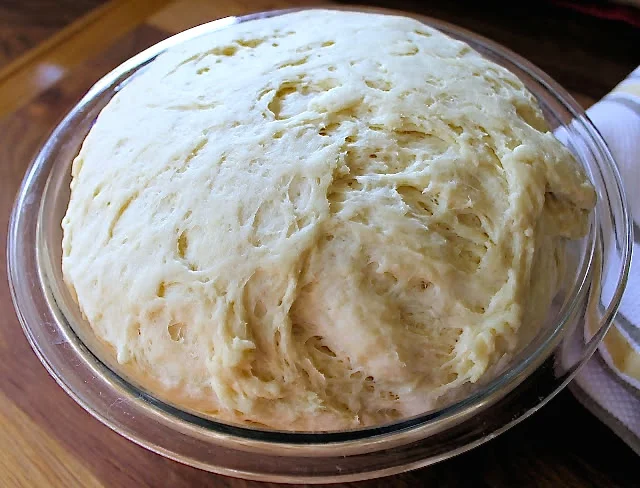
This simple Italian-style pizza dough uses yeast, olive oil and a short rise to make a soft dough you can roll out for two pizzas. It is a useful from-scratch base when you want control over the thickness and shape.
Ingredients
- 240 ml (1 cup)lukewarm water
- 12 g (1 tablespoon)sugar
- 9 g (1 tablespoon)active dry yeast
- 360 g (3 cups), plus 16 g (2 tablespoons) for flouring the surfaceunbleached flour
- 30 ml (2 tablespoons)extra virgin olive oil
Instructions
- 1
Dissolve the sugar
Stir the sugar into the lukewarm water in a small bowl until dissolved.
- 2
Activate the yeast
Add the yeast and leave the mixture for about 15 minutes, until foamy.
- 3
Combine the ingredients
Put the flour, water, sugar and yeast mixture, and olive oil in the bowl of a stand mixer or food processor fitted with a dough blade.
- 4
Form the dough
Process for around 1.5 minutes, until the dough gathers into a ball.
- 5
Cover the dough
Transfer the dough to an oil-coated bowl and cover it with a damp kitchen towel.
- 6
Let it rise
Leave the dough until it has doubled in size, for at least 25 minutes.
- 7
Divide and roll
Split the dough in half and roll out each piece.
What is pizza dough?
Pizza dough is a leavened bread dough, traditionally used as the base for Italian pizza. Flour and water form the structure, while yeast makes the dough rise and olive oil adds richness.
This version keeps the method straightforward: activate the yeast, bring the ingredients together in a processor or mixer, then give the dough a short rise before rolling.
Nutrition and macros by portion
The nutrition label shows one serving as written: 826 calories, 20g protein, 174g carbs, 15g fat.
| Portion | Adjustment | kcal | Protein | Carbs | Fat |
|---|---|---|---|---|---|
| Lighter | Use less olive oil | 578 kcal | 14g | 122g | 11g |
| This serving | As written | 826 kcal | 20g | 174g | 15g |
| Hungry | Make larger pizzas | 1239 kcal | 29g | 261g | 23g |
Most of the carbohydrates come from the flour, while the olive oil supplies most of the fat; the flour also contributes the dough's protein. Pair a portion with vegetables and a protein-rich topping for a more balanced plate.
The ingredients that matter
Flour: unbleached flour gives the dough its structure. Measure the flour consistently, since packing it into a cup can make the dough drier than intended.
Yeast: active dry yeast should become foamy after standing in the sweetened water. That foam is a useful sign that it has activated.
Olive oil: extra virgin olive oil enriches the dough and helps it feel supple as it is handled.
Getting the dough together
Water temperature: use lukewarm water rather than hot water. The method relies on the yeast becoming foamy before it is combined with the flour.
Processing: stop when the dough gathers into a ball, around 1.5 minutes. The recipe does not call for extended kneading.
Watch the rise
Rise cue: look for the dough to double in size, rather than relying on the clock alone. The stated minimum rise is 25 minutes.
Cover: a damp kitchen towel keeps the surface covered while the dough rests. Make sure the bowl is coated with oil before adding the dough.
Rolling and shaping
Divide: split the dough into two equal pieces so each can be rolled into its own base.
Floured surface: use the extra 16 g of flour to dust the work surface as needed. A light dusting helps prevent sticking without burying the dough in flour.
Serving ideas
Once rolled, the dough is ready for your chosen toppings and baking method. Keep toppings in a moderate layer so the base can cook through.
Serve pizza with a crisp green salad or simply cooked vegetables for a plate with more variety in texture.
Recipe notes & tips
- Let the yeast mixture stand for the full 15 minutes, until visibly foamy.
- Use lukewarm, not hot, water when dissolving the sugar.
- Oil the bowl before placing the dough inside so it is easier to handle after rising.
- Dust the rolling surface lightly with the reserved flour to prevent sticking.
- Divide the dough evenly if you want two similarly sized bases.
Variations
- Wholemeal blend: replace part of the unbleached flour with wholemeal flour, adding water only if the dough needs it.
- Herb dough: mix dried oregano or basil into the flour before processing.
- Garlic dough: add a little finely grated garlic with the olive oil.
- Seeded edge: press sesame or poppy seeds onto the rolled rim before baking.
- Thin bases: roll each half more thinly for a crisper-style base.
Common mistakes to avoid
- Hot water: it can interfere with the yeast; use lukewarm water instead.
- Impatient activation: mixing in yeast before it turns foamy skips the method's activation check; wait about 15 minutes.
- Too much flour on the surface: excess flour can make the dough harder to handle; dust lightly and use the reserved amount as needed.
- Skipping the rise: rolling immediately misses the recipe's texture-building rest; wait until the dough doubles.
- Uneven portions: noticeably different halves make differently sized bases; divide the dough as evenly as possible.
How to store
Refrigerate the dough in a covered, lightly oiled container and use within 1–2 days. Bring it towards room temperature before dividing and rolling; the recipe does not specify a reheating method for the dough.
Frequently asked questions
Can I make this dough without a stand mixer?
Yes. The method also allows a food processor fitted with a dough blade. It does not give a hand-mixing method.
How do I know the yeast is ready?
After about 15 minutes in the sweetened water, the mixture should look foamy.
How long should the dough rise?
At least 25 minutes, and until it has doubled in size. The rise may take longer depending on the conditions in your kitchen.
Why is the dough sticking when I roll it?
Lightly flour the work surface with some of the reserved flour. Use only as much as needed to release the dough.
Can I prepare the dough ahead?
It can be kept covered in the fridge for 1–2 days. Let it warm towards room temperature before rolling.
How many bases does this recipe make?
The method divides the dough in half, making two bases.
Cook it from the original
This recipe comes from enrilemoine.com. Their page has the author’s own photos, notes and tips — the best place to cook it from.
Open the recipe on enrilemoine.com