
Thai Red Curry Beef w Mae Ploy
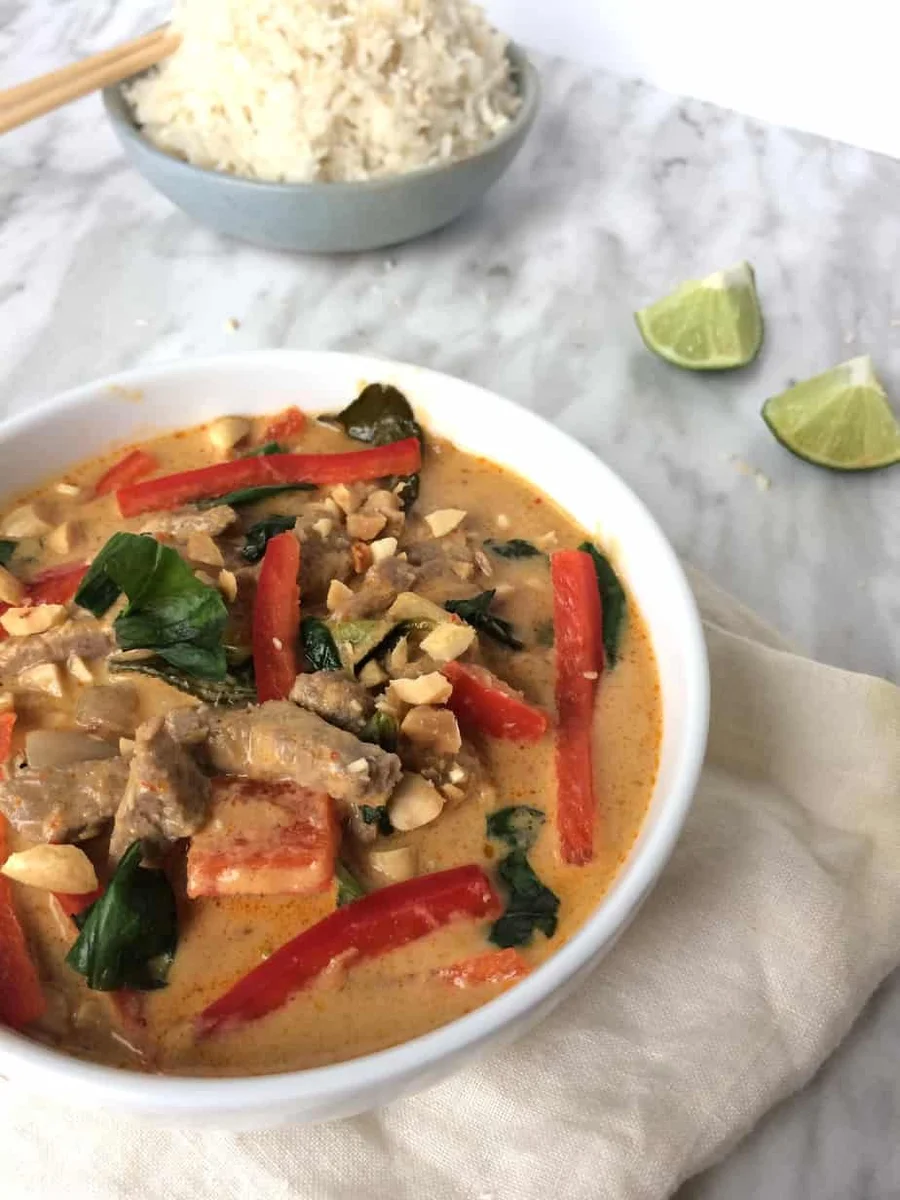
This Thai-inspired red curry pairs tender strips of beef with coconut milk, vegetables and aromatic curry paste. It comes together in a skillet, with basil and peanuts adding a fresh finish and a little crunch.
Ingredients
- 1/2–1 lb (227–454 g)beef tenderloin
- 2 tbspMae Ploy red curry paste
- 1 tbspoil
- 1 canfull-fat coconut milk
- 1–2 tspbrown sugar
- 1–2 tbspfish sauce
- 1red onion
- 1red pepper
- 1 handfulchopped peanuts
- 4–6lime leaves (optional)
- 8–10basil leaves
Instructions
- 1
Chop the vegetables
Cut the red pepper and onion into similarly sized strips or cubes; the recipe uses cubes about 1 cm wide. Set them aside.
- 2
Slice the beef
Slice the beef tenderloin thinly across the grain.
- 3
Warm the skillet
Place a skillet over heat and add 1 tbsp oil.
- 4
Fry the curry paste
Add the red curry paste and stir-fry for at least 2 minutes, until its colour darkens and its aroma becomes more pronounced.
- 5
Add coconut cream
Carefully open the coconut milk and spoon the thick cream from the top into the skillet.
- 6
Cook the paste
Cook for a further 3 minutes, stirring until combined and the oil begins to separate slightly.
- 7
Simmer beef and vegetables
Add the remaining coconut milk, vegetables, lime leaves and beef strips. Cook for 5–7 minutes; check the beef from 5 minutes onward, since overcooking can make it tough. Test a piece by pressing it gently with the side of a fork.
- 8
Finish the curry
Stir in the brown sugar, lime juice and basil, then adjust the fish sauce to taste.
- 9
Serve with peanuts
Serve over rice and scatter the chopped peanuts on top.
What is Thai red curry beef?
Thai red curry is a coconut-based dish seasoned with red curry paste, whose chilli and aromatic ingredients give the sauce its colour and fragrance. This version combines the paste with tender beef, vegetables and basil for a quick skillet curry.
Mae Ploy paste supplies a concentrated savoury, spicy base, while coconut milk softens it into a creamy sauce. The method cooks the paste before adding the rest of the milk, helping its flavour bloom.
Build flavour with the paste
Curry paste: Fry it in the oil for at least 2 minutes, stirring so it darkens and smells aromatic rather than raw. Keep an eye on the pan and avoid letting it scorch.
Coconut cream: The thick layer from the top of the can goes in first. Cooking it with the paste for 3 minutes helps bring the sauce together before the remaining milk is added.
Keep the beef tender
Thin slices: Cutting across the grain shortens the muscle fibres, making the beef easier to bite through. Aim for slices of similar thickness so they cook at roughly the same pace.
Doneness: Begin checking at 5 minutes, as the method gives a 5–7-minute cooking window. Remove the pan from the heat once the beef is just cooked to your liking; continued cooking can toughen it.
Balance the seasoning
Fish sauce: Start with the lower amount if you prefer a gentler savoury note, then adjust to taste at the end. Curry pastes and fish sauces vary in saltiness, so tasting is more reliable than adding the full amount automatically.
Sugar and lime: Brown sugar rounds out the curry paste, while the recipe adds lime juice for brightness. The ingredient list does not give a quantity for the lime juice, so add it gradually if following the method.
Choose the vegetables and herbs
Onion and pepper: Cut them into similar-sized pieces so they cook evenly during the short simmer. The stated 1 cm cubes are one option; strips also work as described.
Lime leaves and basil: Lime leaves are optional and lend a citrusy aroma during cooking. Basil goes in at the end to preserve its fresh character.
Serve it as a meal
Rice: Spoon the curry over rice, as the method suggests, so it can catch the coconut sauce. Plain steamed rice keeps the curry’s seasoning in focus.
Peanuts: Scatter chopped peanuts over each serving just before eating for a crisp contrast to the tender beef and creamy sauce.
Recipe notes & tips
- Slice the beef across the grain and keep the pieces thin for a more tender result.
- Stir the curry paste continuously as it fries so it darkens without catching on the pan.
- Shake or turn the coconut milk can gently before opening only if you want to avoid mixing its cream layer; the recipe relies on skimming that layer off the top.
- Start checking the beef at the 5-minute mark rather than automatically cooking it for the full 7 minutes.
- Taste before adding more fish sauce, since the curry paste and sauce can both be salty.
- Add the basil near the end so its flavour stays fresh.
Variations
- Adjust the heat: Use a little less curry paste for a milder sauce, or add more if you like it spicier.
- Change the vegetables: Swap the red pepper for another quick-cooking vegetable cut to a similar size.
- Skip the lime leaves: Leave them out if you do not have them, as the recipe marks them optional.
- Add extra herbs: Use additional basil at serving for a more pronounced herbal finish.
- Choose another cut: Use another tender beef cut sliced thinly across the grain, and watch it closely as it cooks.
Common mistakes to avoid
- Raw-tasting paste: Fry it for at least 2 minutes before adding the coconut cream.
- Burnt paste: Stir frequently and keep the heat controlled while the paste cooks.
- Tough beef: Slice across the grain and start checking doneness at 5 minutes.
- Uneven vegetables: Cut the onion and pepper to similar sizes so they cook at a similar rate.
- Over-seasoned curry: Add fish sauce gradually and taste before adding more.
- Wilted basil: Stir it in at the end rather than cooking it throughout the simmer.
How to store
Refrigerate leftover curry in a covered container and eat within 3 days. Reheat gently in a saucepan until piping hot, stirring occasionally; add a splash of water if the sauce has thickened. Store rice separately when possible.
Frequently asked questions
Can I make this curry without lime leaves?
Yes. They are listed as optional, so you can leave them out. The method also adds lime juice at the end, though no quantity is given in the ingredient list.
How do I know when the beef is cooked?
Start checking at 5 minutes, as the recipe specifies. The beef should be cooked to your preference; avoid leaving it in the pan longer than needed, since it can become tough.
Can I use a different cut of beef?
A tender cut sliced thinly across the grain is the closest substitute. Less tender cuts may need a different cooking approach and may not suit this short simmer.
Why fry the curry paste before adding the milk?
The method gives the paste at least 2 minutes in the pan so its colour darkens and its aroma develops. Stir as it cooks to stop it catching.
What should I serve with the curry?
The recipe suggests serving it over rice, with chopped peanuts scattered on top. A side of vegetables can round out the meal.
Can I prepare the vegetables ahead?
Yes. Chop the onion and red pepper ahead and keep them covered in the fridge, then add them during the simmer as directed.
Cook it from the original
This recipe comes from flourandspiceblog.com. Their page has the author’s own photos, notes and tips — the best place to cook it from.
Open the recipe on flourandspiceblog.com