
Steak roulade with mushrooms
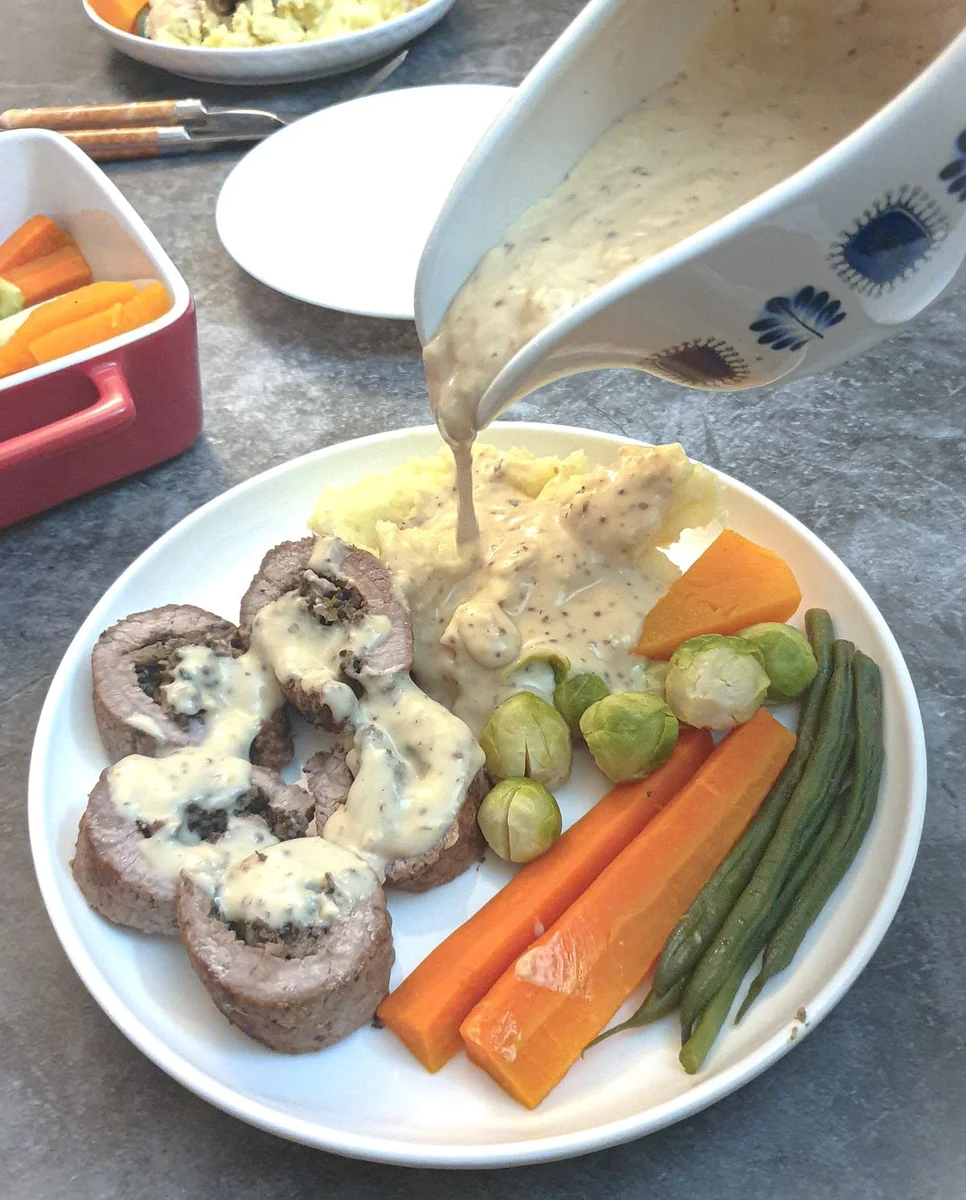
Thin slices of steak are rolled around a savoury mushroom, onion and herb filling, fried until browned and served with a creamy horseradish and mustard gravy. It makes a comforting main course, especially alongside mashed potatoes.
Ingredients
- 200 g (7 oz)chestnut mushrooms
- 1 mediumwhite onion
- 2 clovesgarlic
- 60 g (¼ cup)butter
- 1 tablespoonfresh thyme leaves
- 1 tablespoonchopped parsley
- ½ teaspoon, or to tastesalt
- ¼ teaspoon, or to tasteground black pepper
- 6 slicesthin frying steak, sizzle steak or minute steak
- 1–2 tablespoonssunflower oil, for frying
- to tastesalt
- 250 ml (1 cup)beef stock
- 1 tablespooncreamed horseradish
- 1 tablespoonwholegrain mustard
- 2 tablespoonsdouble or single cream
- 1 tablespoon cornflour mixed with 2 tablespoons watercornflour paste
Instructions
- 1
Chop the filling
Finely chop the mushrooms, using a food processor or a sharp knife. Chop the onion, thyme leaves and garlic, either by hand or in the food processor.
- 2
Soften the onion
Melt the butter in a saucepan or frying pan. Add the onion and cook gently for 5 minutes, stirring now and then, until it begins to soften and turn translucent; do not let it brown.
- 3
Cook the mushrooms
Add the mushrooms and cook over a low heat with the onion, stirring often to stop them sticking. Cook until they release their moisture, then continue until it evaporates and the mixture forms a thick paste; this stage takes 15–20 minutes.
- 4
Season the filling
Season with salt and ground black pepper to taste. Continue cooking until the moisture has evaporated and the filling is a thick paste; this stage takes 10–15 minutes. Take the pan off the heat, stir in the parsley and leave the filling to cool.
- 5
Thin the steak
Place a slice of steak between two pieces of clingfilm and gently bash it with a meat mallet until it is thinner and wider. Sprinkle each slice lightly with salt.
- 6
Fill and roll
Spread 1–2 tablespoons of the mushroom mixture in a thin layer over each steak slice, or arrange it in a line down the centre. Roll each slice into a sausage shape and secure it with toothpicks.
- 7
Brown the rolls
Heat the sunflower oil and lightly fry the steak rolls, turning them with tongs until browned on all sides. As the steak is thin, this takes only a few minutes; the recipe suggests 2–3 minutes per side, with a little longer for well-done steak.
- 8
Boil the gravy
Put the beef stock, creamed horseradish and wholegrain mustard in a small saucepan. Bring to the boil and boil for 2 minutes.
- 9
Finish the gravy
Take the pan off the heat and stir in the cream and half the cornflour paste. Return it to a low heat and stir until the gravy reaches a pourable consistency, adding the rest of the paste only if needed.
What is steak roulade?
A roulade is a filled ingredient rolled into a compact shape; here, thin steak wraps around a savoury mushroom filling. This British-style version pairs the browned rolls with a creamy horseradish and mustard gravy.
The method suits thin frying steak because it cooks quickly and can be rolled without a long braise. A concentrated filling helps keep the rolls flavourful without making them bulky.
Nutrition and macros by portion
The nutrition label shows one serving as written: 226 calories, 23g protein, 4g carbs, 14g fat.
| Portion | Adjustment | kcal | Protein | Carbs | Fat |
|---|---|---|---|---|---|
| Lighter | Use less gravy | 158 kcal | 16g | 2g | 9g |
| This serving | As written | 226 kcal | 23g | 4g | 14g |
| Hungry | Add more mashed potatoes | 339 kcal | 34g | 5g | 20g |
The steak supplies most of the protein, while the butter, oil and cream contribute much of the fat. The mushroom filling and gravy add relatively little carbohydrate; mashed potatoes would add more to the plate. Pair a roll with a generous serving of greens and a moderate portion of potatoes for a balanced meal.
Building the mushroom filling
Fine chop: cutting the mushrooms, onion and garlic small makes the filling easier to spread or shape into a line. A food processor is convenient, but a sharp knife works just as well.
Slow cooking: cook the onion gently, then let the mushrooms give up their moisture and cook it away. The filling should be thick rather than wet before it goes into the steak.
Rolling the steak
Even slices: place the steak between clingfilm and thin it gently with a meat mallet. A wider, thinner piece is easier to fill and roll.
Secure seam: roll the steak into a snug sausage shape and use toothpicks to hold it together. Keep the filling in a fairly thin layer so the rolls are easier to close.
Getting the texture right
Filling cue: the mushroom mixture is ready when it has thickened into a paste and no loose moisture remains. Let it cool before spreading it over the steak.
Steak cue: turn the rolls with tongs to brown all sides, keeping in mind that thin steak cooks quickly. The suggested timing is 2–3 minutes per side, with longer frying if you prefer it well done.
Making the gravy
Horseradish and mustard: boiling these with the beef stock for 2 minutes gives the gravy its savoury, sharp base. Stir in the cream after taking the pan off the heat.
Cornflour paste: begin with half the paste, then return the gravy to a low heat and stir until it is pourable. Add the remainder only if it needs further thickening.
What to serve with it
Mashed potatoes are a natural partner for the gravy and make the meal more substantial. Spoon the sauce over the steak rolls and potatoes just before serving.
For a contrasting side, serve with a green vegetable such as peas or steamed greens. Keep the accompaniments simple so the mushroom filling and horseradish gravy remain the focus.
Recipe notes & tips
- Chop the mushroom mixture finely so it spreads neatly over the steak.
- Cook the filling until thick and let it cool before assembling the rolls.
- Use clingfilm to help keep the steak in place while you gently thin it.
- Secure each roll with toothpicks before frying and remember to remove them before eating.
- Turn the rolls with tongs so they brown on all sides.
- Add the cornflour paste gradually to avoid making the gravy thicker than you want.
Variations
- Herb change: swap the thyme for another fresh herb that suits mushrooms.
- Milder gravy: use less creamed horseradish for a gentler sauce.
- Sharper gravy: add a little more wholegrain mustard to the stock mixture.
- Extra greens: serve with peas or steamed greens alongside the potatoes.
- Cream choice: use single cream for a lighter sauce or double cream for a richer one.
Common mistakes to avoid
- Wet filling: keep cooking until the mushroom moisture evaporates so the rolls are easier to fill.
- Browned onion: cook it gently and stir occasionally to soften it without colouring.
- Overfilled steak: use a thin layer of filling so the rolls can close securely.
- Loose rolls: fasten them with toothpicks before they go into the pan.
- Overcooked steak: remember that thin slices cook quickly and check them as they brown.
- Thick gravy: add the cornflour paste in stages and stop once the sauce is pourable.
How to store
Refrigerate leftover steak rolls and gravy in a covered container and use within 2 days. Reheat gently in a covered pan until piping hot throughout; add a splash of stock if the gravy has thickened.
Frequently asked questions
Can I make the mushroom filling ahead?
Yes. Cook it until thick, then let it cool and refrigerate it in a covered container until you are ready to assemble the rolls.
How do I stop the steak rolls unravelling?
Roll each slice snugly and secure it with toothpicks before frying. Turn the rolls carefully with tongs.
How long should I fry the steak rolls?
The recipe suggests 2–3 minutes per side because the steak is thin. Fry them a little longer if you prefer well-done steak.
Can I use single cream instead of double cream?
Yes. Either single or double cream can be used in the gravy.
What should I serve with steak roulade?
Mashed potatoes are suggested as a bed for the rolls and gravy. Green vegetables such as peas or steamed greens also make a good accompaniment.
How do I know when the gravy is thick enough?
Stir it over a low heat until it reaches a pourable consistency. Add the rest of the cornflour paste only if needed.
Cook it from the original
This recipe comes from foodleclub.com. Their page has the author’s own photos, notes and tips — the best place to cook it from.
Open the recipe on foodleclub.com