
Homemade Dill Pickle Chips
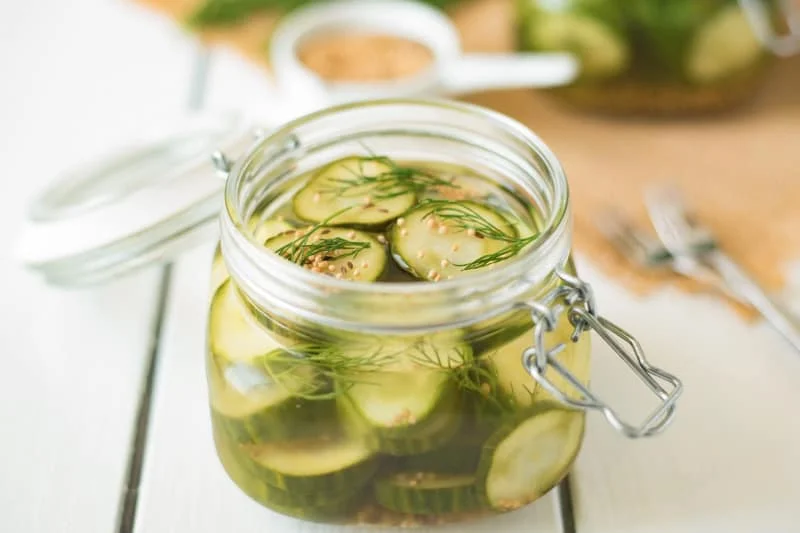
These American-style dill pickle chips turn sliced cucumbers into crisp, tangy pickles with a simple vinegar brine. Chill the cucumber slices first, then give the sealed jars a day in the fridge for the flavours to develop.
Ingredients
- 510 g (18 oz)pickling or English cucumbers
- 450 ml (1 3/4 cups)distilled white vinegar
- 200 ml (3/4 cup)water
- 1 tablespoonmustard seeds
- 1 tablespoondill seeds
- 1 teaspoonpickling or kosher salt
- 1 teaspoongranulated sugar
- 4 large or 8 smallfresh dill sprigs
Instructions
- 1
Chill the cucumbers
Slice the cucumbers and put them in a bowl of ice water. Refrigerate for 2 hours.
- 2
Make the brine
Add the vinegar, water, mustard seeds, dill seeds, salt and sugar to a stainless-steel or non-stick pan. Bring the mixture to a boil, then take it off the heat and leave it to cool completely.
- 3
Fill the jars
Once the brine is cool, put the fresh dill and cucumbers into sterilised jars. Pour in the brine until the cucumbers are covered, then seal the jars and refrigerate for 1 day before eating.
What are dill pickle chips?
Dill pickle chips are thin cucumber slices preserved in a sharp, seasoned vinegar brine. They are a familiar American-style pickle, often served alongside sandwiches or burgers.
This version uses both dill seeds and fresh dill, so the brine has a rounded herbal flavour. A short soak in ice water before pickling helps the slices stay crisp.
Nutrition and macros by portion
The nutrition label shows one serving as written: 35 calories, 0g protein, 3g carbs, 0g fat.
| Portion | Adjustment | kcal | Protein | Carbs | Fat |
|---|---|---|---|---|---|
| Lighter | Serve fewer pickle chips | 25 kcal | 0g | 2g | 0g |
| This serving | As written | 35 kcal | 0g | 3g | 0g |
| Hungry | Serve a larger portion | 53 kcal | 0g | 5g | 0g |
The small amount of carbohydrate comes mainly from the cucumber and teaspoon of sugar in the brine; the recipe provides very little protein or fat. Pair a serving with a protein-rich main and a more substantial carbohydrate, such as bread or potatoes, to make a fuller plate.
Choosing the cucumbers
Cucumber choice: Pickling cucumbers are a good fit for their compact size and firm flesh, while English cucumbers work too. Slice them evenly so the pieces pickle at a similar rate.
Cold soak: The recipe calls for 2 hours in ice water before packing. Drain the slices before they go into the jars so you do not unnecessarily dilute the brine.
Getting the brine right
Seasonings: Mustard seeds, dill seeds, salt and a little sugar flavour the vinegar and water. Measure them as listed; the sugar is a small part of the seasoning rather than a sweet-pickle base.
Cooling: Bring the brine to a boil, then let it cool completely before using it. Adding the fresh dill and cucumbers after cooling follows the recipe and avoids pouring hot liquid over them.
Packing and covering
Clean jars: Use sterilised jars, as the method specifies, and arrange the cucumber slices with the dill sprigs. Keep the slices in the jars rather than pressing them so tightly that they are difficult to cover.
Full coverage: Pour in enough cooled brine to cover the cucumbers. Seal the jars and refrigerate them; the recipe says to wait 1 day before eating.
Timing and texture
The listed total time is 15 minutes, but the method also includes a 2-hour cucumber soak, complete brine cooling and a 1-day refrigerator rest. Allow for those waits when planning to serve the pickles.
The finished slices should be cold and crunchy, with a tangy flavour from the vinegar and a clear dill note. Keep them refrigerated while they rest and after opening.
Serving the pickle chips
Sandwiches: Add a few chips to a burger or sandwich for a crisp, sour contrast. They also work well on the side of a simple lunch.
Platter: Serve them with other cold foods such as cheese, crackers or sliced vegetables. Use a clean fork to lift them from the jar.
Recipe notes & tips
- Slice the cucumbers to a consistent thickness for more even pickling.
- Use a stainless-steel or non-stick pan, as specified, for heating the brine.
- Let the brine cool completely before adding it to the jars.
- Make sure the cucumber slices are fully submerged in the vinegar mixture.
- Refrigerate the sealed jars for a full day before serving for the stated resting time.
Variations
- More dill: Add extra fresh dill sprigs to the jars for a stronger herbal note.
- Garlic: Add a peeled garlic clove to each jar for a savoury variation.
- Chilli heat: Add a small dried chilli to the jar for a spicy version.
- Peppercorns: Add a few whole peppercorns alongside the listed seeds for extra seasoning.
- Thicker slices: Cut the cucumbers slightly thicker for chunkier chips, keeping the slices as even as possible.
Common mistakes to avoid
- Uneven slices: Different thicknesses pickle at different rates; aim for consistent slices.
- Skipping the cold soak: The method relies on a 2-hour ice-water soak, so allow time for it before packing.
- Using warm brine: It should cool completely before it is poured over the cucumbers.
- Exposed cucumber: Slices above the brine are not covered as directed; add enough liquid to submerge them.
- Eating too soon: The recipe calls for 1 day in the fridge before serving; wait for the flavours to settle.
How to store
Keep the jars sealed and refrigerated; the recipe says the pickles will keep for up to 4 weeks. Use a clean utensil when serving, and do not leave the jar at room temperature for extended periods.
Frequently asked questions
Can I use English cucumbers?
Yes. The ingredient list allows either pickling or English cucumbers. Slice them evenly before the ice-water soak.
How long do the pickles need before eating?
Refrigerate the sealed jars for 1 day before eating, as directed in the method.
Does the brine need to cool before I use it?
Yes. Leave it to cool completely before adding it to the jars with the fresh dill and cucumber slices.
How long do homemade dill pickle chips keep?
They keep refrigerated and well sealed for up to 4 weeks, according to the recipe.
Can I reduce the sugar?
The recipe uses only 1 teaspoon of granulated sugar. Changing it will alter the seasoning balance, so follow the listed amount for the original version.
Cook it from the original
This recipe comes from culinaryginger.com. Their page has the author’s own photos, notes and tips — the best place to cook it from.
Open the recipe on culinaryginger.com