
Sauteed potatoes and onions
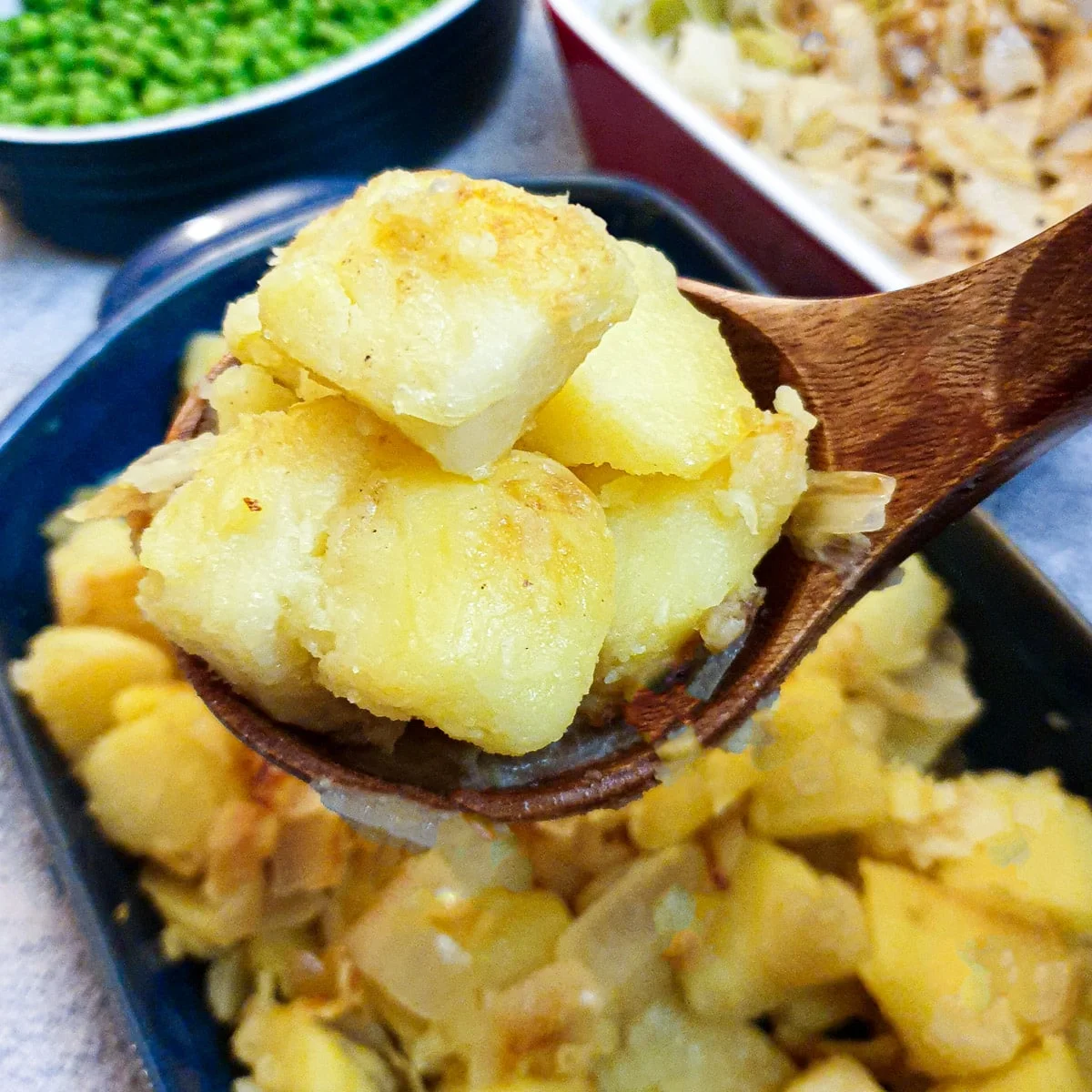
A simple British-style side of lightly browned, fork-tender potatoes and soft, savoury onions. It pairs easily with a roast or sausages, and any leftovers can be fried for breakfast hash.
Ingredients
- 350 g (¾ lb)potatoes, cut into cubes about 2 cm (¾ inch)
- 175 g (½ lb)onions, cut into cubes about 1 cm (½ inch)
- ½ tsp, or to tastesalt
- 2 tbspsunflower oil
- 2 tbspwater
Instructions
- 1
Heat the oil
Heat the sunflower oil in a sauté pan or frying pan until quite hot. Add the potatoes; the oil should sizzle gently around them.
- 2
Season the potatoes
Add the salt.
- 3
Start browning
Stir-fry the potatoes over a medium heat for 5 minutes, until they begin to brown.
- 4
Continue cooking
Cook over a medium heat for another 5 minutes, stirring 2 or 3 times, until the potatoes start to brown.
- 5
Add onions
Lower the heat and stir in the onions and 2 tbsp water. Cover with a lid and turn the heat down as low as possible.
- 6
Steam until soft
Cook the potatoes and onions for about 20 minutes, stirring occasionally, until the onions have softened.
- 7
Serve hot
Transfer the potatoes to a serving dish and serve hot alongside a roast or sausages.
What are sautéed potatoes and onions?
This is a homely British-style side dish of potatoes cooked in a pan with onions until the potatoes are browned and tender. Its appeal is in the contrast between the golden edges and soft, gently steamed centre.
This version starts the potatoes in hot oil, then adds the onions later so they soften without spending the whole cooking time in the pan.
Nutrition and macros by portion
The nutrition label shows one serving as written: 280 calories, 4g protein, 36g carbs, 14g fat.
| Portion | Adjustment | kcal | Protein | Carbs | Fat |
|---|---|---|---|---|---|
| Lighter | Use less sunflower oil | 196 kcal | 3g | 25g | 10g |
| This serving | As written | 280 kcal | 4g | 36g | 14g |
| Hungry | Serve a larger portion | 420 kcal | 6g | 54g | 21g |
The potatoes provide most of the carbohydrate, while the sunflower oil supplies most of the fat; the vegetables contribute only a modest amount of protein. For a more balanced plate, serve a portion alongside a protein-rich main such as sausages, with another vegetable if you like.
Choosing and cutting the vegetables
Potatoes: cut them into even cubes of about 2 cm so they cook at a similar pace. The recipe does not specify a variety, so use potatoes you have to hand.
Onions: cut them into smaller cubes, about 1 cm. They go into the pan after the potatoes have started to brown, giving them time to soften without losing their shape completely.
Getting the potatoes browned
Hot oil: let the oil heat before adding the potatoes; a gentle sizzle when they go in is the cue given in the method.
Room in the pan: spread the potatoes out as much as your pan allows and stir a few times during cooking. This helps them make contact with the hot pan and develop colour.
Why the covered simmer matters
Water and a lid: once the onions are added, the small amount of water creates steam in the covered pan. Keep the heat very low, as directed, so the vegetables can soften without the liquid quickly evaporating.
Doneness: the method uses softened onions as its main cue. Check a potato cube with a fork too; it should be tender enough to pierce easily.
Timing and texture
The method gives two separate 5-minute stages before adding the onions, followed by about 20 minutes of covered cooking. Stir occasionally during the covered stage and check that the pan is still on its lowest heat.
The stated total time is 30 minutes, though the listed cooking stages add up to about 35 minutes, before allowing for preparation or heating the pan. Use the texture cues rather than rushing the potatoes.
What to serve alongside
Roast dinner: serve the potatoes hot with a roast, as suggested in the recipe. Their soft onions and browned edges make them an easy accompaniment.
Sausages: pair them with sausages for a straightforward meal. Leftovers can also be fried the next morning as breakfast hash-browns.
Recipe notes & tips
- Cut the potatoes into evenly sized cubes so they cook consistently.
- Wait for the oil to heat before adding the potatoes, and look for a gentle sizzle.
- Stir only a few times during the initial browning stages to give the potatoes time to colour.
- After adding the onions and water, keep the pan covered and the heat very low.
- Check a potato cube with a fork near the end of cooking to judge tenderness.
Variations
- Add black pepper: season alongside the salt for a little extra warmth.
- Use butter: replace some of the sunflower oil with butter for a richer flavour.
- Add herbs: stir in chopped parsley just before serving.
- Include garlic: add a little finely chopped garlic with the onions.
- Make breakfast hash: fry leftover potatoes and onions in a pan until hot and lightly crisped.
Common mistakes to avoid
- Adding potatoes to cool oil: wait until the oil is hot enough to sizzle gently around them.
- Uneven potato cubes: cut them to a similar size so they become tender together.
- Turning the heat too high: lower it to the minimum for the covered stage so the pan does not cook too fiercely.
- Leaving the lid off: cover the pan after adding the water to trap steam and soften the onions.
- Expecting the onions to brown: the covered stage is intended to soften them, so use tenderness as the cue.
How to store
Cool leftovers promptly, then store them in a covered container in the fridge and use within 3 days. Reheat in a frying pan until piping hot; frying also helps restore some crispness.
Frequently asked questions
Can I use a different type of potato?
The recipe does not specify a variety. Choose potatoes that hold together when cubed, and check them with a fork as they cook.
How do I know when the potatoes are cooked?
The onions should be softened, and a fork should pass easily into a potato cube. If the potatoes need longer, continue cooking gently with the pan covered.
Why are my potatoes not browning?
The oil needs to be hot before the potatoes go in, and the potatoes need contact with the pan. Stir a few times rather than constantly during the first cooking stages.
Can I make this ahead?
It is best served hot after cooking. You can refrigerate leftovers and reheat them in a frying pan.
Can I make breakfast hash with leftovers?
Yes. Fry the leftover potatoes and onions in a pan until thoroughly hot, letting them crisp lightly as they heat.
Cook it from the original
This recipe comes from foodleclub.com. Their page has the author’s own photos, notes and tips — the best place to cook it from.
Open the recipe on foodleclub.com