
Puerto Rican pan sobao
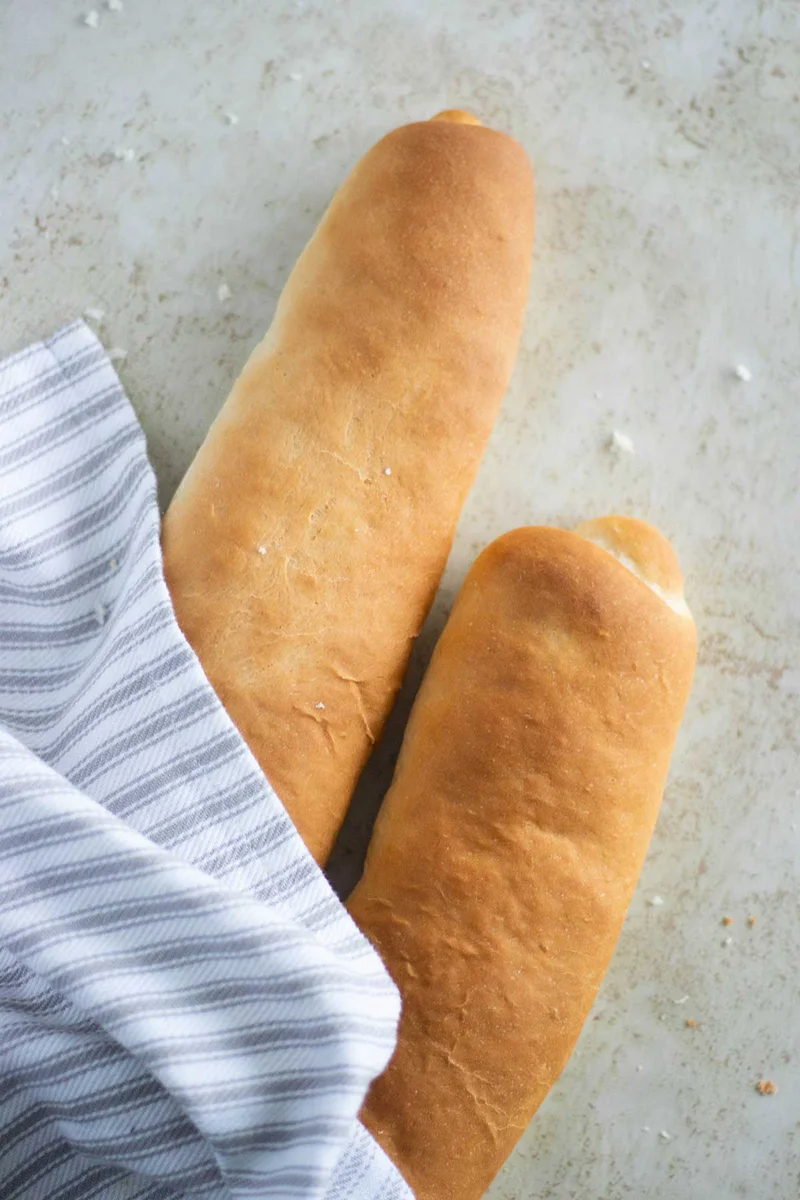
Puerto Rican pan sobao is a soft, lightly sweet bread with a fluffy crumb and a tender crust. Enjoy it warm with coffee, or slice it for sandwiches and snacks.
Ingredients
- 21 g (1½ tablespoons)vegetable shortening
- 170 g (6 oz), at 43°C (110°F)water
- 52 g (3½ tablespoons)sugar
- 6 g (1½ teaspoons)instant yeast
- 280 g (2 cups)strong bread flour
- 4 g (½ teaspoon)salt
Instructions
- 1
Mix the wet ingredients
In a large bowl, combine the shortening, water, sugar and yeast. Stir until the sugar has dissolved.
- 2
Add the flour
Stir the salt into the flour, then add all the flour to the wet mixture. Mix for about 3–5 minutes, until no water remains visible.
- 3
Knead the dough
Move the dough to a flat surface and knead for about 15 minutes. It will be sticky at first; keep kneading without adding more flour.
- 4
Shape the loaves
Cut the dough into 2 pieces. Roll each piece into a rectangle about 30 cm (12 inches) long and 15 cm (6 inches) wide, then roll it into a thin cylinder. Place both rolls on a baking tray lined with baking paper.
- 5
Proof and bake
Put the tray in a switched-off oven with the light on, or another suitable place, and leave the dough to proof for 2 hours. Take it out and preheat the oven to 175°C (350°F). Bake for 22 minutes, turning the tray halfway through so the bread browns evenly. Remove from the oven; if you like, try it warm, taking care not to burn yourself.
What is pan sobao?
Pan sobao is a Puerto Rican bread known for its soft, springy inside and gently sweet flavour. Its name is commonly associated with the kneading that helps give the dough its smooth, tender texture.
This version uses a simple enriched dough with shortening and sugar. Shaping it into slim rolls makes it easy to serve in slices or use for sandwiches.
Nutrition and macros by portion
The nutrition label shows one serving as written: 162 calories, 5g protein, 29g carbs, 3g fat.
| Portion | Adjustment | kcal | Protein | Carbs | Fat |
|---|---|---|---|---|---|
| Lighter | Smaller bread portion | 113 kcal | 4g | 20g | 2g |
| This serving | As written | 162 kcal | 5g | 29g | 3g |
| Hungry | Larger bread portion | 243 kcal | 8g | 44g | 5g |
The flour and sugar provide most of the carbohydrates, while the shortening contributes most of the fat. Flour also supplies the protein in this recipe. Pair a slice with eggs or another protein-rich filling and some fruit or vegetables for a more balanced plate.
Why the dough is sticky
Flour choice: Strong bread flour gives the dough structure as it is kneaded and proofed. Measure it by weight where possible for a consistent dough.
Resist adding flour: The dough is expected to feel sticky at first. Keep working it on the surface rather than dusting in extra flour, which can make the finished bread denser.
Kneading for a soft crumb
Steady kneading: Work the dough for about 15 minutes, as directed, until it becomes smoother and more cohesive. The dough should still feel soft rather than dry.
Surface feel: If it clings to your hands at the start, continue kneading instead of trying to make it easy to handle immediately. This preserves the recipe’s intended flour balance.
Shaping the rolls
Even rectangles: Roll each half of the dough to roughly 30 by 15 cm before shaping. Similar dimensions help the two loaves bake at a similar rate.
Tight cylinders: Roll each rectangle into a thin cylinder and set it on the lined tray. Leave space between the rolls so they are not pressed together.
Proofing and baking cues
Warm proof: The recipe uses a switched-off oven with its light on for a 2-hour proof. Keep the oven switched off while the dough rises.
Even colour: Bake at 175°C for 22 minutes, turning the tray halfway through. Look for an evenly browned exterior, and take care when handling the hot bread.
Serving pan sobao
For breakfast: Serve slices warm alongside coffee, as the bread’s mild sweetness works well with a simple hot drink. Let it cool briefly before slicing so the soft crumb is easier to cut.
For sandwiches: Split or slice the rolls once cooled and fill them as you like. They also make a handy snack with a little butter or another topping.
Recipe notes & tips
- Use the water at the specified 43°C (110°F) before mixing.
- Dissolve the sugar in the water and shortening mixture before adding the flour.
- Knead on a clean, unfloured surface so you do not incorporate extra flour.
- Line the baking tray with baking paper to make transferring and removing the loaves easier.
- Turn the tray halfway through baking for more even browning.
- Allow the loaves to cool briefly before slicing to protect their soft shape.
Variations
- Breakfast slices: Toast slices lightly and serve with butter.
- Sandwich rolls: Split a cooled loaf and fill it with your preferred sandwich ingredients.
- Sweet topping: Spread a little jam on a warm slice for a simple snack.
- Savoury topping: Pair slices with cheese for a contrast to the lightly sweet bread.
Common mistakes to avoid
- Adding flour too soon: The dough starts sticky; keep kneading for the full 15 minutes before judging its texture.
- Using very hot water: Check that the water is about 43°C (110°F) before combining it with the yeast.
- Skipping the tray lining: Use baking paper so the shaped loaves are easier to lift off after baking.
- Crowding the rolls: Leave space between the two shaped pieces so they can bake without pressing together.
- Forgetting to turn the tray: Rotate it halfway through the 22-minute bake for more even browning.
- Cutting immediately: Let the bread cool briefly before slicing to avoid squashing its tender crumb.
How to store
Once completely cool, store the bread in an airtight container or wrapped at room temperature and enjoy within 2–3 days. Rewarm slices briefly in a toaster or warm oven; avoid prolonged heating, which can dry them out.
Frequently asked questions
Can I use plain flour instead of strong bread flour?
Strong bread flour is specified for this dough and gives it more structure. Plain flour may produce a softer, less resilient result.
Can I proof the dough outside the oven?
Yes. The method allows proofing in another suitable place; keep the dough covered and let it rise for the stated 2 hours.
Why is the dough sticky?
It is meant to start sticky, and the method specifically says not to add more flour. Continue kneading for about 15 minutes.
How do I know when the bread is baked?
Bake for 22 minutes at 175°C (350°F), turning the tray halfway through. The loaves should be evenly browned on the outside.
Can I serve pan sobao warm?
Yes, it can be tried warm after baking, but handle it carefully because the bread and tray will be hot.
Cook it from the original
This recipe comes from foodmetamorphosis.com. Their page has the author’s own photos, notes and tips — the best place to cook it from.
Open the recipe on foodmetamorphosis.com