
Pesto alla Genovese (Vermicelli with Basil and Pine Nuts Pesto)
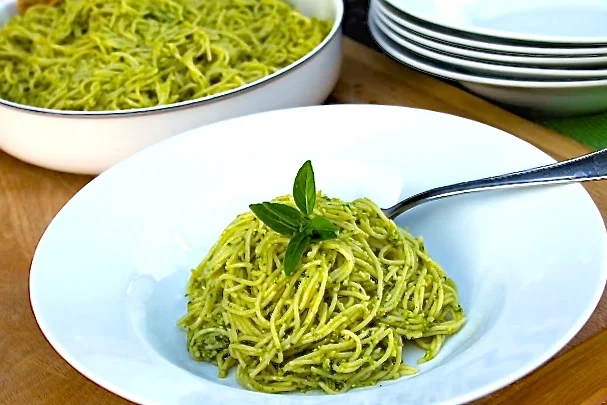
Pesto alla Genovese is a quick pasta dish with a fresh basil, pine nut and olive oil pesto. It makes a fragrant, satisfying meal with just a few ingredients and little cooking time.
Ingredients
- 1 packagevermicelli or angel hair pasta (capellini)
- 4 cups (about 60 g)basil leaves
- 4garlic cloves, pressed with the blade of a knife
- ½ cup (about 70 g)pine nuts
- ½ cup (120 ml)extra virgin olive oil
- to tastecoarse sea salt
- ¼ cup (about 25 g)grated Parmesan cheese (or Grana Padano)
- 1 sprigfresh basil, for garnish
Instructions
- 1
Boil the water
Bring a pan of water to the boil for the pasta.
- 2
Blend the pesto
Put the basil, pine nuts, garlic and salt to taste in a food processor. Process, gradually adding the olive oil, until the mixture is combined.
- 3
Add the cheese
Transfer the pesto to a bowl, add the grated cheese and mix well. Add a little more olive oil if needed.
- 4
Cook the pasta
Meanwhile, cook the pasta until al dente. Drain it, then run fresh water over it to stop the cooking.
- 5
Drain again
Drain the pasta once more.
- 6
Combine pasta
Mix the pesto and pasta together in a large bowl.
- 7
Garnish and serve
Finish with a sprig of fresh basil.
What is pesto alla Genovese?
Pesto alla Genovese is a Ligurian sauce traditionally made from basil, garlic, pine nuts, cheese and olive oil. Its name comes from Genoa, in north-west Italy, where basil pesto is a familiar pairing for pasta.
This version uses a food processor and thin vermicelli or capellini, so it comes together quickly. The pesto coats the strands lightly, bringing a strong basil aroma and a savoury, nutty flavour.
Nutrition and macros by portion
The nutrition label shows one serving as written: 551 calories, 13g protein, 62g carbs, 28g fat.
| Portion | Adjustment | kcal | Protein | Carbs | Fat |
|---|---|---|---|---|---|
| Lighter | Use less olive oil | 386 kcal | 9g | 43g | 20g |
| This serving | As written | 551 kcal | 13g | 62g | 28g |
| Hungry | Add more pasta | 827 kcal | 20g | 93g | 42g |
Most of the carbohydrates come from the pasta, while olive oil and pine nuts provide much of the fat; the cheese and pasta contribute some protein. Serve it with a generous side of salad or vegetables to add freshness and balance the plate.
Choosing the ingredients
Basil leaves: Use fresh, fragrant leaves and remove any tough stems. Their flavour is the centre of the sauce, so avoid leaves that are bruised or wilted.
Pine nuts and cheese: Pine nuts add a mellow richness, while Parmesan or Grana Padano gives the pesto a salty, savoury edge. Grated cheese blends into the sauce more readily than large pieces.
Blending a smooth pesto
Add the olive oil while the processor runs, as the method directs, to help bring the basil, nuts and garlic together. Stop once the ingredients are combined rather than processing for longer than needed.
Mix the cheese in by hand after transferring the pesto to a bowl. If the mixture seems too thick to coat the pasta, loosen it with a little more olive oil.
Getting the pasta right
Thin pasta cooks quickly, so check it as it approaches the packet's suggested cooking time. Al dente strands should be cooked through but retain a slight firmness when bitten.
The recipe calls for rinsing the drained pasta with fresh water to stop the cooking, then draining it again. Let excess water run off well so it does not dilute the pesto.
Bringing everything together
Use a large bowl so you can toss the pasta with the pesto without crushing or spilling the delicate strands. Combine them while the pasta is still warm, which helps the sauce spread across it.
Taste before serving and adjust the seasoning if needed. The cheese and salted pasta water can already contribute salt, so add any extra carefully.
Serving ideas
Serve the pasta straight away, topped with the fresh basil sprig. A simple green salad or lightly cooked seasonal vegetables make an easy accompaniment.
Because the pesto is rich with oil, pine nuts and cheese, a crisp, fresh side balances the plate. Keep the pasta portion alongside plenty of vegetables if you want a more varied meal.
Recipe notes & tips
- Have the pesto ingredients ready before the pasta finishes cooking, as capellini cooks fast.
- Add the oil gradually so you can stop when the pesto reaches a coating consistency.
- Taste the pesto before adding extra salt, especially if your cheese is quite salty.
- Drain the pasta thoroughly after rinsing so the sauce stays flavourful rather than watery.
- Toss the pasta and pesto in a roomy bowl to coat the strands evenly.
Variations
- Swap the cheese: Use Grana Padano in place of Parmesan for a slightly different savoury finish.
- Use another pasta: Choose spaghetti or linguine if vermicelli or capellini is unavailable.
- Add more greens: Serve with steamed green beans or wilted spinach alongside the pasta.
- Toast the pine nuts: Briefly toast them in a dry pan before blending for a deeper nutty flavour.
- Make it chunkier: Pulse the pesto briefly so small pieces of basil and pine nut remain.
Common mistakes to avoid
- Overprocessing the basil: Stop as soon as the ingredients are combined to avoid turning the pesto into a thin purée.
- Adding all the oil at once: Pour it in gradually so you can control the pesto's consistency.
- Overcooking thin pasta: Start checking early and drain as soon as it is al dente.
- Leaving water on the pasta: Drain it again thoroughly after rinsing so the pesto is not diluted.
- Salting too heavily: Season the pesto cautiously because the cheese can add plenty of salt.
How to store
Refrigerate leftover pasta in an airtight container and eat within 2 days. Reheat gently in a pan or microwave, adding a small splash of water or olive oil if it seems dry; the basil may lose some of its fresh colour and aroma.
Frequently asked questions
Can I make the pesto without a food processor?
Yes. Chop the basil, garlic and pine nuts very finely, then mix them with the olive oil and cheese. A mortar and pestle also works for a more traditional, textured pesto.
Can I use a different pasta shape?
Yes. Spaghetti or linguine are suitable alternatives, though the cooking time will vary. Cook the pasta until al dente and drain it as directed.
Why does the recipe rinse the pasta?
The fresh water stops thin pasta from continuing to cook after draining. Drain it again well afterwards so excess water does not thin the pesto.
Can I make the pesto ahead?
You can blend it ahead and keep it covered in the fridge for up to 2 days. Stir it before using, and add a little olive oil if it has thickened.
What can I use instead of pine nuts?
Almonds or walnuts can be used, though they will change the flavour. Blend them with the other pesto ingredients as directed.
How do I keep the pasta from becoming soggy?
Check the thin strands early and drain them when they are al dente. After rinsing, let the water drain away thoroughly before mixing with the pesto.
Cook it from the original
This recipe comes from enrilemoine.com. Their page has the author’s own photos, notes and tips — the best place to cook it from.
Open the recipe on enrilemoine.com