
Vegetarian Native Jollof
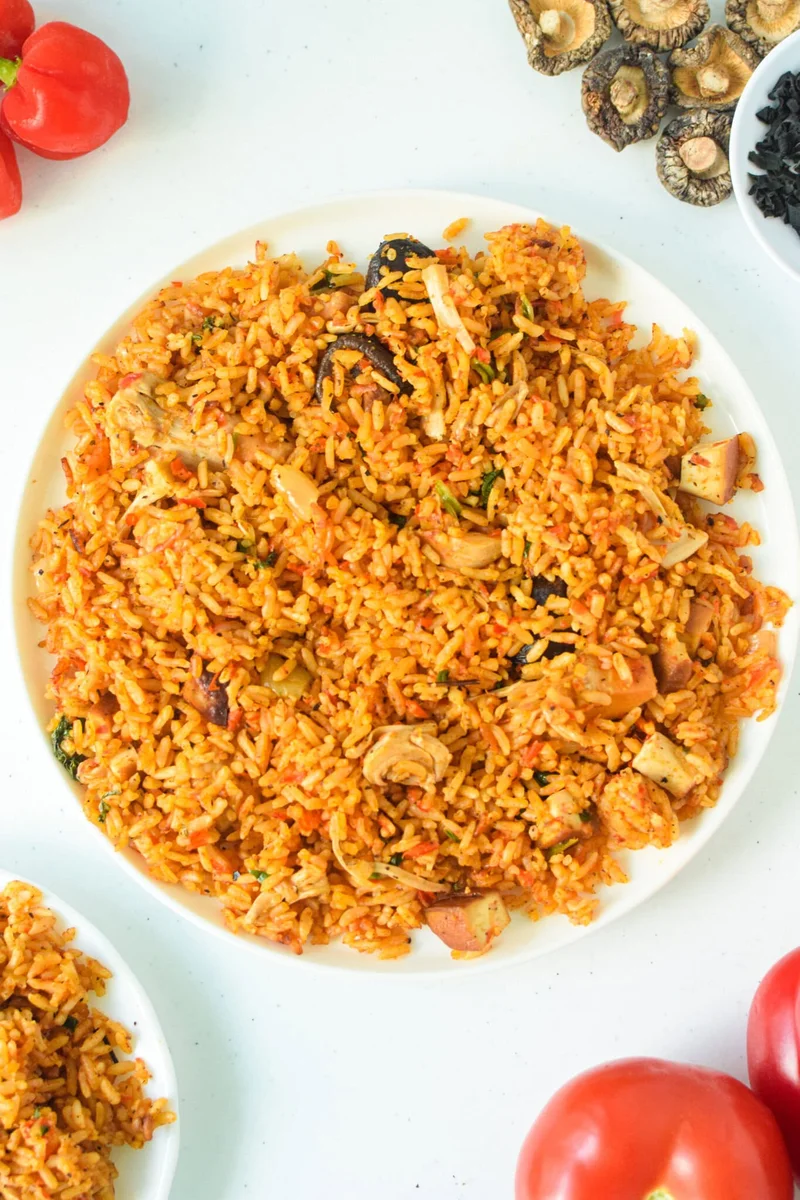
Vegetarian native jollof is a one-pot Nigerian rice dish built around a deeply seasoned pepper and tomato stew. Dried mushrooms, jackfruit and smoked tofu give this version savoury depth and plenty of texture.
Ingredients
- 60 ml (1/4 cup)red palm oil
- 1 mediumonion, chopped
- 2 tspiru/dawa dawa powder (or 1 tbsp dried dawa dawa, soaked first if needed)
- 1Scotch bonnet pepper (or habanero)
- 1 1/2red bell peppers
- 1tomato
- 2 tspgarlic powder
- 2 tsponion powder
- 1 tspCameroon pepper (or cayenne pepper)
- 2 tspnori mix
- 240 ml (1 cup)dried mushrooms, soaked in water
- 1vegetable bouillon cube
- 1 canyoung jackfruit
- 2 tspdried scent leaf (or 1 1/2 tsp oregano or 60 ml (1/4 cup) fresh scent leaf)
- 1 packsmoked tofu
- 380 g (2 cups)long-grain rice, washed
- 600 ml (2 1/2 cups)water or vegetable broth
Instructions
- 1
Warm the oil
Heat the red palm oil in a pot over a medium heat until it melts and becomes liquid.
- 2
Soften the onion
Add the chopped onion and sauté until soft, about 5 minutes.
- 3
Cook the iru
Stir in the fermented locust beans and cook with the onion for 2–3 minutes.
- 4
Add the pepper
Mix in the blended red bell pepper, Scotch bonnet or habanero, and tomato. Cook for 10 minutes.
- 5
Season the stew
Add the garlic powder, onion powder, Cameroon pepper, nori mushroom mix and bouillon cube, then stir well.
- 6
Add mushrooms
Stir the dried mushrooms into the stew so they can rehydrate and absorb its flavour.
- 7
Reduce the stew
Simmer for 10–15 minutes, stirring periodically, until cooked through and reduced. It is ready when oil begins to separate and rise to the top.
- 8
Rinse the jackfruit
While the stew simmers, rinse the jackfruit very well to remove its briny taste.
- 9
Add jackfruit
After the 10–15 minutes of simmering, add the jackfruit and crumble in the scent leaf. Check and adjust the salt and seasoning.
- 10
Add tofu and rice
Stir in the smoked tofu, then add the washed rice.
- 11
Add the liquid
Mix everything well and pour in the water or stock. Taste once more to check the seasoning, cover the pot and bring it to a boil.
- 12
Cook the rice
Once boiling, reduce the heat to low and cook for about 15 minutes, then stir well.
- 13
Finish steaming
When no water is visible, cover the pot with parchment paper or aluminium foil and cook for another 15–20 minutes, or until the rice is tender. Do not add more water, or the rice may become mushy.
- 14
Steam the spinach
When the rice is tender, turn off the heat, sprinkle in the chopped spinach and cover the pot so the spinach steams.
- 15
Check the spinach
Once the spinach has wilted, the rice is ready.
- 16
Serve the rice
Serve with a protein of your choice or enjoy on its own.
What is native jollof?
Jollof is a West African rice dish, with distinctive regional versions across the area. This Nigerian-style native version builds flavour in a pepper and tomato stew before cooking the rice in it.
Here, iru, red palm oil, mushrooms and nori mix bring savoury, earthy notes, while jackfruit and smoked tofu make the pot more substantial.
Nutrition and macros by portion
The nutrition label shows one serving as written: 560 calories, 18g protein, 82g carbs, 19g fat.
| Portion | Adjustment | kcal | Protein | Carbs | Fat |
|---|---|---|---|---|---|
| Lighter | Use less palm oil | 392 kcal | 13g | 57g | 13g |
| This serving | As written | 560 kcal | 18g | 82g | 19g |
| Hungry | Serve a larger portion | 840 kcal | 27g | 123g | 29g |
Rice supplies most of the carbohydrates, while the palm oil contributes much of the fat. Tofu, mushrooms and jackfruit provide some protein, though the exact amount depends on the tofu pack and bouillon used. Pair a serving with extra vegetables or a protein of your choice for a more balanced plate.
Build the flavour base
Pepper blend: the bell pepper, tomato and Scotch bonnet or habanero form the stew’s aromatic base. Blend them together before adding, as the method directs.
Iru and spices: cooking the fermented locust beans briefly with the softened onion helps distribute their bold flavour. Add the dried seasonings and bouillon after the pepper mixture has cooked.
Let the stew reduce
Reduction: simmer the stew for 10–15 minutes, stirring periodically. Look for it to thicken and for oil to begin separating at the surface before adding the jackfruit.
Mushrooms: dried mushrooms go into the stew as it cooks so they can rehydrate and take on its seasoning. If using dried dawa dawa instead of powder, soak it first if it needs rehydrating.
Get the rice texture right
Rice and liquid: stir the washed rice thoroughly into the stew before pouring in the water or stock. Once the pot comes to a boil, lower the heat and cook for about 15 minutes.
Final steam: after stirring, cover the pot with parchment paper or foil for another 15–20 minutes. The recipe cautions against adding extra water at this stage, which can make the rice mushy.
Balance the seasoning
Salt check: taste the stew after adding the jackfruit, then check it again after adding the cooking liquid. Bouillon and nori mix both contribute seasoning, so adjust only after tasting.
Heat: Scotch bonnet, habanero and Cameroon pepper bring plenty of warmth. Cayenne can replace Cameroon pepper, but keep the chilli level suited to your preference.
Finish and serve
Greens: the method adds chopped spinach after the heat is turned off, then lets it wilt under the lid. It gives the finished rice a fresh contrast to the rich, savoury stew.
Serving: enjoy the rice on its own or alongside a protein of your choice. Since jackfruit and tofu are already in the pot, it also works as a self-contained meal.
Recipe notes & tips
- Rinse the jackfruit thoroughly to reduce its briny flavour.
- Stir periodically while the stew simmers so it reduces evenly.
- Taste after adding the bouillon and again after adding the cooking liquid before adjusting seasoning.
- Keep the heat low during the covered rice-cooking stages to avoid scorching the base.
- Wait until the rice is tender before turning off the heat and adding the spinach.
Variations
- Use cayenne: swap it for the Cameroon pepper if that is what you have.
- Choose another tofu: use any tofu you like in place of smoked tofu.
- Swap the scent leaf: use 1 1/2 tsp oregano instead of 2 tsp dried scent leaf.
- Use fresh scent leaf: replace the dried leaf with 60 ml (1/4 cup) fresh leaves.
- Change the mushrooms: any dried mushroom can be used after soaking.
Common mistakes to avoid
- Skipping the jackfruit rinse: rinse it well to remove the brine taste.
- Adding extra water at the end: keep to the stated liquid and steaming times so the rice does not turn mushy.
- Cooking the rice over high heat: lower the heat after the liquid boils to cook it gently.
- Missing the reduction cue: give the stew its full 10–15 minutes and look for oil separating at the top.
- Overlooking seasoning: taste the stew and cooking liquid before covering the pot, then adjust as needed.
How to store
Refrigerate leftovers in a covered container and use within 3–4 days. Reheat until steaming hot; if the rice has dried out, add a small splash of water before reheating.
Frequently asked questions
Can I use fresh mushrooms?
The recipe calls for dried mushrooms soaked in water. It does not specify a fresh-mushroom quantity, so the result may differ if you substitute them.
Can I use vegetable broth instead of water?
Yes. Use 600 ml of vegetable broth in place of the water, as listed in the recipe.
How do I know when the stew is ready for the rice?
After its 10–15 minute simmer, it should be reduced, and you should see oil beginning to separate and rise to the top.
Why shouldn't I add more water while the rice finishes cooking?
The recipe notes that extra water can make the rice mushy. Let it steam covered for 15–20 minutes and check for tenderness.
Can I leave out the smoked tofu?
You can use another tofu of your choice, as the recipe suggests. Leaving it out changes the finished dish, and no replacement quantity is specified.
When should I add the spinach?
Add chopped spinach after the rice is tender and the heat is off. Cover the pot and let the residual heat wilt it.
Cook it from the original
This recipe comes from eatwithafia.com. Their page has the author’s own photos, notes and tips — the best place to cook it from.
Open the recipe on eatwithafia.com