
Croaker soup
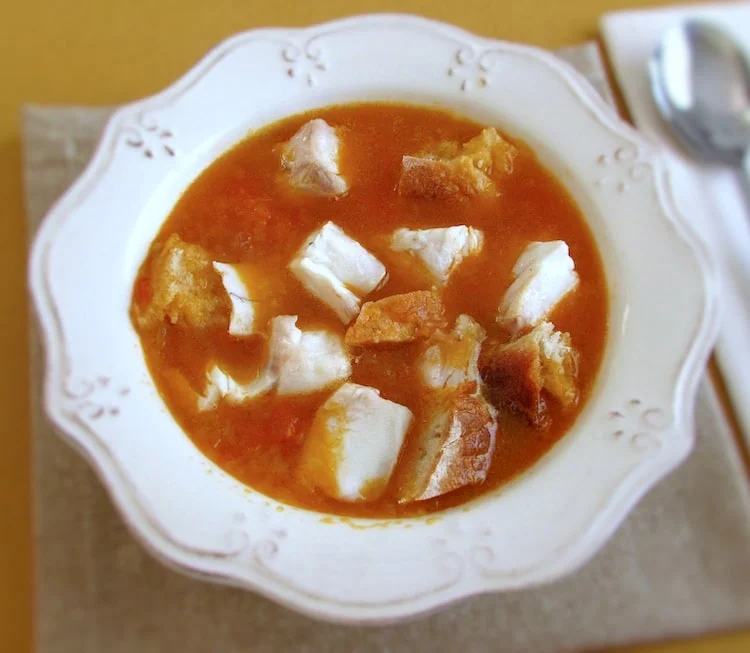
Portuguese croaker soup combines flaky fish with a tomato, onion and olive oil broth, served over pieces of bread. It makes a warming lunch or dinner, with a simple method that lets the fish and broth do the work.
Ingredients
- 4 steaks (about 900 g)croaker
- 5 mediumripe tomatoes
- 2 mediumonions
- 4 clovesgarlic
- 1 litrewater
- 50 mlolive oil
- to tastebread
- to tastesalt
Instructions
- 1
Poach the croaker
Put the croaker in a saucepan with water seasoned with salt and bring to the boil over high heat. Once boiling, lower the heat to medium and simmer for about 10 minutes. Lift out the cooked fish with a slotted spoon and leave it to cool slightly. Remove the skin and bones, then cut the fish into pieces.
- 2
Make the broth
Add the olive oil, chopped onion and chopped garlic to a saucepan. Cook over low heat, stirring occasionally, until the onion starts to turn slightly golden. Add the peeled tomatoes, cut into small pieces, and simmer, stirring occasionally, until they begin to break down. Pour in the water and bring to the boil over medium-high heat; as soon as it boils, turn off the heat.
- 3
Assemble the soup
Put pieces of bread in the bottom of each dish. Add the croaker pieces, pour over the broth and serve.
What is croaker soup?
This Portuguese-style soup pairs croaker with a light broth made from tomatoes, onion, garlic and olive oil. It is served over bread, which softens as it absorbs the broth.
This version keeps the fish and broth as distinct parts: the croaker is cooked first, then added to the tomato base just before serving.
Nutrition and macros by portion
The nutrition label shows one serving as written: 480 calories, 48g protein, 39g carbs, 17g fat.
| Portion | Adjustment | kcal | Protein | Carbs | Fat |
|---|---|---|---|---|---|
| Lighter | Less bread, more fish | 336 kcal | 34g | 27g | 12g |
| This serving | As written | 480 kcal | 48g | 39g | 17g |
| Hungry | Add another bread portion | 720 kcal | 72g | 59g | 26g |
The croaker provides most of the protein, while the bread and tomatoes contribute carbohydrates. Olive oil supplies most of the fat; serve with a portion of vegetables or salad to balance the bowl.
Choosing and preparing the fish
Croaker: the recipe uses steaks weighing about 900 g in total. Poaching them before removing the skin and bones makes the fish easier to portion into pieces.
Bones: take care to remove them after the fish has cooled slightly, checking the pieces before they go into the bowls.
Building the tomato broth
Onion and garlic: cook them gently in the olive oil so the onion has time to soften and turn slightly golden without rushing.
Tomatoes: peeled and chopped tomatoes simmer until they start to break down, bringing their flavour into the base. Add the water after this stage and switch off the heat when the broth reaches a boil.
Getting the texture right
Broth: the tomatoes should begin to collapse before you add the water, but the method does not call for blending or straining. The finished soup keeps some texture from the tomato and fish.
Bread: place it in the bowls before adding the other components. It will soak up broth; use the amount you prefer for a firmer or softer result.
Timing the components
Fish: simmer the croaker for about 10 minutes, then allow for a little cooling time before removing the skin and bones.
Broth: prepare the tomato base while the fish cools if convenient, keeping an eye on the onion and stirring the ingredients occasionally. The stated total time for the recipe is 40 minutes.
Serving the soup
Bowls: divide the bread and fish between four dishes, then ladle over the hot broth. Serve once assembled so the bread does not sit in the liquid for too long.
On the side: a simple green salad or cooked vegetables can round out the meal without competing with the tomato and fish flavours.
Recipe notes & tips
- Use a slotted spoon to lift the cooked fish while leaving it easy to drain.
- Let the croaker cool just enough to handle before removing the skin and bones.
- Chop the tomatoes into similarly sized pieces so they soften at a similar pace.
- Stir the onion and garlic as they cook to help them soften evenly.
- Add the broth to the bowls shortly before serving to control how soft the bread becomes.
Variations
- Use stale bread: it holds its shape well as it absorbs the broth.
- Add fresh herbs: scatter chopped parsley over the bowls just before serving.
- Make it more garlicky: add an extra clove to the onion and garlic base.
- Include extra tomato: add more chopped ripe tomato for a fruitier broth.
- Serve with greens: offer a simple green salad alongside the soup.
Common mistakes to avoid
- Boiling the fish hard: lower the heat once the water boils and simmer for about 10 minutes.
- Leaving bones behind: check each piece carefully after removing the skin and bones.
- Browning the onion too quickly: keep the heat low and stir occasionally.
- Adding tomatoes too late: simmer them until they start to break down before pouring in the water.
- Assembling too early: add the broth to the bread shortly before serving so it does not become overly soft.
How to store
Store the fish and broth separately from the bread in covered containers in the fridge and use within 2 days. Reheat the broth and fish gently until hot, then assemble over fresh bread.
Frequently asked questions
Can I use a different fish?
Yes, another firm white fish can be used, though its cooking time may differ. Check it for doneness and remove any bones before serving.
Do I have to peel the tomatoes?
The method calls for peeled tomatoes. Peeling helps keep the broth more pleasant to eat, especially when the tomatoes are cut into small pieces.
How do I know when the croaker is cooked?
After about 10 minutes of simmering, check that the fish is cooked through and separates into pieces. If the steaks are unusually thick, allow a little more time.
Can I prepare the broth ahead?
You can make the broth ahead and refrigerate it. Reheat it before serving, and add the bread and fish to the dishes just before pouring it over.
What bread works best?
Use bread that you enjoy soaking up broth with. Slightly stale bread is handy because it tends to keep its shape longer.
Cook it from the original
This recipe comes from foodfromportugal.com. Their page has the author’s own photos, notes and tips — the best place to cook it from.
Open the recipe on foodfromportugal.com