
Roasted Butternut Squash with Maple Pecans
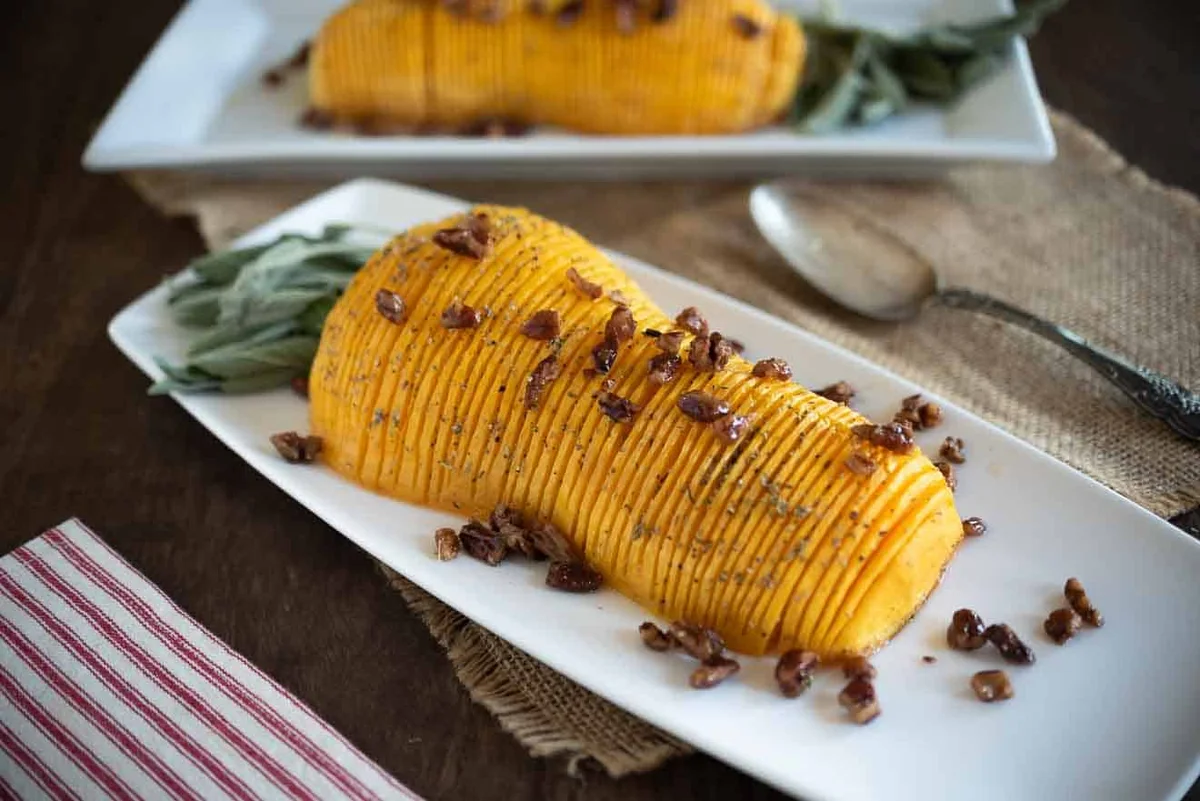
Butternut squash is roasted until tender, brushed with sage butter and finished with maple-coated pecans. It makes a sweet-savoury centrepiece or an easy autumn side dish.
Ingredients
- 1 (1.3 kg; 3 lb)butternut squash, peeled and seeds removed
- 30 ml (2 tablespoons)vegetable oil
- 30 ml (2 tablespoons)butter, melted
- 5 ml (1 teaspoon)dried sage
- 1.25 ml (1/4 teaspoon)salt
- A small pinchground black pepper
- 60 g (1/2 cup)pecan pieces
- 45 ml (3 tablespoons)maple syrup
Instructions
- 1
Heat the oven
Preheat the oven to 220°C (425°F), positioning the rack just above the centre.
- 2
Arrange the squash
Cut the squash in half lengthways and place both halves cut-side down on a parchment-lined baking tray.
- 3
Mix the butter
In a bowl, combine the oil, melted butter, sage, salt and pepper.
- 4
Brush and roast
Brush the squash evenly with half of the oil and butter mixture. Roast for 20 minutes.
- 5
Prepare the pecans
While the squash roasts, toast the pecan pieces in a small pan over medium-low heat, stirring often, until browned. Add the maple syrup and stir to coat the pecans. Transfer them to a parchment-lined baking tray, separate the pieces so they do not stick together and leave them to cool.
- 6
Slice and finish
Take the squash out of the oven and let it cool slightly. Place a chopstick or similarly thick object along either side of a squash half to stop the knife cutting all the way through. Using a sharp knife, make thin slices along the length of each half. Drizzle with the remaining oil and butter mixture, then return to the oven for 20 minutes, until tender. Serve topped with the maple pecans.
What is roasted butternut squash with maple pecans?
This is a roasted squash side dish with a sweet-savoury finish: sage and butter flavour the squash, while maple-coated pecans add a crisp topping. It draws on familiar American autumn ingredients, especially squash, maple syrup and pecans.
The squash is halved before roasting, then sliced without cutting all the way through. That lets the slices open as they roast while keeping each half together for serving.
Nutrition and macros by portion
The nutrition label shows one serving as written: 130 calories, 1g protein, 9g carbs, 11g fat.
| Portion | Adjustment | kcal | Protein | Carbs | Fat |
|---|---|---|---|---|---|
| Lighter | Use less butter | 91 kcal | 1g | 6g | 8g |
| This serving | As written | 130 kcal | 1g | 9g | 11g |
| Hungry | Serve a larger half | 195 kcal | 2g | 14g | 17g |
Most of the carbohydrates come from the squash and maple syrup, while the butter, oil and pecans provide most of the fat. The pecans contribute a little protein. Balance a serving with a protein-rich main and another vegetable that is not coated in butter or syrup.
The squash and the seasoning
Squash: The recipe uses a large, peeled and deseeded butternut squash. Cutting it in half lengthways gives you a stable surface for the initial roast and makes it easier to slice afterwards.
Sage butter: Dried sage is mixed with melted butter, oil, salt and pepper. Brushing on only half at first leaves the rest to flavour the exposed slices during the final roast.
How to slice it safely
Guide rails: Lay a chopstick or similarly thick object along each side of a squash half before slicing. These act as a stop for the knife, helping keep the base intact.
Thin cuts: Use a sharp knife and slice as thinly as you can without cutting through the bottom. Keep the squash steady, and take your time rather than forcing the blade.
Getting the texture right
Roasting: The first 20 minutes soften the squash enough to make slicing manageable. After the slices are brushed with the remaining mixture, roast for another 20 minutes, as directed.
Doneness: The squash should be tender when tested with a knife. If the slices still feel firm, continue roasting until they soften, checking regularly.
Maple pecans without clumps
Toasting: Stir the pecans often over medium-low heat so they brown evenly without scorching. Add the maple syrup once they are browned, then mix until the pieces are coated.
Cooling: Spread the coated pecans out on parchment and separate them while they are still easy to move. Let them cool before scattering them over the squash.
Serving the squash
Serve it warm as a side with a roast dinner or alongside a simple main course. The sweet maple topping and aromatic sage work well with plainly seasoned dishes.
Add the pecans just before serving to keep their texture distinct. For easier sharing, serve each half whole and let diners take slices at the table.
Recipe notes & tips
- Use a sharp knife for cleaner, more controlled slices.
- Keep the squash cut-side down for the first roast, as directed.
- Brush the mixture over the squash evenly so the seasoning is distributed.
- Stir the pecans frequently as they toast over medium-low heat.
- Separate the maple-coated pecans on parchment before they cool.
- Add the pecans at serving time to preserve their crispness.
Variations
- Fresh sage: Use finely chopped fresh sage in place of dried sage, adjusting to taste.
- Pecan size: Chop larger pecan pieces so they are easier to scatter over the squash.
- Maple finish: Drizzle a little extra maple syrup over the squash just before serving.
- Peppery finish: Add a little more ground black pepper to the butter mixture.
- Individual portions: Slice the roasted squash into portions before bringing it to the table.
Common mistakes to avoid
- Cutting through the base: Place chopsticks alongside the squash to stop the knife before it reaches the tray.
- Slicing too thickly: Make the cuts as thin as you can so the squash can soften in the final roast.
- Skipping the first roast: Roast the halves for 20 minutes before slicing, as this is part of the method.
- Scorching the pecans: Keep the pan at medium-low heat and stir often while they toast.
- Leaving the pecans in a heap: Spread and separate them on parchment so they do not stick together as they cool.
- Serving before tender: Test the squash with a knife and roast longer if it is still firm.
How to store
Refrigerate leftovers in a covered container and use within 3–4 days. Reheat in the oven until warmed through; add the pecans after reheating if you want to keep them crisp.
Frequently asked questions
Can I prepare the pecans ahead?
Yes. Toast and coat them with maple syrup, then cool them spread out on parchment. Keep them in an airtight container until serving.
How do I know when the squash is cooked?
The slices should be tender when tested with a knife. If they are still firm after the final 20 minutes, continue roasting and check again.
Why put chopsticks beside the squash?
They act as stops for the knife so you can slice the squash without cutting all the way through its base.
Can I use fresh sage instead of dried?
Yes. Finely chop the fresh sage and mix it into the oil and melted butter. Start with a modest amount and adjust to taste.
Can I make this without pecans?
You can leave them off, though the dish will lose its crunchy maple topping. The roasted squash can still be served with the sage butter.
Can I reheat leftovers?
Yes. Warm the squash in the oven until heated through, then top with the pecans. Reheating the pecans with the squash may soften them.
Cook it from the original
This recipe comes from culinaryginger.com. Their page has the author’s own photos, notes and tips — the best place to cook it from.
Open the recipe on culinaryginger.com